 English
 Russian
 Arabic
 Indonesian
 Turkish
 Vietnamese
 Polish
 German
 Malay
Malay Thai
Thai Kazakh
 Spanish
 Chinese (Simplified)
 Korean
 Italian
 Azerbaijani
 Dutch
Dutch French
 Romanian
 Portuguese
 Hindi
HindiWhat Determines the Speed of a Hydraulic Motor?
The speed of a hydraulic motor mainly depends on the actual flow rate that reaches it. The basic formula shows this clearly:
n = Q / q × ηᵥ
Here:
- n stands for the motor speed (in revolutions per minute),
- Q means the real flow rate that enters the motor,
- q is the motor displacement (the volume of fluid needed for each revolution),
- ηᵥ represents volumetric efficiency.
This factor handles internal leakage.
A bigger flow rate raises the speed for the same motor. On the other hand, a larger displacement lowers the speed with the same flow. Pressure mainly affects torque, not speed right away. People sometimes mix this up and think pressure controls speed directly. The effective flow is just the fluid that does real work. It leaves out losses from leaks or bypass routes.
What Factors Affect the Flow Supplied to a Hydraulic Motor?
Pump Output and Control Method
The pump displacement and the speed of the prime mover set the main flow. Variable displacement pumps let you change output easily. They use mechanical, electrical, or pressure-compensated controls. These adjust to match the need.
Valves and Throttling
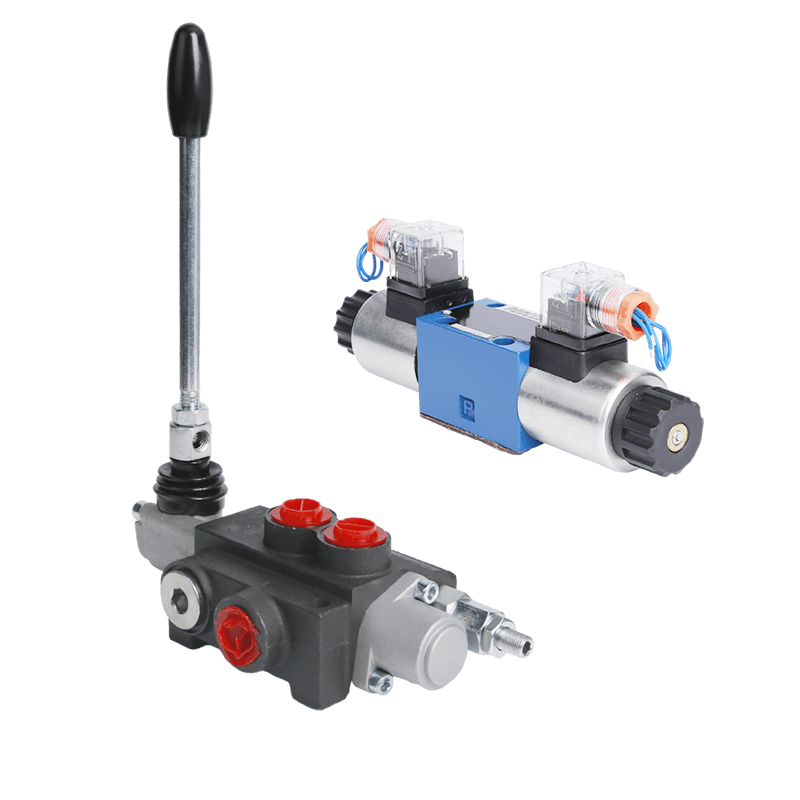
Throttle valves control flow. But common ones vary a lot when pressure differences change. Pressure-compensated flow control valves keep flow steady. They handle load-related pressure shifts well.
Throttle Locations
- Meter-in throttling puts the restriction before the motor inlet. It limits incoming flow directly. This method is simple and saves energy with positive loads. Yet it reacts strongly to pressure changes downstream. Speed can become unstable when loads shift or during overrunning.
- Meter-out throttling blocks the exhaust flow from the motor outlet. It creates backpressure to fight load-driven speedup. This works great for overrunning loads, like winches that lower heavy items or conveyors with extra momentum. It gives better speed control. Still, it makes a lot of heat because it throttles high-pressure return fluid.
- Bypass throttling sends extra pump flow around the motor through a side path. It provides okay stability. It also lets full pump flow go to other actuators. But it wastes energy all the time by bypassing, so overall efficiency drops.
In mobile machines like cranes or tracked vehicles, overrunning happens often. There, meter-out setups usually do a better job at keeping speed steady.
Load and System Pressure
Load shifts change system pressure right away. This alters pressure drops across throttle parts and valves. Higher pressure opens up more leakage paths in small gaps. Effective flow to the motor falls, and speed drops as a result.
Internal Leakage and Volumetric Efficiency
Leakage happens through clearances in pumps, valves, and motors. It grows with pressure because parts bend and gaps widen. It also rises with temperature since viscosity drops. Volumetric efficiency ηᵥ usually hits its best at medium pressures. It falls at very high or low levels. Wear makes leakage worse over time. This leads to uneven speed during long runs.
Viscosity and Temperature
Hydraulic fluid viscosity plays a big role in flow. High viscosity from cold temperatures raises friction and pressure losses in lines and holes. Response slows down. Low viscosity from hot conditions boosts leakage and cuts volumetric efficiency. Dirt adds extra flow blocks. Air in the fluid makes compressible spots that mess up steady flow.
Pipelines and Pressure Drop
Friction in hoses, tubes, fittings, and bends causes pressure losses. These losses grow with the square of flow speed, as the Darcy-Weisbach equation shows. Lines that are too small, too long, or full of curves make bigger drops. The motor gets less flow, especially at high speeds.
System Architecture
In circuits with many actuators, flow splits based on series or parallel setups, priority dividers, or proportional valves. Uneven loads among actuators pull flow one way more. This changes speeds of single motors.
Suction Conditions
Poor suction comes from dirty filters, low fluid levels, thick fluid, or narrow inlet lines. It leads to pump cavitation. This brings flow pulses and air bubbles. Motor speed then becomes shaky.
How to Control Hydraulic Motor Speed?
Flow Control Valve
Flow control valves limit fluid supply straight to set the desired speed. · Fixed orifices give a set limit. They fit constant-speed jobs well. · Adjustable orifices, like needle valves, allow hand adjustments. · Pressure-compensated types hold flow steady against load pressure changes.
These work for cheap, low-accuracy setups with steady loads, such as simple conveyor drives.
Variable Displacement Pump Control
This method changes pump displacement directly through swashplate or bent-axis moves. It adjusts output flow without throttle waste. · Mechanical links or hand controls give basic changes. · Electro-hydraulic or load-sensing types react to pressure signals on their own. They save energy well.
This choice shines in big-power systems with changing loads, like mobile equipment where low energy use matters.
Valve-Pump Combined Control
Variable pump output pairs with downstream valve throttling. The pump handles large flow changes for good efficiency. Valves then fine-tune split for accuracy when demands shift. This mix appears often in complex factory systems that need quick response and little heat.
Closed-Loop Control
Speed sensors like tachometers or encoders give real-time feedback. Controllers look at the difference between target and actual speed. They use PID methods: proportional for fast fix, integral to wipe out steady error, derivative to cut overshoot. The output shifts valve position or pump setting.
This delivers very good accuracy, often ±1% or better. It fits automation, test stands, or robots. It handles upsets from load shifts or temperature changes.
Advanced Speed Control Techniques for Modern Applications
Proportional and Servo Valve Integration
Proportional valves adjust flow smoothly with solenoid current. They give finer steps than on/off valves. Servo valves add high speed and spool feedback. They respond in milliseconds with great precision in closed loops. These suit fast-moving uses like injection molding or CNC machines.
Electronic Flow Compensation
Built-in electronics use sensors for pressure, temperature, and flow. They run real-time math to adjust for viscosity changes or leaks. This keeps speed steady over wide conditions.
Multi-Motor Synchronization Strategies
Flow dividers, either gear or spool kinds, split flow evenly by mechanics. Electronic methods use master-slave feedback or proportional valves. They fix speed differences in side-by-side motors. This matters for even movement in conveyors, crawlers, or multi-wheel drives.
How to Choose the Right Speed Control Solution
Load Characteristics
Steady loads suit simple valve throttling. Changing loads or heavy/inertial ones need compensated valves, variable pumps, or closed-loop setups. These stop droop or overspeed.
Speed Accuracy Requirement
Basic jobs accept ±5-10% swing with open-loop ways. Precise work (±0.5-2%) calls for proportional or servo valves plus feedback.
Dynamic Response
Quick changes, like fast direction switches, need fast actuators and well-tuned controllers. This cuts settling time and swings.
Why Hydraulic Motor Speed Fluctuates and How to Stabilize It
Fluctuations due to Load Changes
Sudden load rises ask for more torque. Pressure climbs and leakage grows, so speed falls. Load drops let speed climb. Pressure-compensated valves hold flow constant to help. Closed-loop feedback corrects actively.
Leakage and Friction
Wear causes leakage that shifts with pressure and temperature. Static friction at start or low speeds leads to stick-slip. Good seals, close fits, and proper lubrication cut changes.
Unstable Oil Condition
Temperature shifts change viscosity. This affects flow resistance and leakage. Particles or water block paths or add air. Coolers, heaters, filters, and regular fluid checks keep things stable.
Hydraulic Piping and Circuit Dynamics
Line stretch and fluid mass create pressure waves and delays. Accumulators soak up shocks. Damping holes or relief valves calm sudden changes.
The Effect of Control Systems and Actuators
Slow valve action or poor PID settings cause overshoot or hunting. Pick fast parts and tune gains well, such as with Ziegler-Nichols methods, for steady behavior.
Cavitation and Airborne Effects
Low inlet pressure or air entry forms vapor bubbles. They burst and interrupt flow with noise. Good suction head, proper venting, and clean filters remove air.
FAQ
Meter-in vs meter-out: which is better for motor speed control?
Meter-in keeps things simple and cheap for basic systems. Meter-out gives stronger stability, particularly with changing or overrunning loads. But it raises heat.
How can heat be reduced during hydraulic speed control?
Variable displacement pumps cut throttle losses. Pressure-compensated valves boost efficiency. Good cooling keeps fluid at the right temperature.
Is precise speed control possible without servo valves?
Yes. Proportional valves with closed-loop feedback reach high precision in many cases.
Why does a hydraulic motor become noisy during speed control?
Cavitation from low pressure, leaks from worn parts, or flow pulses from unsteady controls or dirty fluid cause noise.
What is the difference between speed control and torque control?
Speed control changes flow to set RPM. Torque control adjusts pressure to handle output force. Many systems mix both for full performance.
Partner with a Reliable Hydraulic Motor Manufacturer and Supplier
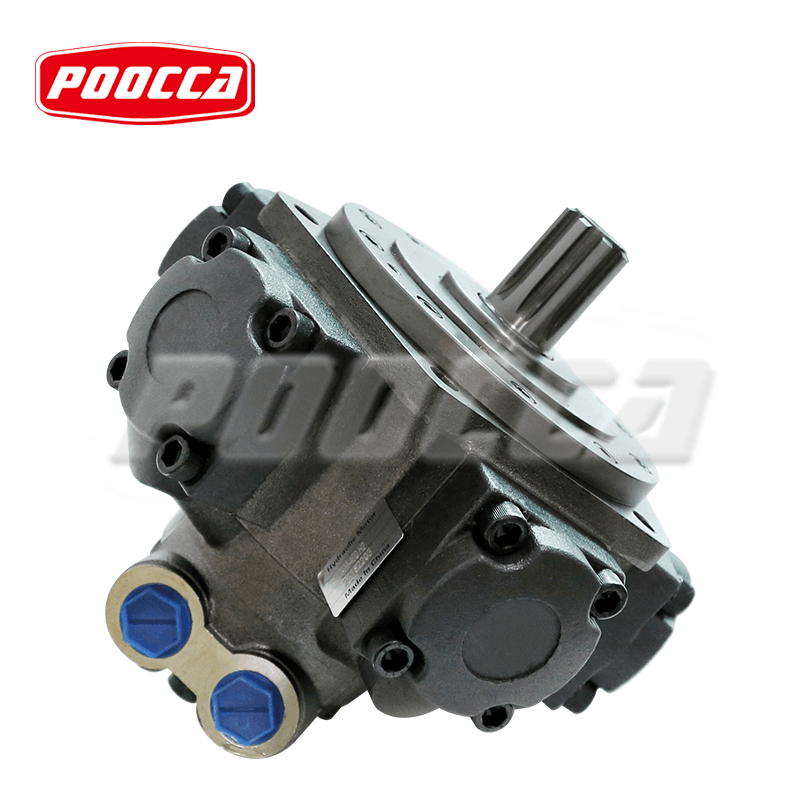
POOCCA established in 2006, serves as a leading manufacturer and supplier of hydraulic motors, including orbital, piston, gear, and vane types compatible with major brands like Rexroth, Danfoss, Parker, Eaton, and Poclain. With extensive R&D, production capabilities, and global exports to over 120 countries, POOCCA delivers high-quality, customized hydraulic motors and complete system solutions. For tailored hydraulic motor selections, expert technical support, or competitive quotations on reliable components, contact the POOCCA team today at their Shenzhen facility or via official channels to optimize system performance.