
 English
 Russian
 Arabic
 Indonesian
 Turkish
 Vietnamese
 Polish
 German
 Malay
Malay Thai
Thai Kazakh
 Spanish
 Chinese (Simplified)
 Korean
 Italian
 Azerbaijani
 Dutch
Dutch French
 Romanian
 Portuguese
 Hindi
HindiHydraulic piston motors change high-pressure fluid energy into turning mechanical power. They do this with good efficiency and strong torque. These motors run heavy machines in many fields. They use exact control of fluid flow and mechanical parts. This guide looks at the main ideas, designs, and technical facts about hydraulic piston motors.
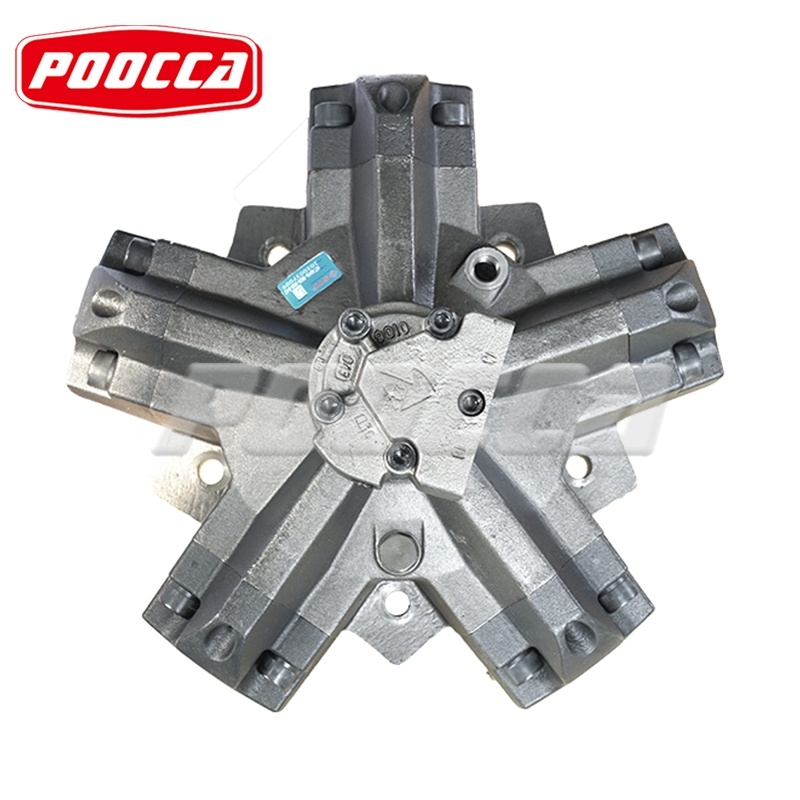 The Fundamental Principle: Harnessing Fluid Power
Hydraulic systems use Pascal’s principle. Pressure on a trapped fluid that does not compress much spreads the same way in every direction. Hydraulic fluid is usually a special kind of oil. It sends force well because it hardly compresses at all.
A hydraulic pump makes high-pressure fluid from a tank. This fluid moves through hoses and valves to the motor. The motor turns pressure energy into turning movement. Force increase lets small motors create very large torque. The closed system sends low-pressure fluid back to the tank.
The Role of the Hydraulic Power Unit
The Hydraulic Power Unit (HPU) has a main driver like an electric motor or engine. It also includes a tank and a pump. It gives steady pressurized fluid to the motor.
The Lifeblood of the System: Hydraulic Fluid
Hydraulic fluid sends power. It also oils parts, moves heat, and fills small spaces. Good thickness, resistance to oxidation, and control of dirt keep the system working well. The right choice of fluid makes sure it works with seals and temperatures in use.
Step 1: The Genesis of Force – Fluid Pressurization and Delivery
Pressurized fluid comes into the motor through an inlet port. A fixed valve plate with kidney-shaped ports handles the flow. As the cylinder block turns, the cylinders line up one after another with high-pressure and low-pressure ports. This makes a pressure difference that starts the turning.
The Pathway: From Pump to Motor
Strong hoses or pipes hold up against high pressures. These pressures often reach thousands of PSI. Directional valves, flow valves, and pressure relief valves manage the fluid with care. They stop damage and improve how well the system runs.
The Gatekeeper: The Valve Plate in Detail
The valve plate makes sure fluid enters and leaves at the right times. Tight seals between the turning cylinder block and the fixed plate cut down leaks. This helps get high volumetric efficiency.
Step 2: The Piston’s Journey – Generating Linear Motion
High-pressure fluid goes into a cylinder bore. It pushes the piston out in a straight line. The length of the piston stroke and its diameter set the displacement. Many pistons work in timed groups. This gives smooth torque.
Pistons have close fits and strong materials. They manage high pressures and back-and-forth forces. They also keep good lubrication.
Step 3: The Pivot Point – Translating Linear Force into Rotary Motion
Straight piston movement turns into rotation through mechanical links.
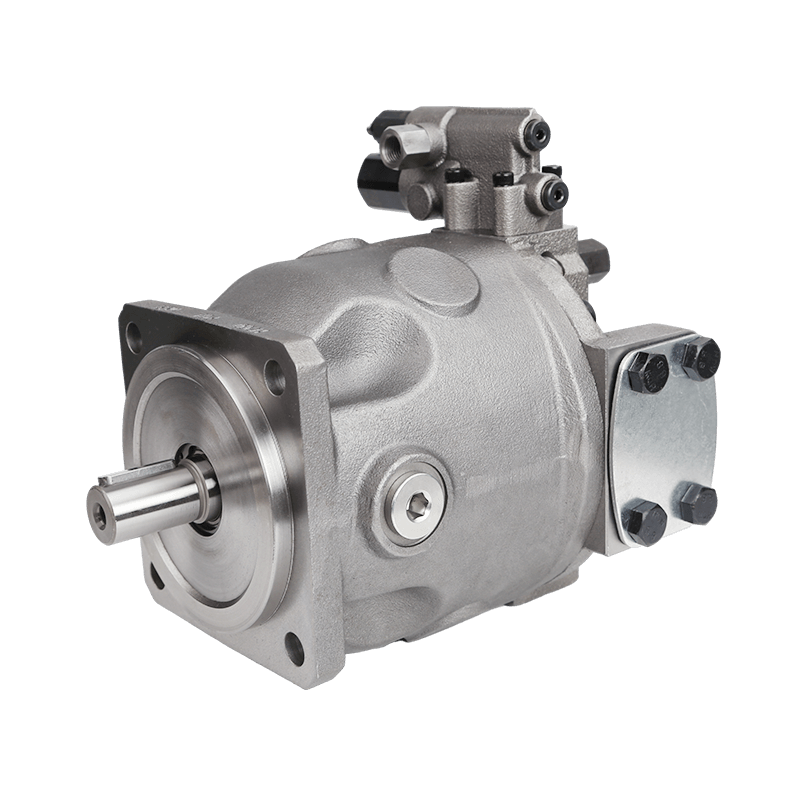
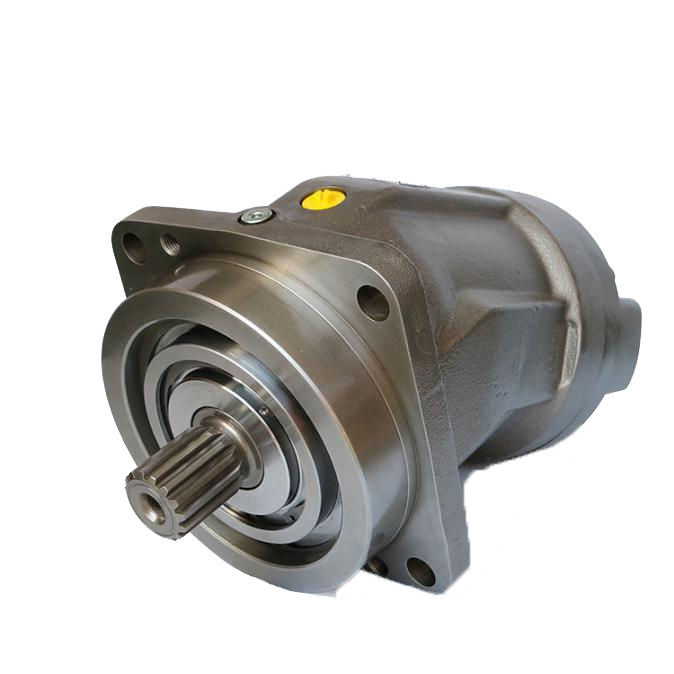
In axial piston motors, pistons push on a tilted swashplate. The reaction force makes the cylinder block turn. In bent-axis designs, the cylinder block sits at an angle to the drive shaft. Pistons connect with ball joints or rods.
Swashplate and Bent-Axis Mechanisms
Fixed or variable swashplate angles let users control displacement. Variable designs change the angle. This helps get the best speed and torque for different loads.
Step 4: The Final Output – Creating Torque and Rotating the Shaft
Forces from several pistons add up. They make steady torque on the output shaft. Displacement (cc/rev or in³/rev) affects torque directly. Higher displacement gives more torque at lower speeds. Flow rate mainly sets the speed.
High starting torque and good efficiency fit tough jobs.
Step 5: Completing the Circuit – Fluid Return and System Renewal
As pistons pull back, fluid leaves through the low-pressure port. It goes back to the reservoir. The cycle repeats without stops. This keeps the motor running all the time. Return lines and cooling keep the fluid in good shape.
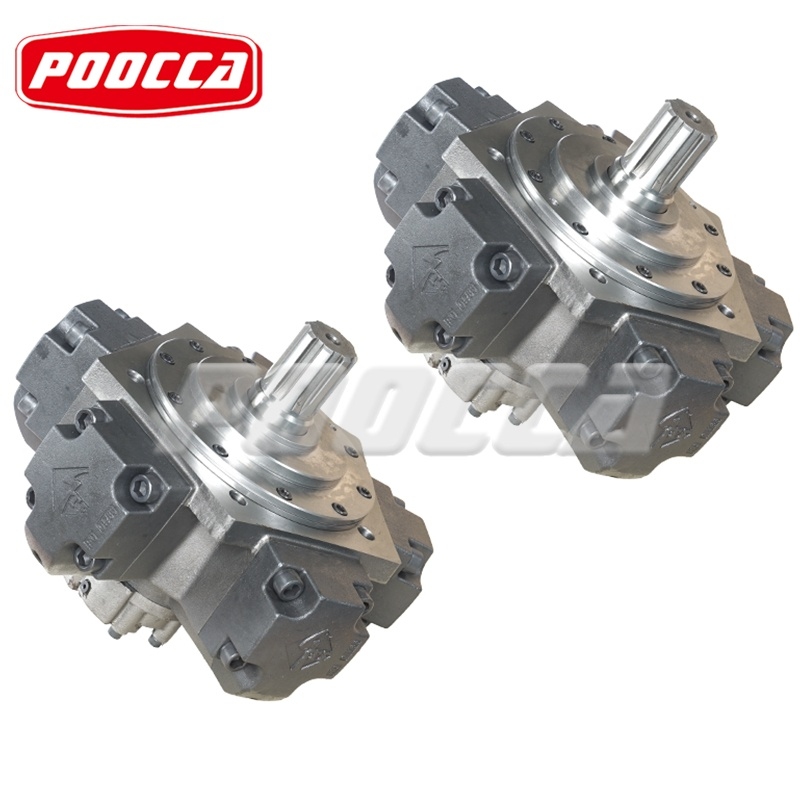
A Deeper Examination: Classifying Hydraulic Piston Motors
Axial Piston Motors
Axial designs work well in high-speed and high-efficiency uses. They have swashplate or bent-axis setups. They offer variable displacement choices for exact control.
Radial Piston Motors
Radial piston motors give high torque at low speeds. Pistons push out sideways against a cam ring or eccentric. This creates strong and smooth turning. It suits heavy loads.
Engineering Details: Axial vs. Radial Configurations
Axial Piston Motors give great power density and work in both directions. Swashplate types allow small setups. Bent-axis designs manage higher pressures and speeds in a good way.
Radial Piston Motors have strong builds for very high torque. Many pistons in phases make low ripple and high starting torque. Cam-ring or crankshaft types improve performance for winches, conveyors, and mobile equipment.
Key parameters include displacement, maximum pressure (up to 450 bar in advanced models), speed range, and efficiency ratings. Material selection for pistons, cylinders, and valves ensures durability under cyclic loading.
A Comparative Analysis: Piston Motors Versus Other Hydraulic Actuators
Piston motors do better than gear and vane motors in efficiency and high-pressure ability. Gear motors give simple design and lower cost for medium work. Vane motors offer smooth running but less torque density. Piston designs give better control and power in heavy jobs.
Real-World Manifestations: Where Piston Motors Power Progress
Hydraulic piston motors run construction equipment like excavators and wheel loaders. They also power agricultural machinery, mining equipment, marine winches, and industrial mixers or conveyors. Their high torque and exact speed control improve output in hard conditions.
Frequently Asked Questions (FAQ)
What is the main difference between axial and radial piston motors?
Axial designs suit higher speeds and variable displacement. Radial designs do well in high-torque and low-speed applications.
How does displacement affect motor performance?
Larger displacement increases torque output. It usually lowers maximum speed for a given flow rate.
Can hydraulic piston motors operate bidirectionally?
Yes. Reversing fluid flow direction reverses shaft rotation in most designs.
What factors determine hydraulic piston motor efficiency?
Volumetric efficiency from less leakage, mechanical efficiency from less friction, and fluid condition play main roles.
Partner with a Trusted Hydraulic Manufacturer and Supplier
Businesses seeking reliable hydraulic solutions benefit from partnering with an established manufacturer and supplier. POOCCA operates as a leading factory with comprehensive production capabilities in gear pumps, piston pumps, vane pumps, hydraulic motors, and valves. With extensive experience since 2006 and a wide product range including Rexroth, Parker, Danfoss, and Eaton equivalents, POOCCA delivers high-quality components backed by technical expertise and efficient global supply. Contact the POOCCA team for custom solutions, OEM replacements, and full hydraulic system support tailored to specific industrial requirements. Visit the official resources or reach out directly to discuss project needs with the manufacturer and supplier.