
 English
 Russian
 Arabic
 Indonesian
 Turkish
 Vietnamese
 Polish
 German
 Malay
Malay Thai
Thai Kazakh
 Spanish
 Chinese (Simplified)
 Korean
 Italian
 Azerbaijani
 Dutch
Dutch French
 Romanian
 Portuguese
 Hindi
HindiHydraulic piston motors work as strong rotary actuators. They change hydraulic energy from pressurized fluid into mechanical torque and steady rotational motion. These motors give high power density. They also offer precise speed control and dependable performance in tough conditions. Industries like construction, mining, marine propulsion, and heavy machinery rely on piston motors. They value the motors for their strength and their ability to produce large torque over wide speed ranges.
The main mechanism uses several pistons that move back and forth inside a cylinder block. Pressurized hydraulic oil pushes on the pistons. This action creates linear force. Then mechanical parts such as swash plates or cam rings turn that force into rotary output. Many designs allow bidirectional rotation and variable displacement. This setup lets users adjust output features easily without changing the prime mover.
 1. Axial Piston Hydraulic Motor
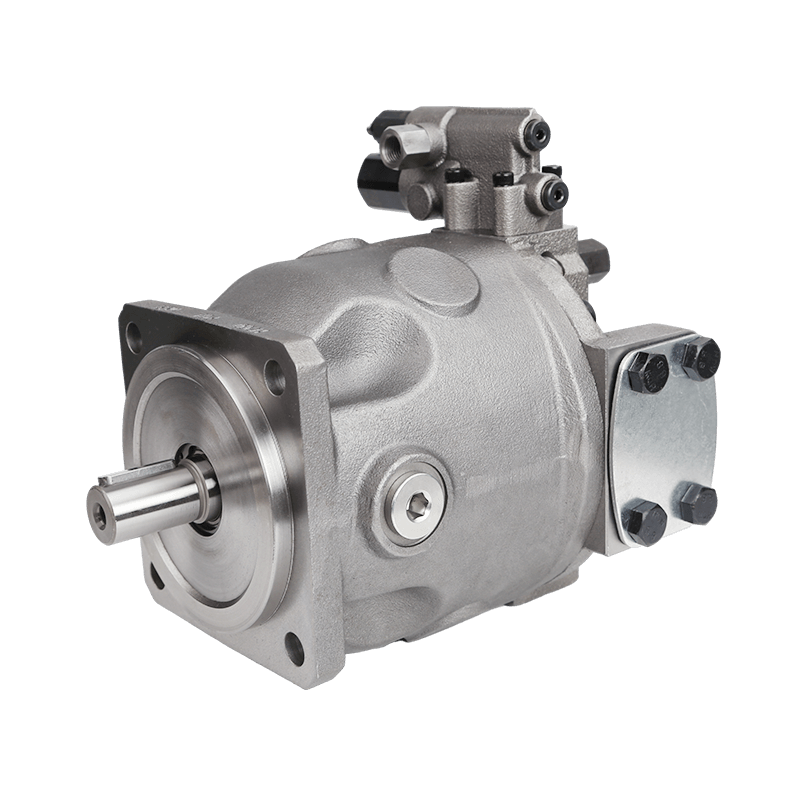
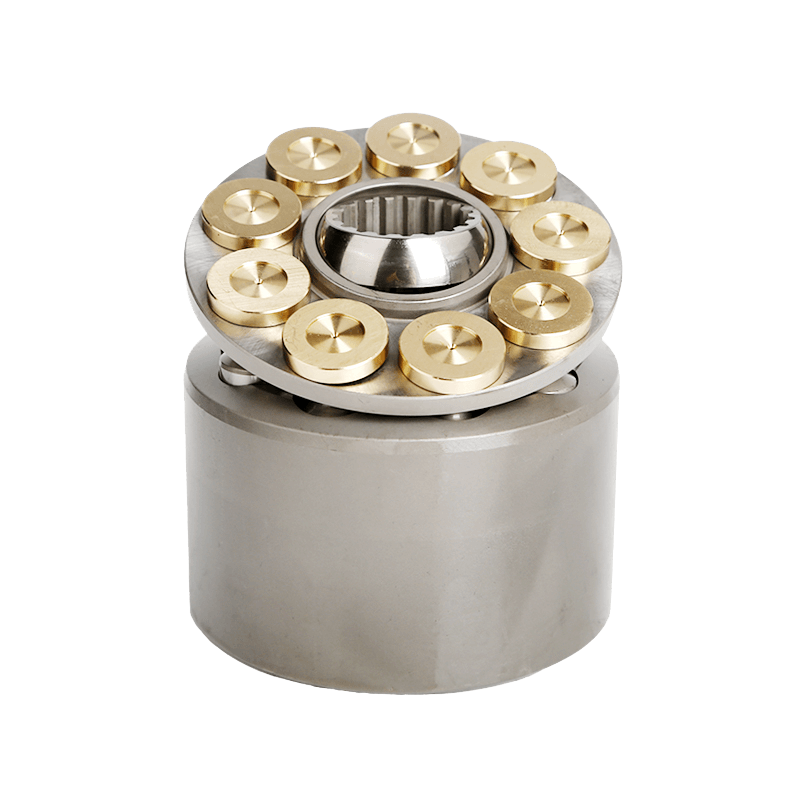
Axial piston hydraulic motors count among the most common piston motor setups. They stand out for their compact size, high efficiency, and fit for both high-speed and high-pressure uses.
1.1 Types of Axial Piston Hydraulic Motors
Axial piston motors break down further by their structure and function.
1.1.1 Swash Plate vs. Bent Axis Designs
Swash plate (straight-axis or in-line) motors keep pistons parallel to the output shaft. A fixed or variable-angle swash plate manages piston stroke. These motors have simple construction. They also show excellent dynamic response for variable displacement control.
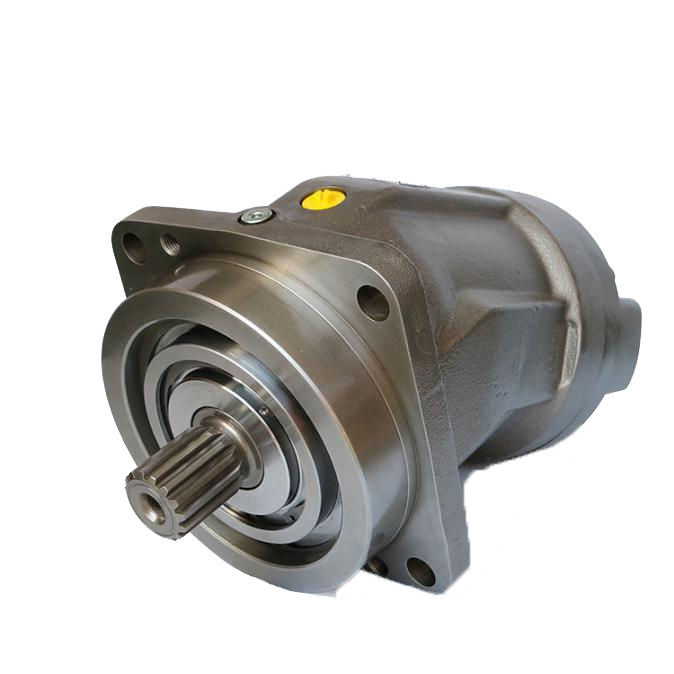
Bent axis motors place the cylinder block at an angle (usually 25–40 degrees) to the drive shaft. This angled setup cuts side loads on pistons. It lowers friction too. In addition, it supports bigger ranges for displacement changes.
1.1.2 Fixed Displacement and Variable Displacement Models
Fixed displacement axial piston motors give steady output torque and speed for a set flow and pressure. They fit applications that need consistent performance.
Variable displacement models change the swash plate or yoke angle. This action varies piston stroke as needed. The feature brings precise control over speed and torque. It also boosts energy efficiency in systems with changing loads.
1.1.3 Flow Distribution and Piston Contact Methods
End-face (gap seal) distribution remains the most usual method. It delivers reliable sealing and high volumetric efficiency. Valve-plate or seat-type distribution shows up in special designs.
Piston contact with the swash plate uses slipper-pad (surface contact) for better load spread and less wear. Some high-speed variants use spherical (point contact).
1.2 Working Principle of Axial Piston Hydraulic Motors
In a typical swash plate axial piston motor, the cylinder block turns while the swash plate stays still. High-pressure fluid enters cylinder bores through the port plate (valve plate). Pressure pushes pistons outward against the tilted swash plate.
The reaction force splits into axial and tangential parts. The tangential force creates torque. This torque rotates the cylinder block and output shaft. Low-pressure fluid leaves from the other side of the port plate.
Reversing inlet and outlet ports changes rotation direction without trouble. In variable displacement versions, users adjust the swash plate angle. This change alters piston stroke length. It directly affects displacement, torque, and speed. Larger angles raise displacement and torque. At the same time, they lower maximum speed.
Bent-axis motors follow a similar idea but with the whole cylinder block angled. The design reduces lateral piston forces. As a result, it causes lower internal losses and better mechanical efficiency, especially at higher pressures.
These motors often reach volumetric efficiencies over 95 percent. They also achieve overall efficiencies above 90 percent when they run in optimal pressure and speed ranges. Many fixed swash plate models share basic structure with axial piston pumps. This similarity allows possible component interchange in certain hydraulic circuits.
1.3 Advantages and Disadvantages of Axial Piston Motors
Axial piston motors supply compact structure, high power-to-weight ratio, and operation at pressures up to 450 bar. They bring excellent controllability, fast response, bidirectional ability, and fairly low noise compared with some other options.
Swash plate designs have simple construction, small overall size, good variable control dynamics, and high power density. They support large maximum displacements. They also work well in both motor and pump modes under right conditions.
Bent-axis variants provide reduced piston side loads, lower friction, wider variable displacement ranges, greater tolerance to fluid contamination because of larger clearance gaps, and superior low-speed starting characteristics with minimal inertia.
Limitations include higher manufacturing complexity and cost than gear or vane motors. Sensitivity to fluid contamination stays a factor, especially for precision surfaces such as slippers and valve plates. Variable bent-axis models can lead to increased overall dimensions and weight because of the swinging cylinder mechanism.
2. Radial Piston Hydraulic Motor
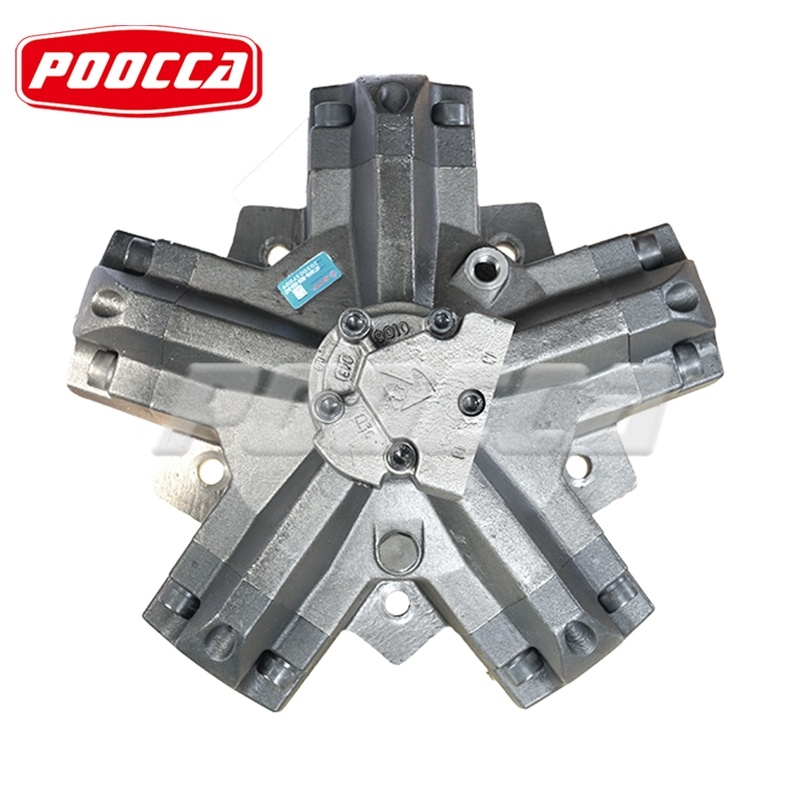
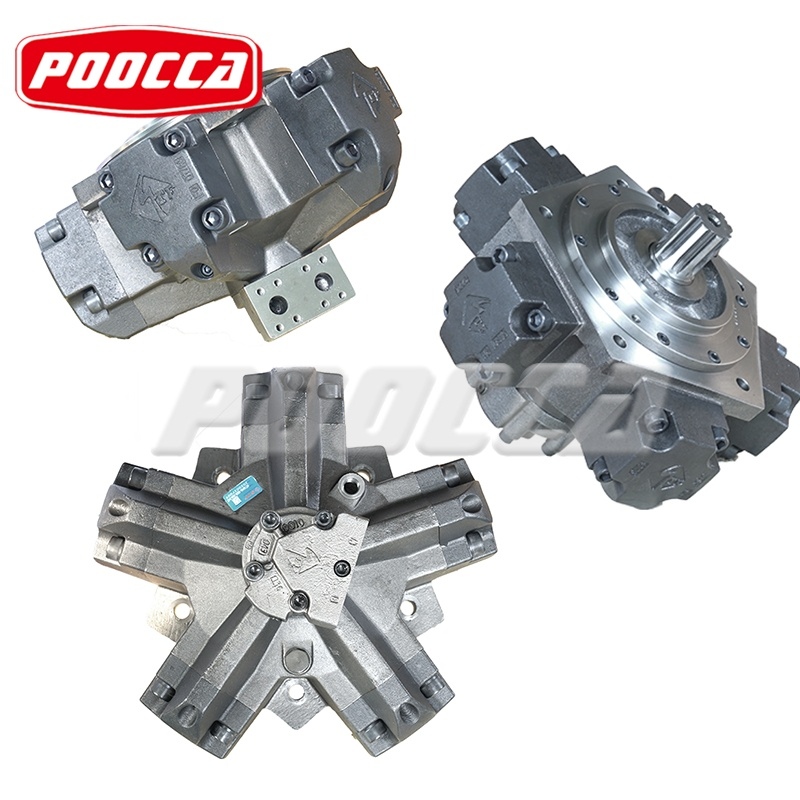
Radial piston hydraulic motors place pistons perpendicular to the output shaft. They suit low-speed, high-torque (LSHT) applications. In these cases, direct drive without reduction gearing works best.
2.1 Types of Radial Piston Hydraulic Motors
Radial piston motors classify by cam and piston arrangement.
2.1.1 Cam-Ring (Multi-Stroke) and Crankshaft (Single-Stroke) Designs
Cam-ring motors use an eccentric cam ring or multi-lobe cam with multiple pistons (usually 5 to 11). Each revolution creates multiple torque pulses. This feature gives smoother output.
Crankshaft designs employ a single eccentric crank or connecting rod mechanism. They often deliver higher torque per piston. However, they may show higher torque ripple.
2.1.2 Fixed and Variable Displacement Configurations
Fixed displacement radial motors supply consistent performance. Variable versions adjust eccentricity or apply valve timing control to change effective displacement.
Additional variants include roller piston or sliding piston types for reduced wear. Some models have internal or external cam rings.
2.2 Working Principle of Radial Piston Hydraulic Motors
Pressurized fluid distributes one after another to individual piston chambers through a central pintle or distributor valve. Each piston extends radially outward. It presses against the cam ring or eccentric surface.
The resulting radial force produces a tangential component. This component rotates the output shaft (or housing in rotating-case designs). As rotation goes on, the distributor valve sends high-pressure fluid to next pistons. At the same time, it exhausts low-pressure fluid from retracting pistons.
Torque output stays proportional to piston area, system pressure, and the effective radial lever arm. The multi-piston setup and cam geometry decide smoothness and torque uniformity. Bidirectional operation happens by reversing fluid flow direction through the distributor.
This architecture naturally supports very high starting and running torque at low rotational speeds. It often works without gearboxes.
 2.3 Advantages and Disadvantages of Radial Piston Motors
Radial piston motors do well at delivering high torque at low speeds. They offer smooth operation, strong starting torque, and long service life under heavy loads. They perform effectively in winch drives, conveyor systems, wheel motors, and mixing equipment.
Larger sealing surfaces in many designs improve tolerance to moderate fluid contamination. Output stays stable even under varying loads.
Drawbacks include larger physical size and higher weight for equivalent power ratings compared to axial types. Maximum operating speeds usually stay lower. Manufacturing complexity can raise costs. Lower piston-count models may show noticeable torque ripple.
3. Detailed Comparison Between Axial and Radial Piston Motors
Axial piston motors usually reach higher maximum speeds and better power density in a compact space. They work best in applications that need quick response and variable control.
Radial piston motors focus on maximum torque at very low speeds. They provide excellent smoothness and high starting efficiency. They fit direct-drive scenarios where space permits larger units.
Both families support fixed and variable displacement, open or closed circuit operation, and bidirectional rotation. Axial designs often show advantages in high-speed efficiency. Radial units lead in sustained low-speed, high-torque duty cycles.
Selection criteria include required speed range, torque demands, available installation space, system pressure, fluid cleanliness level, and overall efficiency targets across the operating envelope.
4. Key Performance Parameters and Selection Considerations
Some of the parameters to consider for hydraulic pistons include displacement, pressure, torque, speed, and efficiencies at different levels.
Efficiencies considered here are the volumetric efficiency of the motor, which is a function of the amount of leakage in the motor. Another one would be mechanical efficiency due to friction and viscosity effects. Overall efficiency includes both efficiencies.
Parameters that will influence the integration level of the motor include mounting methods, shaft design, and port size among others. Other important considerations would include temperature limits while operating (up to 115°C), case drain requirements, and suitability of different kinds of fluids.
FAQ
What is the primary structural difference between axial and radial piston motors?
Axial piston motors arrange pistons parallel to the output shaft for higher speeds and compact size. Radial piston motors position pistons perpendicular to the shaft for superior low-speed high-torque performance.
Do hydraulic piston motors support bidirectional rotation?
Most piston motor designs enable smooth bidirectional operation by simply reversing the direction of hydraulic fluid flow through symmetrical porting and valve plates.
Partner with a Trusted Hydraulic Piston Motor Manufacturer and Supplier
POOCCA delivers reliable axial and radial piston motor solutions, competitive factory pricing, short lead times, and expert assistance for custom requirements across diverse industrial applications. The POOCCA team stands ready to provide detailed product catalogs, technical data sheets, and guidance on optimal motor selection for specific hydraulic systems. Reach out today to discuss bulk supply needs, OEM integration, or tailored drive solutions that enhance overall system productivity and reliability.