 English
 Russian
 Arabic
 Indonesian
 Turkish
 Vietnamese
 Polish
 German
 Malay
Malay Thai
Thai Kazakh
 Spanish
 Chinese (Simplified)
 Korean
 Italian
 Azerbaijani
 Dutch
Dutch French
 Romanian
 Portuguese
 Hindi
HindiAccording to Grand View Research, the global hydraulic equipment market was valued at USD 43.7 billion in 2023, underscoring how critical high-performance components such as the rexroth a4vso axial piston variable pump remain for industrial, mobile, and manufacturing applications. For engineers and sourcing teams searching for a practical alternative to fragmented PDF manuals, this guide explains what matters most: working principles, control devices, pressure and flow ranges, compliance expectations, and how to evaluate replacement or equivalent hydraulic pumps for open-circuit systems.
Understanding the A4VSO Market Context and Why the Rexroth A4VSO Remains a Benchmark
The Rexroth A4VSO is widely recognized in open-loop hydraulic systems because it combines axial piston efficiency, variable displacement control, and application flexibility for machine tools, presses, marine equipment, metallurgical systems, and general industrial power units. In many purchasing journeys, teams begin with search terms such as “Rexroth A4VSO data sheet,” “Rexroth A4VSO manual pdf,” or “A4VSO 180 Rexroth pdf,” but what they actually need is not just a document—they need confidence in fit, pressure capability, control compatibility, and lifecycle value.
According to Markets and Markets, the global hydraulic pumps market is projected to reach USD 11.2 billion by 2028, growing at a 4.8% CAGR. That sustained demand reflects the ongoing need for robust hydraulic pumps that can maintain stable output under fluctuating loads. Axial piston variable pump platforms like the A4VSO are especially attractive because they allow displacement adjustment based on system demand, which can reduce energy waste compared with fixed-displacement designs in many duty cycles.
According to Statista, manufacturing value added worldwide exceeded USD 16 trillion in recent years, highlighting the scale of industrial activity that depends on reliable fluid power systems. In these settings, specification details matter: pressure ratings in PSI, flow in GPM, control response, shaft options, mounting dimensions, and fluid compatibility all influence whether a pump integrates cleanly into an existing hydraulic power unit.
This is where a supplier with technical support can create real value. Rather than leaving buyers to decode damaged or incomplete PDFs, POOCCA helps customers evaluate hydraulic pumps, motors, valves, and hydraulic cylinders through a more consultative process. That includes support for custom solutions, factory-direct pricing, and flexible MOQ options for OEM, aftermarket, and replacement projects. For buyers comparing a rexroth a4vso pump to equivalent axial piston variable pump models, the decision often comes down to system fit, lead time, documentation quality, and quality assurance—not just nameplate familiarity.
In practical terms, the A4VSO category remains important because it addresses a common industrial challenge: delivering high power density and controllable flow in open-circuit hydraulic systems. Whether a maintenance manager is replacing a worn unit or an equipment builder is specifying a new power pack, understanding the technical and standards landscape behind the rexroth a4vso can significantly reduce downtime risk and procurement errors.
Technical Deep Dive: How the Rexroth A4VSO Axial Piston Variable Pump Works
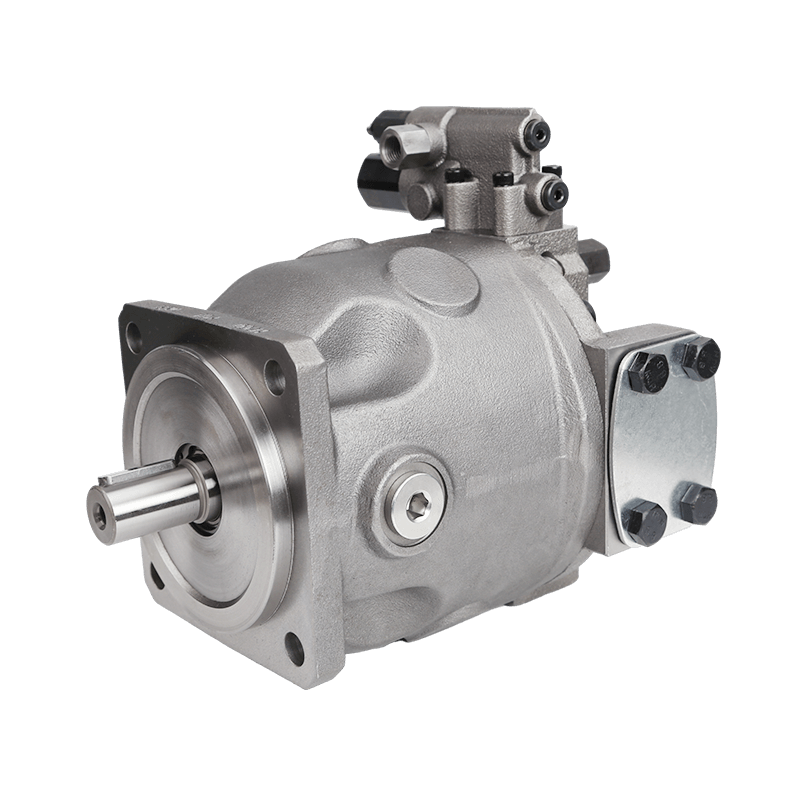
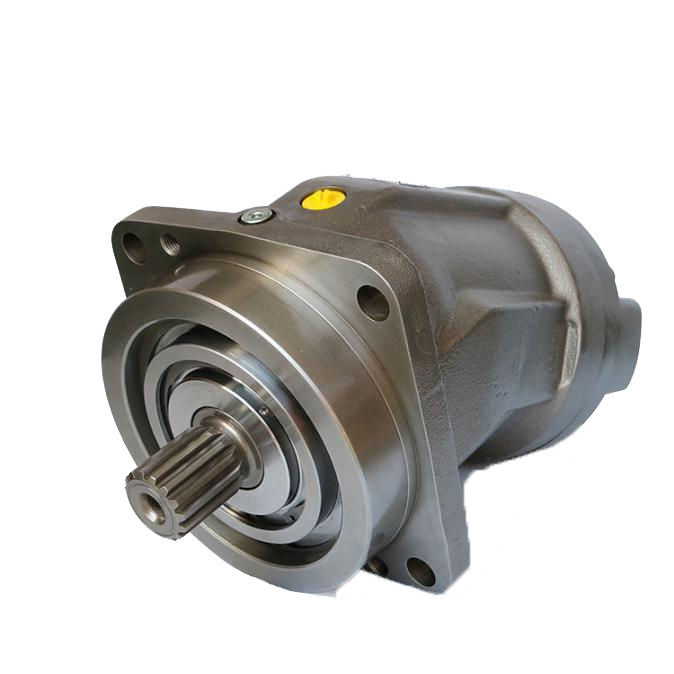
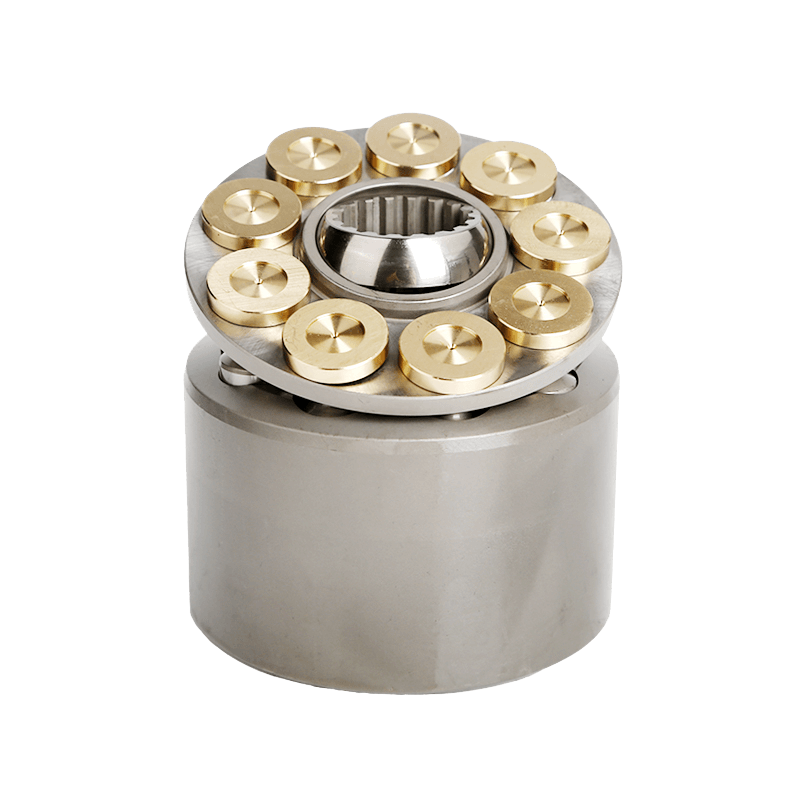
The rexroth a4vso belongs to the axial piston variable pump family designed for open-circuit operation. In simplified terms, multiple pistons are arranged parallel to the drive shaft within a rotating cylinder block. As the shaft turns, the pistons reciprocate against a swash plate angle. By changing that angle, the pump changes displacement and therefore output flow. This variable architecture is one of the key reasons axial piston pumps are selected for machines that need precise hydraulic control under changing load conditions.
According to NFPA fluid power performance guidance widely used by the industry, efficiency losses in hydraulic systems can materially affect total operating cost, especially in continuous-duty applications. That is why users closely evaluate volumetric efficiency, mechanical efficiency, and noise behavior when comparing variable piston pumps. In many industrial systems, the design target is to maintain stable pressure with predictable response while controlling oil temperature and minimizing unnecessary recirculation.
As Michael Gust, fluid power educator and consultant, states: “Variable displacement piston pumps give designers a major advantage because flow is matched more closely to demand, which can improve system efficiency and controllability when correctly specified.”
From a specification standpoint, buyers typically review displacement class, rated pressure, peak pressure, speed range, and control options. In many A4VSO-style applications, operating pressure can reach several thousand PSI, and system flow may be measured across a broad GPM range depending on frame size and speed. Control devices may include pressure control, pressure-flow control, load-sensing logic, or electro-hydraulic variations depending on machine architecture. Search phrases such as LR2D often point to a specific control strategy or related configuration interest, making control compatibility just as important as pump displacement.
According to SAE International, dimensional and port standardization remains central to hydraulic component interchangeability, helping OEMs and maintenance teams reduce integration risk. This matters because even if two pumps appear equivalent on paper, differences in flange dimensions, shaft configuration, case drain location, or control mounting can complicate replacement planning.
As Barbara Putz, industrial hydraulics specialist, states: “A pump is never just a pump in a production environment—the mounting pattern, control logic, fluid cleanliness requirements, and pressure profile all determine whether the replacement will truly perform as expected.”
According to IBISWorld, industrial machinery manufacturing remains a multi-hundred-billion-dollar sector in the United States alone, which explains the persistent demand for precise replacement documentation and parts compatibility. Yet many users searching for a Rexroth A4VSO Service Manual PDF or Rexroth A4VSO Pump parts PDF are really trying to answer broader engineering questions: What shaft rotation is needed? What control device is installed? Is the pump intended for mineral oil? What filtration class is recommended? What is the expected pressure compensator setting?
For buyers that need alternatives or parallel sourcing, POOCCA can support the evaluation of hydraulic pumps and related hydraulic motors, valves, and cylinders for industrial systems where lead time, budget, and customization matter. This is especially useful when a project requires not just a replacement pump, but a complete hydraulic package aligned to the machine’s target pressure, flow, control behavior, and installation envelope.
Industry Standards and Compliance for Hydraulic Pumps, Controls, and Documentation
When evaluating a rexroth a4vso or an equivalent axial piston variable pump, performance data should never be considered in isolation from standards and compliance requirements. In industrial procurement, standards function as the common language that connects engineering design, quality assurance, safety, and international trade.
ISO 9001 is one of the first indicators many buyers review because it signals that a manufacturer operates within a documented quality management framework. While ISO 9001 certification does not by itself guarantee product superiority, it does show that the supplier has formalized process control, corrective action, traceability, and continual improvement practices. For hydraulic pumps, this is highly relevant because dimensional consistency, machining precision, cleanliness control, and test procedures directly affect field reliability.
CE marking is another important reference point for products entering applicable markets. It indicates conformity with relevant European requirements where applicable, especially for machinery-related integration contexts. Buyers also frequently ask about API standards when pumps are considered for oil and gas, process, or heavy industrial applications. Although not every axial piston pump is governed by the same API framework, the broader point is that documentation should clearly define where the product is intended to be used and what standards apply.
According to ISO, quality management systems based on ISO 9001 are adopted by organizations in more than 170 countries, demonstrating how central this benchmark has become in global sourcing. According to SAE International, standardized interface and testing approaches improve communication between manufacturers and system designers, reducing specification ambiguity during component replacement and machine design.
The NFPA also plays a major role in fluid power best practices, terminology, and safety awareness in North America. For a pump such as the rexroth a4vso, standards-aligned documentation should ideally include rated and peak pressure, fluid type recommendations, allowable shaft loading, case drain requirements, startup guidance, and contamination control expectations. A missing detail in any of these categories can shorten service life or cause commissioning problems.
For procurement teams, compliance extends beyond the pump body itself. Related hydraulic valves, motors, and hydraulic cylinders should be specified with the same discipline so the full system can maintain target pressure, flow, and controllability. This is one reason many OEMs prefer suppliers that can support multiple component categories rather than offering a pump alone. POOCCA positions this as part of its factory-direct support model, helping customers align technical documentation, custom solutions, and sourcing efficiency under one channel.
Ultimately, standards matter because they reduce uncertainty. For teams searching online for an A4VSO manual or data sheet, the best outcome is not simply finding a PDF—it is obtaining standards-aware technical guidance that confirms the chosen hydraulic pump will perform safely and reliably in the intended operating environment.
Implementation Guide: How to Select, Replace, and Integrate an A4VSO-Style Pump Successfully
Selecting or replacing a rexroth a4vso should start with system data, not just part-number matching. Engineers should verify at least six core factors: displacement, rated pressure, peak pressure, prime mover speed, control type, and mounting/interface dimensions. A mismatch in any one of these can affect startup behavior, efficiency, or machine safety.
According to Markets and Markets, predictive maintenance and smart industrial monitoring adoption continues to rise across manufacturing, creating more opportunities to identify pump wear before catastrophic failure. In practice, this means users should track pressure instability, elevated case drain flow, rising oil temperature, abnormal vibration, and delayed response from control devices. These symptoms often indicate internal wear, contamination damage, or control-related issues.
A practical implementation workflow often looks like this:
1. Confirm application duty. Is the pump running continuous industrial cycles, intermittent press duty, or dynamic machine-tool commands? Different duty profiles affect cooling, fluid viscosity management, and pressure compensation settings.
2. Review hydraulic circuit needs. Because the A4VSO is commonly used in open-circuit systems, verify reservoir design, filtration, suction conditions, and return-line arrangement.
3. Match pressure and flow. If the machine requires a certain GPM at a set PSI, confirm the pump can deliver it within the intended speed range.
4. Check controls carefully. Terms like LR2D or pressure-control variants can indicate critical differences in response logic. A wrong control device may physically fit but perform incorrectly.
5. Validate adjacent components. A new pump should be reviewed alongside hydraulic valves, motors, cylinders, and fluid cleanliness controls.
According to Statista, industrial downtime can cost manufacturers thousands of dollars per hour depending on sector and process intensity, which is why accurate replacement planning delivers measurable ROI even before energy efficiency is considered. According to Grand View Research, industrial automation investment continues to support demand for precise fluid power control, further increasing the value of technically documented pump selection.
Success often depends on supplier collaboration. If a plant team has only an old nameplate, a partial data sheet, or a damaged parts document, a capable supplier can reverse-engineer the application requirements from installation dimensions, shaft details, flow targets, and control configuration. This is particularly important when legacy documentation is unreadable or unavailable.
POOCCA supports this implementation process by helping customers compare equivalent hydraulic pumps, clarify technical parameters, and source related components under a factory-direct model with flexible MOQ. For OEMs and distributors, that can simplify projects where cost control, lead time, and customization are all part of the purchasing decision. The result is a more practical path to replacement and integration than relying on a manual alone.
Future Outlook for Axial Piston Variable Pumps and the A4VSO Segment
The future for the rexroth a4vso segment remains positive because industrial users are balancing three priorities at once: energy efficiency, uptime, and sourcing flexibility. Axial piston variable pumps are well suited to this environment because they offer controllable flow, strong power density, and compatibility with increasingly sophisticated control strategies.
According to Grand View Research, continued investment in construction equipment, industrial automation, and heavy machinery will support hydraulic equipment demand over the coming decade. At the same time, buyers are becoming more data-driven. They no longer evaluate pumps only by brand familiarity; they increasingly compare efficiency, lifecycle support, document quality, and replacement availability.
According to Markets and Markets, smart manufacturing adoption is accelerating globally, which will likely increase demand for hydraulic pumps with clearer condition-monitoring pathways, tighter quality control, and better integration support. This trend favors suppliers that can provide both standardized products and custom hydraulic solutions.
For buyers researching the rexroth a4vso, the best next step is to move from document hunting to application matching. A reliable pump choice should satisfy pressure, flow, standards, and installation needs while fitting budget and lead-time expectations. If you need help evaluating an A4VSO-style hydraulic pump, control device, or full-system component set, contacting a technically responsive supplier such as POOCCA can shorten the path from specification to successful operation.
Frequently Asked Questions
Where can I find a Rexroth A4VSO Service Manual PDF?
Many users search for a Rexroth A4VSO Service Manual PDF when troubleshooting pressure loss, unusual noise, or control-device behavior. In practice, the best source is the original manufacturer, an authorized distributor, or a qualified hydraulic supplier that can verify the exact model code and control configuration. This matters because A4VSO-series pumps can differ by displacement, shaft type, mounting, and control options, so a generic PDF may not match your specific unit.
According to SAE International, standardized product identification is critical for reducing replacement and maintenance errors. That is especially true for variable piston pumps, where a small configuration difference can alter setup and service procedures. If your machine only has a partial model tag or a damaged plate, document the installation dimensions, ports, shaft details, and control markings before requesting a manual.
According to Statista, digital document usage in industrial workflows continues to rise year over year, but document quality remains inconsistent across aftermarket channels. If you cannot obtain the original PDF, a technical supplier may still help identify the right pump family and provide application guidance, exploded views, or equivalent replacement options. Always confirm pressure rating, fluid requirements, and contamination limits before servicing the pump.
What is included in an axial piston variable pump (A)A4VSO ETS Hydro manual?
An axial piston variable pump a a4vso ets hydro manual or similar data package typically includes product overview, operating principle, displacement sizes, rated and peak pressure, speed limits, mounting data, port information, and available control devices. In some cases, manuals also include circuit symbols, cross-sectional illustrations, and installation notes for open-circuit hydraulic systems.
According to NFPA, proper fluid power documentation should clearly identify operating limits and safe installation practices. That means a useful manual is not just a marketing sheet—it should help engineers confirm compatibility with the hydraulic power unit, valves, motors, and cylinders in the system.
According to IBISWorld, maintenance and repair activity remains a significant part of industrial machinery spending, which increases the value of clear aftermarket documentation. If the source file is incomplete or unreadable, use the available information to reconstruct the critical data points: displacement, PSI range, GPM target, control type, flange pattern, and shaft design. Those factors usually determine whether the pump can be serviced, replaced, or cross-referenced effectively.
How do I read an axial piston variable pump (A)A4VSO ETS Hydro spec sheet?
To read an axial piston variable pump a a4vso ets hydro spec sheet effectively, start with the displacement code and frame size, then review rated pressure, peak pressure, maximum speed, and control-device designation. After that, check the physical interface details such as mounting flange, shaft end, port threads, and drain connections. Finally, examine any efficiency, noise, or permissible operating condition notes.
According to ISO, technical documentation should support consistent product identification and process control across the supply chain. In hydraulic applications, that means the spec sheet should help determine both performance capability and installation fit. If a pump is rated for the required PSI but not the required speed or flow, it may still be unsuitable.
According to Grand View Research, increasing demand for efficient industrial equipment is driving more attention to controllable hydraulic components. When reading the sheet, focus on whether the pump can deliver the needed GPM within your motor speed range while maintaining stable pressure under the intended duty cycle. Also review any notes on oil viscosity, filtration, and startup conditions, because these often affect reliability more than headline pressure numbers alone.
Where can I get a Rexroth A4VSO Pump parts PDF?
A Rexroth A4VSO Pump parts PDF is usually requested when maintenance teams need seals, bearings, rotating groups, or control-device components. The safest route is to source parts information from the OEM, an authorized channel, or a hydraulic specialist that can verify your exact model code. Parts diagrams are highly configuration-dependent, and using an incorrect breakdown can delay repairs or lead to incompatible orders.
According to SAE International, accurate component identification is fundamental to equipment reliability and maintainability. In the case of variable piston pumps, that is especially important because housing, control assemblies, and shaft arrangements can vary even within the same product family.
According to Markets and Markets, aftermarket industrial service demand is expanding alongside installed equipment bases, increasing the need for better digital parts support. If a parts PDF is unavailable, collect the pump nameplate, external dimensions, and photos of the control block and porting. A knowledgeable supplier may be able to identify equivalent service components or recommend a complete replacement if repair economics are unfavorable.
Is there a difference between a Rexroth A4VSO PDF data sheet and a manual?
Yes. A Rexroth A4VSO PDF data sheet usually focuses on technical specifications, dimensions, operating ranges, and ordering codes. A manual, by contrast, often includes installation guidance, commissioning steps, maintenance notes, and service precautions. Buyers often use these terms interchangeably during search, but they serve different purposes.
According to ISO, clear technical communication improves process consistency and reduces operational errors. In hydraulic systems, the data sheet helps determine whether the pump should be selected, while the manual helps ensure it is installed and maintained correctly.
According to Statista, industrial buyers increasingly rely on digital self-service research before contacting suppliers, which is why both documents matter in procurement. If you are still in the selection stage, prioritize the data sheet for pressure, flow, size, and control compatibility. If you already have the pump in service, the manual becomes more valuable for startup, fluid cleanliness, torque values, and maintenance intervals. Ideally, use both together to minimize engineering and service risk.
What should I check before ordering a Rexroth A4VSO replacement or equivalent pump?
Before ordering a Rexroth A4VSO replacement or equivalent, verify the full model code, displacement, rotation direction, shaft type, mounting flange, port arrangement, control device, rated pressure, and maximum speed. Also confirm the application: open-circuit versus other hydraulic architecture, operating fluid, ambient conditions, and any special commissioning requirements.
According to NFPA, contamination control and proper component matching are among the most important factors in hydraulic reliability. A correctly selected replacement can still fail early if the reservoir, filters, valves, or cooler are not suitable for the revised configuration.
According to Grand View Research, productivity-focused industries continue to invest in equipment reliability, making accurate component selection more valuable than ever. If documentation is incomplete, work with a supplier that can interpret photos, nameplate remnants, and system requirements. This is often the fastest way to determine whether a direct replacement, an upgraded equivalent, or a custom hydraulic package is the best solution. Confirming these details up front reduces downtime, avoids fitment errors, and improves long-term operating performance.