 English
 Russian
 Arabic
 Indonesian
 Turkish
 Vietnamese
 Polish
 German
 Malay
Malay Thai
Thai Kazakh
 Spanish
 Chinese (Simplified)
 Korean
 Italian
 Azerbaijani
 Dutch
Dutch French
 Romanian
 Portuguese
 Hindi
HindiAccording to Grand View Research, the global hydraulic equipment market was valued at over USD 45 billion in 2023, underscoring how critical pumps, valves, motors, and hydraulic cylinders remain as industries undergo a paradigm shift towards electrification, higher efficiency, and smarter machine integration. For OEMs, distributors, and equipment engineers evaluating a dynaset pump or comparable solution, the real opportunity is no longer just buying a pump—it is selecting the right pressure architecture, power source, standards compliance strategy, and supply partner for long-term machine performance. As construction, mining, agriculture, municipal service, and industrial cleaning sectors increasingly demand electric, high pressure, and versatile fluid power systems, manufacturers need suppliers that can deliver custom solutions, stable quality, factory-direct pricing, and flexible MOQ. That is where POOCCA enters the conversation as a practical Partner for Your Machine.
Industry Context: Why the Market Is Moving Beyond a Single Dynaset Pump Option
The market context behind growing interest in a dynaset pump alternative is straightforward: machine builders are being asked to deliver more output with less downtime, lower emissions, and better total cost control. According to Markets and Markets, the global hydraulic pump market is projected to grow at a CAGR of more than 5% through the forecast period, driven by demand in mobile equipment, industrial automation, and energy applications. At the same time, according to Statista, global construction equipment sales continue to show strong long-term resilience despite regional cycles, creating sustained demand for compact, efficient pressure-generation systems that can support cleaning, dust suppression, auxiliary power, and fluid transfer tasks.
This matters because modern customers are not comparing products only by brand name. They are asking more specific technical questions: What PSI is required? How many GPM must the system deliver? Is the unit suited for continuous duty? Can it integrate with electric architecture? How easy is installation inside limited machine envelopes? What service life can be expected under abrasive, high-vibration, or high-temperature conditions? These questions are particularly important when evaluating electric high pressure systems for mobile or stationary equipment.
According to IBISWorld, industrial equipment buyers are placing increasing emphasis on lifecycle cost, maintenance intervals, and supplier responsiveness rather than purely upfront component price. That trend creates room for technically capable manufacturers like POOCCA to compete effectively by offering hydraulic pumps, hydraulic motors, control valves, and hydraulic cylinders tailored to OEM and aftermarket requirements. Instead of focusing on a single narrow product narrative, POOCCA supports system-level thinking: pressure compatibility, flow balancing, seal material selection, manifold matching, and production consistency under ISO 9001-oriented quality processes.
Another factor shaping the market is electrification. According to Grand View Research, the electric construction equipment segment is expected to expand significantly through 2030 as fleet operators seek lower emissions and improved operating efficiency. In practice, this means engineers increasingly need components that can coexist with battery-powered architectures, hybrid auxiliary systems, and mixed hydraulic-electric layouts. A versatile supplier becomes valuable when a machine may require one set of hydraulic pumps for motion control, a separate high pressure subsystem for cleaning or suppression, and precision valves to regulate variable loads.
For buyers reviewing dynaset pump options, POOCCA’s advantage lies in manufacturing flexibility, application support, and cost efficiency. Through factory-direct communication, customers can explore custom specifications, flexible MOQ, and compatibility planning for mobile machinery, industrial skids, municipal vehicles, and cleaning systems. In an industry where every bar, PSI, and GPM affects machine productivity, the best supplier is often the one that helps optimize the full hydraulic package—not merely ship a part number.
Technical Deep Dive: Electric, High Pressure, and Hydraulic Design Considerations for Modern Machines
When decision-makers search for a dynaset pump, they are often trying to solve a broader engineering requirement: how to produce stable high pressure water flow, or hydraulic power, in a compact and reliable way. The answer depends on application specifics, including duty cycle, available power source, desired output pressure, flow rate, environmental conditions, and integration constraints.
In high pressure water applications, output is often described in both bar and PSI. For example, 200 bar is approximately 2,900 PSI, while 450 bar is roughly 6,500 PSI. These pressure levels are commonly associated with industrial cleaning, dust suppression, pipe maintenance, and heavy-equipment washdown. Flow, meanwhile, is commonly measured in GPM. A system delivering 5–10 GPM at elevated pressure may be suitable for targeted cleaning, whereas broader suppression or wash systems may require higher flow profiles depending on nozzle count, stand-off distance, and surface area.
As SAE International engineers frequently emphasize in fluid power design discussions, component matching is essential because “system reliability is rarely determined by a single part; it is determined by how pumps, valves, seals, filtration, and controls work together under real-world load.” That is especially true in compact mobile equipment, where duty cycles are irregular, shock loads are common, and thermal management can quickly become a constraint.
According to NFPA data on fluid power’s economic footprint, the U.S. fluid power industry supports hundreds of thousands of jobs and remains central to mobile and industrial machinery—evidence that hydraulic architecture still plays a foundational role even as electric systems expand. In practical engineering terms, electrification does not eliminate hydraulics; instead, it changes how hydraulic pumps, motors, valves, and cylinders are deployed. A machine may use electric drive for propulsion while still relying on hydraulics for actuation, lifting, steering, attachment functions, or auxiliary pressure systems.
As Erik Rydberg, a senior fluid power consultant, states: “The winning machine platforms of the next decade will combine electric efficiency with hydraulic power density, not treat them as opposing technologies.” That insight is critical for OEMs evaluating whether to redesign around electric motor-driven pump systems, hydraulic power take-off options, or hybrid layouts. The objective is to produce the needed pressure and flow without overcomplicating serviceability.
Consider the technical design checklist. First, define pressure demand: is the system operating at 1,500 PSI, 3,000 PSI, or above 6,000 PSI? Second, define flow demand in GPM, including peak versus continuous requirements. Third, determine whether the application is mobile or stationary. Fourth, evaluate environmental sealing, ingress protection expectations, corrosion exposure, and washdown frequency. Fifth, assess whether the machine architecture benefits more from a fixed displacement pump, variable displacement pump, gear pump, piston pump, or integrated hydraulic motor-pump arrangement.
According to Markets and Markets, predictive maintenance and smart monitoring adoption in industrial equipment is rising at more than 25% in some automation-related segments, which means component selection increasingly includes sensor readiness and maintenance visibility. Pressure spikes, cavitation risk, and contamination control all influence pump longevity. Even the best high pressure system will underperform if paired with poor filtration or unstable valves.
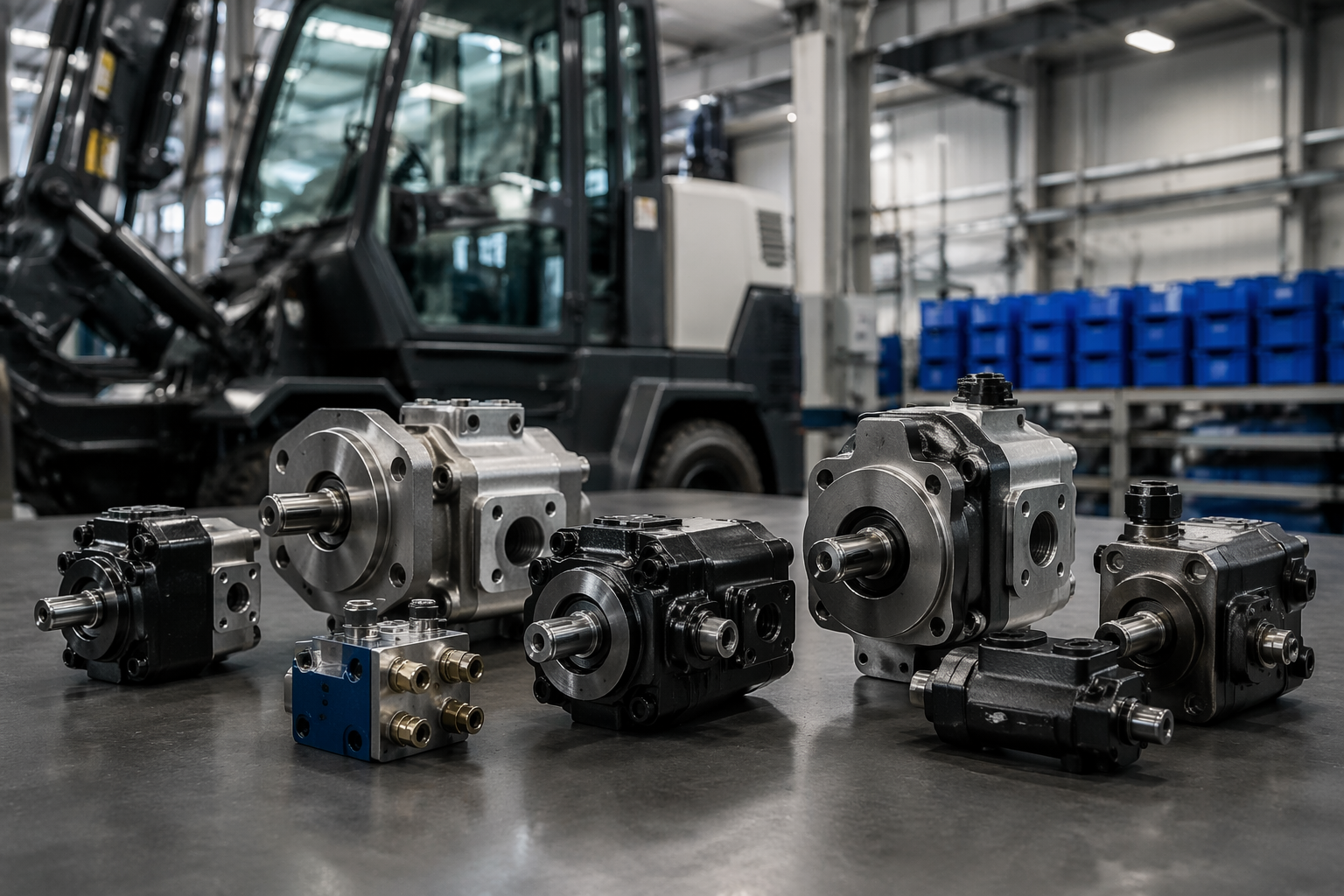
This is where POOCCA can offer practical value for customers comparing against a dynaset pump or similar branded option. POOCCA’s portfolio across hydraulic pumps, motors, valves, and cylinders supports integrated sourcing rather than piecemeal procurement. That matters because OEMs often need coordinated lead times, dimensional consistency, and application-specific modifications. Flexible MOQ is also useful for pilot builds, prototype fleets, or regional distributors testing demand before scaling volume production.
As Dr. Michael Chen, Industrial Systems Advisor, notes: “Buyers increasingly prioritize suppliers that can provide customization without sacrificing delivery discipline, because machine platforms are becoming more application-specific.” For OEMs navigating electric and hydraulic convergence, a supplier that understands both pressure requirements and machine packaging can reduce redesign cycles and installation risk.
Industry Standards and Compliance: ISO, SAE, NFPA, CE, and API Expectations
In fluid power markets, technical performance alone is not enough. Standards compliance and quality assurance strongly influence purchasing decisions, especially in export-driven manufacturing and regulated industrial sectors. Any serious evaluation of a dynaset pump alternative should include quality management, product traceability, material consistency, and conformity with relevant market requirements.
ISO 9001 remains one of the most important benchmarks because it demonstrates that a manufacturer has documented quality management processes for production, inspection, corrective action, and continual improvement. For buyers sourcing pumps, hydraulic cylinders, valves, or motors across multiple SKUs, ISO 9001-aligned operations reduce the risk of dimensional drift, assembly inconsistency, and untraceable defects. POOCCA’s positioning around quality-oriented manufacturing directly aligns with what OEM procurement teams increasingly expect from component partners.
CE marking is also critical for products entering the European market, particularly where electrical integration, machinery safety, and documentation requirements intersect. While CE marking is not a blanket statement of performance, it is an important indicator of conformity with applicable EU directives. For machine builders developing electric, high pressure systems for industrial cleaning, utility service, or mobile platforms, this can affect go-to-market speed and compliance confidence.
SAE International provides widely referenced technical guidance relevant to hydraulic system interfaces, testing practices, pressure ratings, and mobile equipment engineering. NFPA, meanwhile, remains an authoritative body in fluid power education, technical resources, and standardization support. According to NFPA, fluid power systems are preferred in many heavy-duty environments because of their high power density and controllability—advantages that remain difficult to replace fully in demanding mobile machinery.
API standards can also enter the conversation for customers operating in oil and gas, process industries, or harsh-duty environments where reliability and specification discipline are non-negotiable. Even when a product is not directly certified to every API standard, familiarity with API-oriented design expectations signals stronger engineering maturity, especially around materials, pressure containment, and operating integrity.
According to ISO, standardized quality and process controls help organizations improve consistency, customer satisfaction, and operational efficiency. That statement has direct relevance in the pump market, where even minor tolerancing or seal inconsistencies can lead to leakage, pressure instability, or early wear. For buyers comparing a dynaset pump, dynaset pump parts availability, or dynaset pump manual search results with broader sourcing options, it is wise to assess the supplier’s system quality—not only the headline specifications.
A robust supplier should be able to discuss test pressure, working pressure, burst margin, volumetric efficiency, mounting dimensions, seal compatibility, fluid recommendations, and service documentation. It should also understand application context: whether the pump will support a hydraulic water pump arrangement, an industrial cleaning package, or a hybrid electric auxiliary system. This standards-based approach is one reason OEMs and distributors look beyond brand familiarity and seek manufacturing partners such as POOCCA for custom and scalable solutions.
Implementation Guide: Choosing the Right Pump Strategy for Mobile and Stationary Equipment
Successful implementation starts with application mapping. A mobile service truck, electric excavator, mining support vehicle, crusher dust suppression skid, and workshop cleaning station may all require “high pressure,” but not the same configuration. According to Statista, industrial end users continue increasing spending on equipment modernization, and that trend includes retrofits that improve efficiency, uptime, and operator safety.
Step one is to define the job. If the objective is lifting water vertically, engineers must calculate total dynamic head. Water lifted 100 feet requires approximately 43.3 PSI just to overcome static head, before friction losses are added. If the application is cleaning or jetting rather than transfer, the pressure target can be dramatically higher. Step two is to define flow. Higher GPM improves throughput, but excessive flow can overload motors, increase water consumption, and create nozzle mismatch.
Step three is component selection. Gear pumps can be economical and robust for many hydraulic tasks. Piston pumps are often preferred where higher pressure and efficiency are required. Matching relief valves, check valves, flow control valves, and hydraulic motors helps maintain stable operation. Hydraulic cylinders may also be part of the same machine package, especially on mobile equipment where actuation and auxiliary pressure functions must coexist.
Step four is installation planning. Compact footprint, hose routing, electrical interface, mounting orientation, cooling, and filtration all affect long-term performance. According to IBISWorld, maintenance-related downtime remains one of the largest hidden cost drivers in industrial equipment ownership. In real terms, a slightly more expensive but better-integrated pump package can produce lower lifecycle cost if it reduces failures, replacement intervals, or labor-intensive servicing.
Step five is supplier collaboration. This is where POOCCA is especially relevant. Customers comparing dynaset pump price, dynaset pump reviews, or dynaset hydraulic water pump options often need more than catalog access—they need engineering dialogue. POOCCA supports custom solutions, direct factory communication, flexible MOQ, and a broader fluid power portfolio. That can be particularly helpful for machine manufacturers launching new platforms, dealers handling diverse regional requirements, or service companies needing compatible replacements quickly.
According to Markets and Markets, companies that adopt tailored industrial component strategies often improve operational efficiency by double-digit percentages depending on application and maintenance maturity. While exact gains vary, the principle is clear: the right match of pressure, flow, controls, and quality standards drives measurable results. Whether the requirement resembles a hydraulic high pressure water pump, a 12V booster concept, or a more advanced electric-integrated solution, implementation quality determines whether a machine becomes truly versatile and reliable.
Future Outlook: Partnering for the Next Generation of Electric and Hydraulic Pressure Systems
The future of the dynaset pump market—and the broader high pressure equipment segment—will be defined by convergence. Electric powertrains, compact controls, smarter monitoring, and advanced fluid power integration are reshaping how OEMs design machines. According to Grand View Research, industrial automation and electrification trends will continue supporting demand for efficient hydraulic subsystems well into the next decade. According to Statista, global investment in industrial digitalization also continues to rise, reinforcing the importance of systems that are not only powerful but easier to monitor and maintain.
For buyers, this means supplier choice matters more than ever. A product may appear competitive on paper, but long-term value depends on quality systems, customization capability, spare parts planning, and application support. Brand recognition alone is not enough in a market moving toward more specialized machine platforms and customer-specific engineering requirements.
POOCCA is well-positioned for this shift because it aligns with what the market increasingly demands: ISO 9001-oriented manufacturing discipline, custom solutions, factory-direct pricing, and flexible MOQ. For OEMs, distributors, and engineering teams seeking a practical Partner for Your Machine, now is the time to evaluate not just a single dynaset pump reference, but the broader architecture that will define machine performance in the electric, high pressure future. To discuss your project requirements, buyers can connect directly through POOCCA’s contact page.
Frequently Asked Questions
What size of pump do I need to lift water 100 feet?
To lift water 100 feet, you need a pump capable of overcoming at least 43.3 PSI of static head, because every vertical foot of water equals about 0.433 PSI. In practice, that is only the starting point. You also need to account for friction loss in hoses or pipes, fittings, elevation changes, and desired flow rate in GPM. According to SAE-aligned hydraulic calculation practices, engineers should size pumps based on total dynamic head rather than elevation alone. If your target is simple water transfer, a moderate-pressure centrifugal or booster pump may be sufficient. If the application involves high pressure cleaning at elevation, you will need significantly more pressure reserve. For example, some industrial systems operate at 1,500 to 3,000 PSI or far higher, but that pressure is used for cleaning force, not merely lifting water. The best approach is to define vertical lift, pipe diameter, distance, and desired flow, then select a pump and motor combination with a margin for real-world losses. For OEM or industrial applications, POOCCA can help align pressure, GPM, and system configuration with your machine layout and duty cycle.
Is a water pressure booster pump worth it?
In many cases, yes—a water pressure booster pump is worth it when the existing supply pressure is too low for operational needs. Low pressure can reduce cleaning performance, increase process time, and compromise nozzle consistency. According to IBISWorld, businesses are increasingly evaluating equipment purchases through total cost of ownership, not just upfront spend. That means a booster pump can pay off if it improves productivity, reduces manual labor, or enables better washdown, spraying, or process stability. However, value depends on the application. For a home or light commercial setting, a compact automatic pressure pump may solve intermittent weak flow. For industrial or mobile equipment, the question becomes more technical: what PSI and GPM are required, and how stable must the system remain under continuous use? Oversizing wastes energy and may stress seals or fittings, while undersizing causes poor performance. In hydraulic or high pressure equipment, booster selection should also consider filtration, valve settings, and duty cycle. For machine builders comparing dynaset pump options, a well-matched system from a supplier like POOCCA can be more valuable than a generic booster because integration and reliability directly affect uptime.
What type of pump is best to increase water pressure?
The best pump type depends on the use case. For homes or small buildings, an automatic booster pump with pressure control is often the most practical option. For industrial water transfer, centrifugal pumps are common because they handle continuous flow efficiently. For high pressure cleaning or jetting, positive displacement pumps—such as plunger or piston pumps—are typically preferred because they can generate much higher pressure with consistent output. According to Markets and Markets, industrial buyers are increasingly adopting application-specific pump strategies rather than one-size-fits-all solutions, reflecting the need for better performance and efficiency. In hydraulic systems, pump choice also depends on whether the machine already uses hydraulic power. In those cases, a hydraulic water pump or hydraulic motor-driven system may be the best way to increase pressure without adding a separate standalone drive package. If the equipment is being electrified, engineers may also evaluate compact electric motor-driven systems. The key is to balance PSI, GPM, duty cycle, fluid characteristics, and installation constraints. For OEMs, POOCCA’s broader offering in hydraulic pumps, motors, valves, and cylinders supports more tailored solutions than simply choosing a pump by category name.
What is the largest water pump?
The term “largest water pump” can refer to physical size, flow capacity, motor power, or pressure capability. In municipal, mining, flood control, and industrial process environments, some of the largest pumps in the world move thousands or even tens of thousands of gallons per minute. According to Statista, infrastructure modernization and water-related industrial investment remain substantial across multiple regions, which supports demand for both very large transfer pumps and specialized high pressure systems. That said, the “largest” pump is not necessarily the right pump. In many machine applications, compactness, efficiency, and integration matter more than maximum scale. A mobile machine may need a compact hydraulic water pump, while a fixed plant may require a high-flow industrial unit. In high pressure applications, a smaller positive displacement pump can be more suitable than a massive centrifugal unit because the operating objective is pressure, not bulk transfer. Buyers should focus on head, flow, fluid type, and duty cycle rather than headline size. For industrial and OEM needs, the better question is usually: what pump architecture best matches the system? That is where supplier engineering support becomes more valuable than simply buying the biggest available model.
What should buyers know about a hydraulic high pressure water pump or Dynaset pump alternative?
A hydraulic high pressure water pump uses hydraulic power from the host machine to generate pressurized water for cleaning, suppression, flushing, or transfer tasks. This configuration is especially useful on mobile machinery because it can eliminate the need for a separate engine or standalone motor. When evaluating a dynaset pump or similar alternative, buyers should compare working pressure, flow rate, hydraulic input requirements, mounting space, efficiency, maintenance needs, and spare parts support. According to NFPA, hydraulic systems remain highly valued in heavy-duty applications because of their power density and controllability. That makes hydraulic water pump solutions especially relevant for construction, mining, municipal, and service vehicles. Buyers should also verify hose compatibility, filtration requirements, relief protection, and materials used in wetted components. If the system must integrate with electric or hybrid equipment, control logic and packaging become even more important. POOCCA can support these decisions by supplying not only the pump side of the equation, but also related hydraulic motors, valves, and cylinders needed for complete machine integration. That broader system view is often what separates a successful installation from a short-lived retrofit.
How do I evaluate dynaset pump price, manuals, parts, and reviews before buying?
When researching dynaset pump price, manuals, parts, and reviews, buyers should avoid relying on catalog impressions alone. A lower initial purchase price may not translate into lower lifecycle cost if parts are difficult to source, documentation is limited, or the pump does not match the application’s PSI and GPM requirements. According to Grand View Research, industrial customers increasingly prioritize reliability and efficiency as operating costs rise across equipment fleets. That means a serious evaluation should include working pressure, flow performance, duty cycle rating, materials, maintenance intervals, and support availability. Manuals are important because they reveal installation procedures, allowable operating conditions, and service requirements. Parts availability matters because downtime can quickly outweigh component savings. Reviews can help, but they should be filtered by application similarity; a positive review from a light-duty user may not mean much for mining, construction, or heavy washdown use. For many OEMs and distributors, working directly with a manufacturer like POOCCA provides an advantage because the conversation can include custom requirements, flexible MOQ, factory-direct pricing, and system-level compatibility—not just off-the-shelf comparison shopping. In B2B purchasing, application fit and supplier responsiveness usually matter as much as the published price.