 English
 Russian
 Arabic
 Indonesian
 Turkish
 Vietnamese
 Polish
 German
 Malay
Malay Thai
Thai Kazakh
 Spanish
 Chinese (Simplified)
 Korean
 Italian
 Azerbaijani
 Dutch
Dutch French
 Romanian
 Portuguese
 Hindi
HindiAccording to Grand View Research, the global hydraulic equipment market was valued at USD 45.6 billion in 2023, underscoring how critical hydraulic pumps, motors, valves, and cylinders remain across agriculture, construction, manufacturing, and mobile equipment. For buyers searching terms like hydraulic pump tractor supply, the challenge is not simply finding a pump for sale—it is identifying the right pressure, flow, mounting style, fluid compatibility, duty cycle, and compliance profile for the application. This guide explains the engineering essentials, compares major hydraulic pump types, clarifies sizing fundamentals in PSI and GPM, and outlines what industrial buyers should consider when evaluating options. It also highlights how manufacturers like POOCCA support OEMs, distributors, and repair buyers with ISO 9001-aligned production, custom solutions, factory-direct pricing, and flexible MOQ options.
Hydraulic Pump Market Context: Why Demand Keeps Growing Across Agriculture and Industry
Searches for hydraulic pump tractor supply typically come from practical needs: replacing a failed pump on farm equipment, adding power to a dump trailer, upgrading a log splitter, or sourcing a compact power unit. While retail-style searches are common, the broader market context shows why hydraulic pumps remain central to modern equipment design.
According to MarketsandMarkets, the global hydraulic pumps market is projected to grow from approximately USD 10.6 billion in 2024 to USD 12.8 billion by 2029, at a CAGR of 3.8%. That steady expansion reflects continuing investment in off-highway machinery, industrial automation, material handling, and fluid power systems. According to Statista, the global construction equipment market is expected to exceed USD 150 billion in annual revenue in the coming years, a major indicator of sustained downstream demand for hydraulic pumps, valves, motors, and cylinders.
Hydraulic systems remain attractive because they deliver high force density in compact packages. A correctly selected pump can convert mechanical input into consistent hydraulic flow, allowing cylinders to lift, clamp, tilt, split, steer, or compress with precise control. In agricultural settings, pumps power loaders, PTO-driven implements, balers, planters, and hydraulic steering systems. In industrial settings, they support machine tools, presses, injection systems, marine equipment, and automated production lines.
According to NFPA, fluid power technologies are used in hundreds of industrial and mobile applications where controlled force and motion are essential. That matters for procurement teams because a pump is never a standalone item. It must be matched to the full hydraulic circuit, including reservoir volume, pressure relief settings, filtration, seals, valve architecture, motor or engine input, and the cylinder or hydraulic motor load profile.
This is where sourcing strategy becomes important. Buyers comparing a local retail source, online catalog, or OEM replacement provider should evaluate not only availability but also technical support, customization capability, and documentation quality. For instance, POOCCA offers a practical advantage for B2B purchasers seeking hydraulic pumps with custom configuration support, factory-direct pricing, and flexible MOQ for both replacement and production needs. That is especially relevant when standard catalog products do not perfectly fit shaft type, displacement, flange pattern, rotation direction, or pressure requirements.
According to IBISWorld, machinery maintenance and industrial repair activity continues to support parts replacement demand even during slower capital expenditure cycles. In simple terms, even when buyers delay new machine purchases, they still need dependable hydraulic pumps to keep existing equipment operating. That makes content around hydraulic pump tractor supply, hydraulic pumps for sale, used hydraulic pumps, and electric hydraulic pump options highly relevant for search users who are balancing uptime, budget, and performance.
Technical Deep Dive: How Hydraulic Pumps Work, Main Types, and How to Size Them Correctly
At the most basic level, a hydraulic pump converts mechanical energy into hydraulic energy by creating flow. It does not directly create pressure; pressure occurs when the system flow meets resistance. This distinction is essential when comparing hydraulic pumps list pages or evaluating whether a gear pump, vane pump, or piston pump is right for the job.
As Erik Ruppel, former fluid power industry educator and technical trainer, states: “Flow determines actuator speed, while pressure reflects the load the system must overcome.” That single principle explains why GPM and PSI must both be considered during pump selection. If a hydraulic cylinder must extend quickly, you need sufficient flow in gallons per minute. If it must lift or clamp a heavy load, the system must also support the required pressure, often expressed in PSI.
The most common types of hydraulic pumps are:
1. Gear pumps
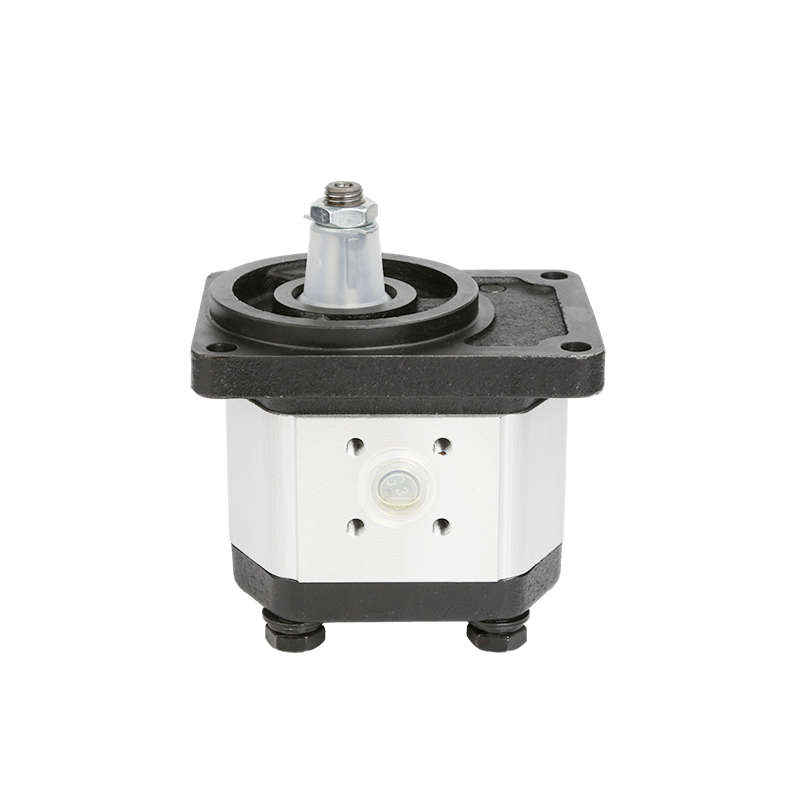
Gear pumps are widely used because they are compact, cost-effective, and reliable for many mobile and industrial applications. They are common in agricultural implements, dump trailers, small hydraulic power units, and general machinery. Buyers searching for “Gear,” “hydraulic,” and “pumps” often start here because gear pumps offer a good balance of affordability and performance.
2. Vane pumps
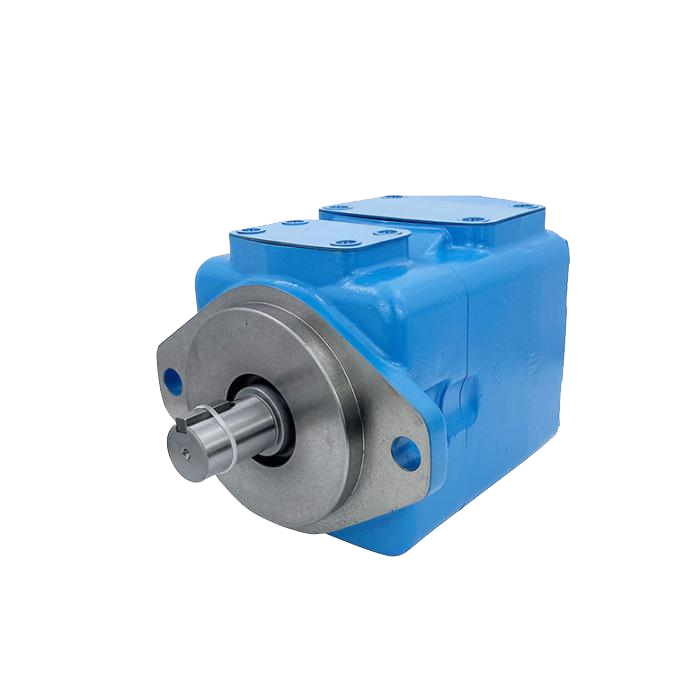
Vane pumps are valued for smoother flow and quieter operation in certain medium-pressure applications. They can be a strong fit for machine tools, packaging equipment, and some mobile hydraulic systems where noise and flow uniformity matter.
3. Piston pumps
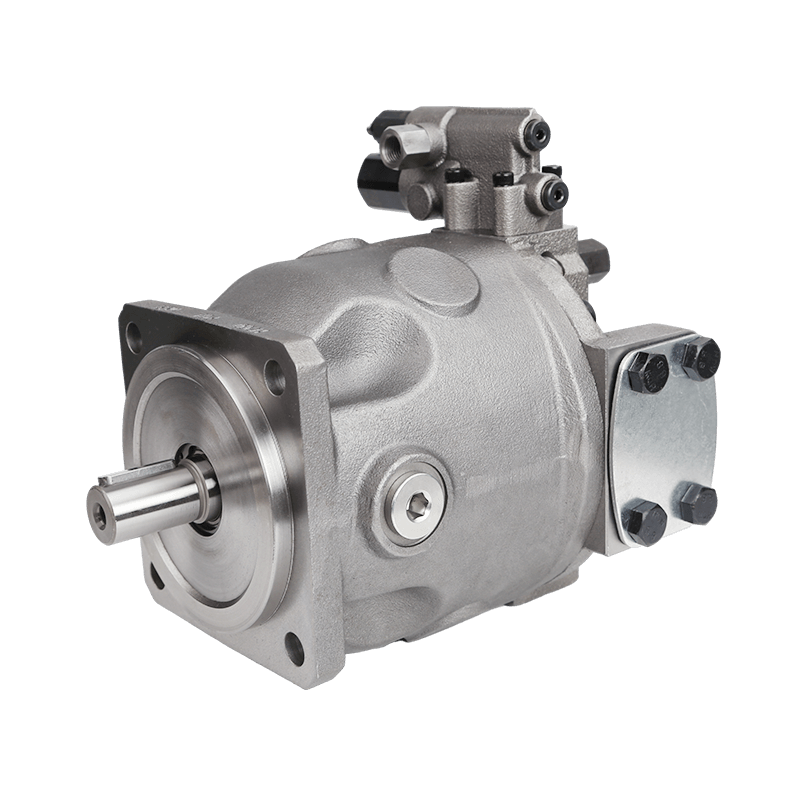
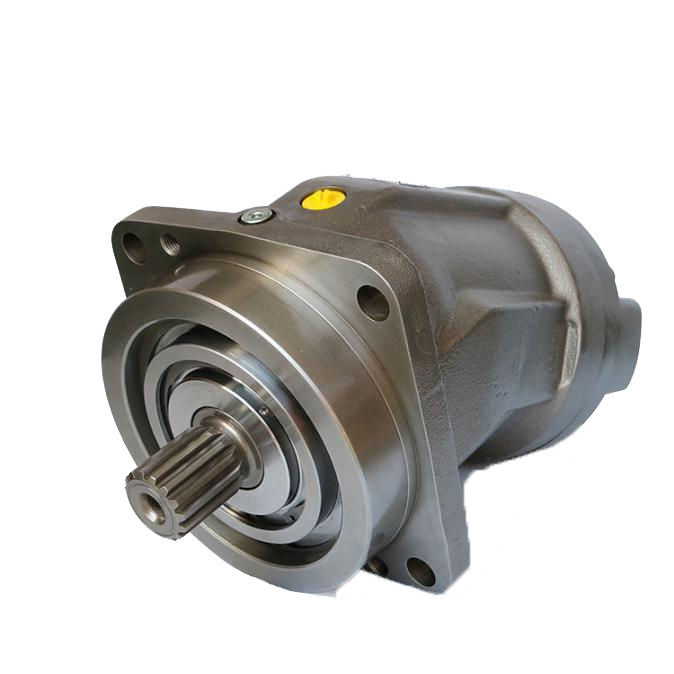
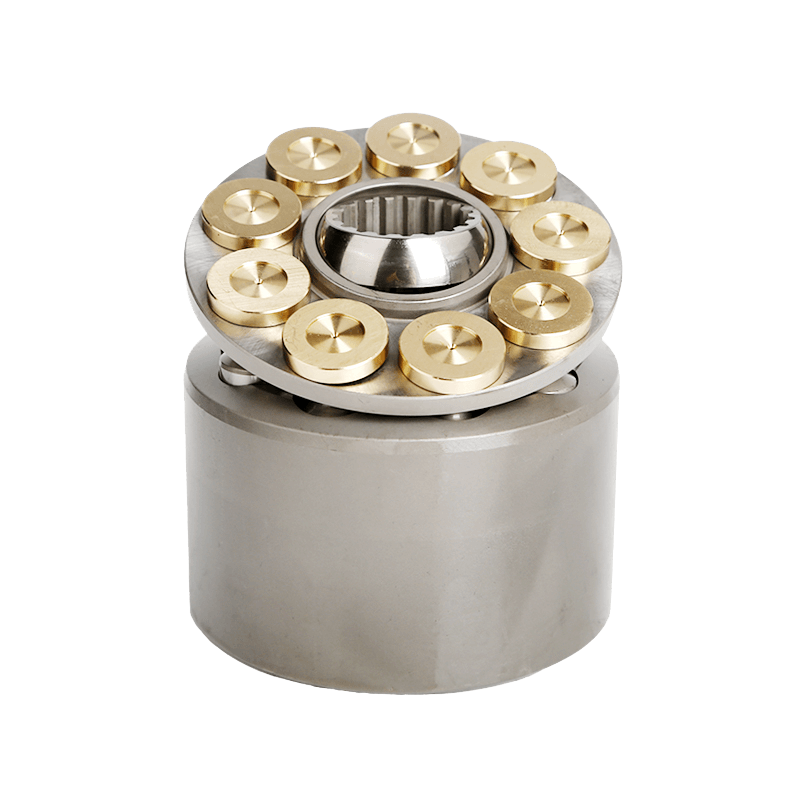
Piston pumps are often used in high-pressure, high-efficiency systems. They are common in construction equipment, industrial process machinery, and advanced mobile systems. While they typically cost more than gear pumps, they deliver strong performance in demanding duty cycles.
According to SAE International technical guidance used throughout mobile equipment design, pump selection should align with the machine’s operating cycle, pressure peaks, thermal profile, and expected efficiency losses. According to ISO-aligned engineering practice, proper fluid cleanliness and filtration are also critical, since contamination remains one of the leading causes of hydraulic component wear.
According to MarketsandMarkets, mobile hydraulics continues to represent a significant share of overall fluid power demand, reinforcing why gear and piston pump performance remains central to equipment engineering. According to Statista, agriculture and construction together account for a substantial share of machinery sectors dependent on fluid power-driven components, including hydraulic cylinders, pumps, valves, and motors.
So how do you determine what size hydraulic pump you need? Start with four variables:
Flow requirement (GPM): determines speed of cylinder extension or hydraulic motor RPM.
Pressure requirement (PSI): determines force available to move the load.
Displacement: cubic inches or cc per revolution of pump output.
Prime mover speed: motor or engine RPM driving the pump.
For example, if an application requires a hydraulic cylinder to move faster, increasing GPM may solve the issue. If the system stalls under load, the limiting factor may be pressure capacity, relief valve setting, or cylinder sizing rather than pump displacement alone. A 12 volt hydraulic pump used on a small trailer or lift can be effective, but duty cycle, amperage draw, reservoir size, and line losses must be considered carefully.
As Brendan Casey, hydraulic systems consultant at HydraulicSupermarket, states: “Most hydraulic problems are caused by poor system design or poor maintenance, not the pump itself.” That insight is highly relevant for buyers evaluating a replacement pump after repeated failures. Installing a new pump without correcting contamination, misalignment, overheating, suction restriction, or relief valve issues often leads to another breakdown.
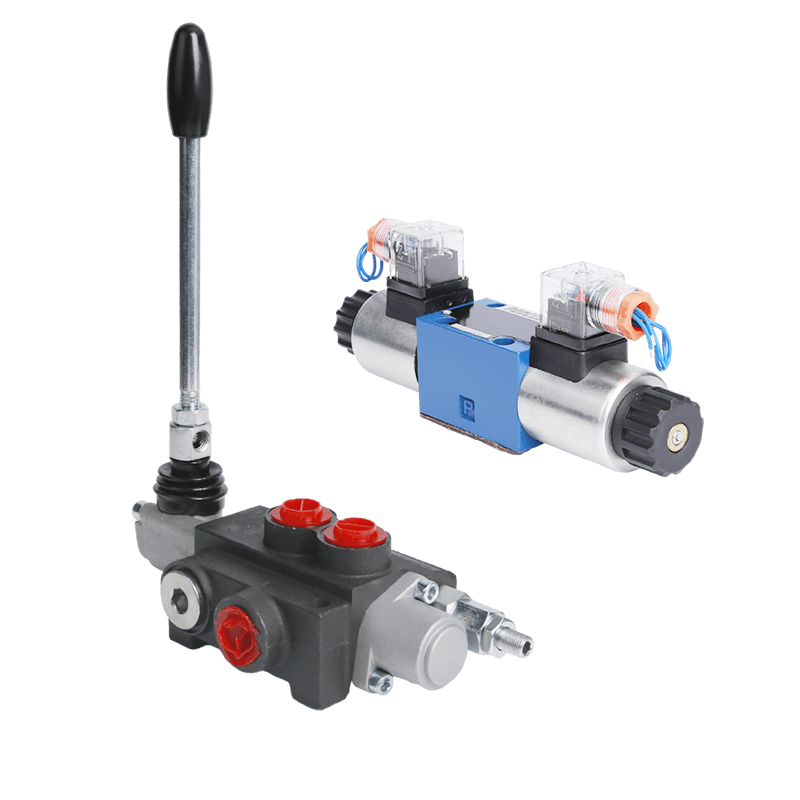
For OEMs and distributors needing more than an off-the-shelf match, POOCCA can support custom hydraulic pump solutions tailored to pressure range, rotation, mounting, ports, and application-specific engineering requirements. This is valuable when buyers need to align pump output with valves, motors, and cylinders in a tightly designed hydraulic circuit.
Industry Standards and Compliance: ISO 9001, CE Marking, SAE, NFPA, and API Considerations
When purchasing hydraulic pumps for industrial use, compliance and quality systems matter just as much as raw specifications. A pump may appear dimensionally compatible, but if its manufacturing quality, documentation, or test standards are inconsistent, long-term performance risk rises significantly.
ISO 9001 is one of the most important baseline indicators of quality management. ISO 9001 does not certify a pump’s engineering performance by itself, but it signals that the manufacturer follows documented procedures for production, inspection, corrective action, traceability, and continuous improvement. For B2B buyers, that translates into more predictable product consistency and better process control. This is one reason many global buyers prioritize suppliers operating within ISO 9001 quality systems.
CE marking can also be relevant, particularly when hydraulic systems or integrated power units are sold into applicable European markets. CE marking indicates conformity with applicable EU directives and standards where required. Buyers should verify whether the component alone, the assembled hydraulic power unit, or the end equipment requires CE documentation.
SAE International standards are widely used in mobile hydraulics, especially for port threads, hose interfaces, testing conventions, and equipment design practices. Matching SAE-related connection and mounting requirements can reduce installation issues and leak risks. Likewise, NFPA standards and technical frameworks support consistency in fluid power components, dimensional considerations, and system safety practices across industrial applications.
API standards may enter the picture in oil and gas, process industries, and certain heavy-duty environments where reliability, pressure integrity, and material compatibility are critical. While not every agricultural or general industrial hydraulic pump will require API-specific compliance, buyers in energy-related sectors should review whether their project specifications call for API-relevant documentation or testing criteria.
According to ISO, quality management systems help organizations improve consistency, customer satisfaction, and process performance. According to NFPA, system-level design best practices—including proper filtration, pressure control, and maintenance planning—play a major role in reducing fluid power failures. Those standards-oriented perspectives matter because hydraulic pumps do not operate in isolation. Their real-world life is shaped by suction conditions, oil viscosity, seal material compatibility, reservoir design, and how well valves and actuators are matched to the pump’s output.
For buyers comparing retail listings, used hydraulic pumps, and factory-direct sourcing, standards provide a more objective way to evaluate value. Lower upfront price may not represent lower total cost if the unit lacks traceable testing, stable dimensional accuracy, or proper material controls. By contrast, a supplier like POOCCA that emphasizes ISO 9001-aligned manufacturing, custom solutions, and direct factory communication can better support engineering validation, especially for repeat procurement or export-oriented projects.
Implementation Guide: How to Choose the Right Hydraulic Pump for Agriculture, Automotive, and Industrial Applications
Whether the search begins with “hydraulic pump tractor supply near me,” “small hydraulic pump tractor supply,” or “electric hydraulic pump,” the buying process should follow a structured implementation checklist rather than a simple price comparison.
Step 1: Define the application.
Is the pump for a log splitter, dump trailer, agricultural implement, vehicle lift, compact power pack, or industrial hydraulic power unit? A pump for cars or light-duty electric lift systems may differ significantly from a PTO hydraulic pump and reservoir setup used on tractors.
Step 2: Confirm flow and pressure targets.
Document required GPM and maximum PSI. If the application powers hydraulic motors, calculate target RPM and torque. If it powers hydraulic cylinders, define bore size, stroke, cycle time, and load weight. This helps answer the People Also Ask question: How do I determine what size hydraulic pump I need?
Step 3: Identify prime mover and mounting details.
Check electric motor voltage, gasoline engine RPM, PTO drive conditions, shaft dimensions, flange style, rotation direction, and port orientation. Many pump mismatches happen because buyers focus on displacement alone and overlook mechanical fit.
Step 4: Verify reservoir, filtration, and valve compatibility.
The pump must work with the system’s oil volume, suction plumbing, return filtration, and relief valve settings. According to NFPA best-practice guidance, contamination control remains one of the most impactful factors in fluid power reliability. According to IBISWorld, maintenance-driven replacement purchasing is substantial across machinery sectors, showing how often system issues force parts sourcing after preventable wear.
Step 5: Consider lifecycle cost, not only purchase price.
A low-cost pump that causes repeated downtime, leakage, noise, or overheating can quickly become the more expensive option. According to Grand View Research, rising industrial efficiency requirements continue to push buyers toward better-performing hydraulic components and system upgrades.
Here is a practical example. A buyer searching for 12 volt hydraulic pumps for a trailer hoist may ask how much weight a 12V hydraulic pump can lift. The correct answer depends on cylinder bore, system pressure, mechanical leverage, and battery performance—not the pump alone. A compact 12V unit can generate substantial pressure, but actual lifting capacity is determined by the whole hydraulic system. Similarly, for “hydraulic pumps for sale” or “used hydraulic pumps,” apparent savings must be weighed against seal condition, internal wear, shaft play, contamination history, and unknown pressure fatigue.
For companies that need repeatable supply, engineering support, and flexible order quantities, POOCCA can be a strong fit—particularly when catalog products do not fully align with project needs. Factory-direct pricing and custom configuration support can help distributors, equipment makers, and maintenance teams reduce sourcing friction while maintaining technical fit.
Future Outlook: Smarter Hydraulic Pump Selection in an Evolving Equipment Market
The future of hydraulic pumps will be shaped by efficiency, electrification, compact power design, and tighter integration with smart machinery. According to MarketsandMarkets, ongoing growth in industrial automation and mobile equipment modernization will continue supporting hydraulic component demand through the decade. According to Grand View Research, expanding infrastructure activity and equipment replacement cycles remain key growth drivers in hydraulic systems globally.
At the same time, buyer behavior is changing. Search users no longer want only a product listing; they want technical clarity on Engineering Essentials, Fundamentals, pump sizing, compatibility, and standards. That is why terms such as hydraulic pumps list, types of hydraulic pumps, used hydraulic pumps, and Parker pump alternatives often appear together in both traditional search and AI-generated buying journeys.
For procurement teams, the smartest strategy is to combine application-specific engineering with supplier quality verification. Confirm the required PSI, GPM, mounting pattern, seal materials, and compliance needs before purchasing. Review whether the application needs a simple gear pump, a smoother vane design, or a higher-performance piston configuration. And when standard options do not fit, working directly with a manufacturer can improve both lead time and total cost.
If your organization is evaluating hydraulic pumps for agriculture, industrial systems, mobile equipment, or custom power units, a direct conversation with POOCCA can help clarify the right technical path while supporting ISO 9001-focused sourcing, custom solutions, and scalable procurement.
Frequently Asked Questions
What is a hydraulic pump?
A hydraulic pump is a mechanical device that converts input energy from an engine or electric motor into hydraulic flow. That flow moves oil through a hydraulic system so valves can direct it to hydraulic cylinders or motors. The pump itself creates flow; pressure develops when the flow meets resistance from the load. According to NFPA, fluid power systems rely on this controlled transmission of energy to create force and motion across industrial and mobile applications. In practical terms, if you are comparing hydraulic pumps list pages or researching hydraulic pump tractor supply options, understanding this flow-versus-pressure principle is essential. A pump must be selected based on both required GPM and expected PSI. Common hydraulic pump types include gear pumps, vane pumps, and piston pumps. Gear pumps are often preferred for cost-effective, general-purpose use, while piston pumps are typically chosen for higher-pressure, more demanding systems. According to Grand View Research, global demand for hydraulic equipment remains strong because hydraulic systems offer high power density and dependable force control. That is why hydraulic pumps are widely used in tractors, trailers, construction machinery, presses, and factory automation systems.
Does Tractor Supply sell hydraulic pumps?
Yes, Tractor Supply is generally known as a retailer that carries farm, trailer, and equipment-related components, and search behavior around “hydraulic pump tractor supply” suggests strong user demand for accessible replacement and utility-focused pump solutions. However, availability can vary by location, product category, season, and online inventory. Buyers should verify whether they need a complete hydraulic power unit, a standalone gear pump, a PTO hydraulic pump and reservoir setup, or a 12 volt hydraulic pump. According to Statista, e-commerce and omnichannel buying continue influencing industrial and agricultural purchasing behavior, meaning many users now research specifications online before buying locally. That makes technical fit more important than simply finding a nearby listing. If the application requires nonstandard mounting, customized displacement, OEM replacement dimensions, or production-scale sourcing, a retail channel may not always be the best match. In those cases, factory-direct providers with engineering support can offer more precise options. For B2B buyers, that often means comparing local convenience against long-term reliability, documentation quality, and configuration flexibility.
Where are hydraulic pumps used?
Hydraulic pumps are used anywhere controlled force, lifting, pressing, steering, clamping, or rotational power is required. Common applications include tractors, harvesters, skid steers, dump trailers, log splitters, forklifts, excavators, presses, injection machinery, marine systems, and industrial hydraulic power units. According to MarketsandMarkets, demand for hydraulic pumps continues to be supported by agriculture, construction, and industrial machinery sectors globally. In a tractor environment, a hydraulic pump may operate steering, loader arms, remote implements, or PTO-driven attachments. In industry, pumps feed valves and actuators that automate motion or apply significant force in compact spaces. In automotive-related applications, hydraulic pumps can also appear in lifts, recovery equipment, and specialized service machinery. According to NFPA, fluid power technologies are fundamental where high force density and controllable motion are needed. The reason hydraulic pumps remain so popular is their ability to transfer substantial power through fluid in a predictable, serviceable system. That combination of power and control is difficult to replace in many heavy-duty environments.
How do I know what hydraulic pump I need?
Start by identifying the application, then calculate the required flow, pressure, displacement, and mechanical fit. Flow is measured in GPM and influences actuator speed. Pressure is measured in PSI and determines force. You also need to confirm shaft type, rotation direction, flange pattern, port size, mounting space, fluid compatibility, and duty cycle. If the pump will power a hydraulic cylinder, calculate the cylinder bore, stroke, and desired cycle time. If it will power a hydraulic motor, determine torque and RPM requirements. According to SAE International design principles used in mobile hydraulics, component matching is essential for safe and efficient system performance. According to ISO quality and process guidance, consistency and proper documentation matter throughout procurement and maintenance as well. Many buyers make mistakes by replacing a failed pump with “the same size” without checking whether the original failure came from contamination, overheating, suction restriction, or relief valve settings. A proper hydraulic pump selection process looks at the full circuit—pump, valves, motors, cylinders, reservoir, and filtration—not only the pump label. That approach reduces repeat failure risk and improves total lifecycle value.
What are the two types of hydraulic pumps most buyers compare first?
Although there are several pump categories, many buyers first compare gear pumps and piston pumps because they represent two common ends of the value-performance spectrum. Gear pumps are simpler, economical, and widely used in general mobile and industrial applications. Piston pumps are often selected for higher-pressure systems, greater efficiency, and more demanding duty cycles. Vane pumps are another important category and are often considered where smoother flow or lower noise is desirable. According to Grand View Research, hydraulic systems remain essential across heavy equipment and industrial machinery, which keeps all three pump types relevant in the market. If a buyer searching hydraulic pump tractor supply needs a rugged, practical replacement for an agricultural or utility application, a gear pump may be the most common answer. If the system operates at higher pressures with more advanced control demands, a piston pump may be more suitable. The best choice depends on the machine, the PSI requirement, the desired GPM, and the operating environment. Buyers should also consider maintainability, contamination sensitivity, and total cost of ownership—not just upfront purchase price.
How much weight can a 12V hydraulic pump lift?
A 12V hydraulic pump does not have a single universal lifting capacity because the actual weight lifted depends on system pressure, cylinder bore, linkage geometry, and mechanical leverage. In other words, the pump provides flow and can generate pressure, but the cylinder and machine design determine the final lifting force. For example, a system operating at 2,500 to 3,000 PSI with a properly sized cylinder may lift a substantial load in trailer or compact hoist applications. However, battery condition, cable sizing, duty cycle, oil temperature, and valve settings can all affect real-world performance. According to NFPA, system-level design is critical in fluid power because individual component ratings do not automatically translate into end-use output. This is why buyers searching for 12 volt hydraulic pumps should review the full hydraulic circuit rather than relying on a product label alone. If lifting capacity is the top concern, calculate cylinder force using pressure and piston area, then account for equipment geometry. That method is far more reliable than trying to estimate capacity based only on the pump category or motor voltage.