
 English
 Russian
 Arabic
 Indonesian
 Turkish
 Vietnamese
 Polish
 German
 Malay
Malay Thai
Thai Kazakh
 Spanish
 Chinese (Simplified)
 Korean
 Italian
 Azerbaijani
 Dutch
Dutch French
 Romanian
 Portuguese
 Hindi
HindiVane pumps are utilized in a variety of hydraulic applications found in many industries around the world. Positive displacement pumps, vane pumps offer up reliable performance in a simple configuration that transforms mechanical energy into hydraulic energy. A number of manufacturers and suppliers utilize vane pumps in applications that require consistent flow and pressure.
What Are Vane Pumps and How Do They Work?
A vane pump is a rotor with slots for sliding vanes. The rotor is eccentrically mounted inside a cam ring or a cylinder. The centrifugal force, the hydraulic pressure and in some cases even a spring push the vanes against the wall of the cam ring. As the rotor is turning the chambers between the vanes are changing in size, some getting bigger and others getting smaller. In this way fluid is sucked in and pressurized.
Key Operating Principles
Suction Phase: On the inlet side, vane chambers increase in volume, generating suction that pulls fluid into the pump.
Discharge Phase: As the rotor continues, chambers decrease in volume on the outlet side, forcing fluid out under pressure.
Sealing: Vanes form tight seals against the housing, minimizing leakage and ensuring efficient displacement.
This design has self-priming capabilities and is intended for use with low-to-medium viscosity liquids that may contain some gas. Vane pumps have high volumetric efficiency often greater than 90% when operating under the correct conditions.
Types of Vane Pumps
Vane pumps are available in several designs to fulfill special performance characteristics.
Fixed Displacement Vane Pumps
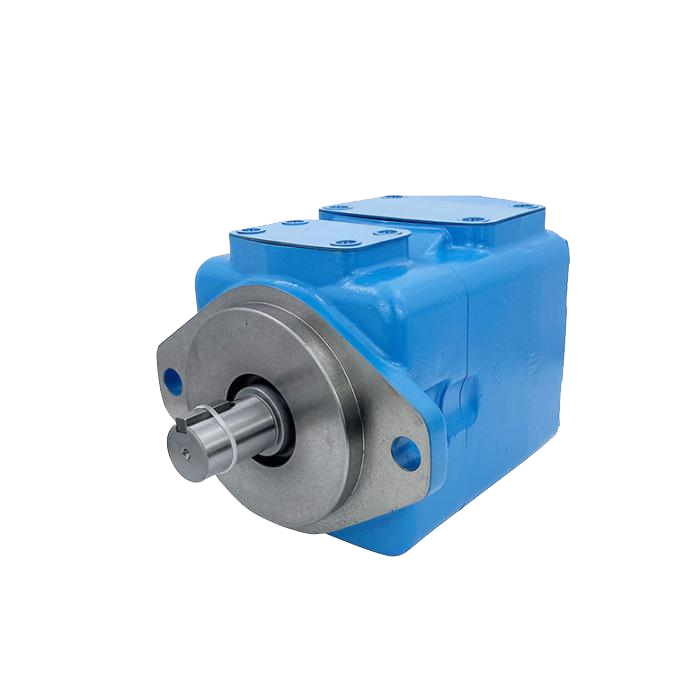
There are single acting varieties that have one suction and one discharge place per cycle. Double-acting varieties have two suction places and two discharge places per cycle giving more smooth running and higher pressure for a given size. Some common single vane pumps are Vickers V & VQ varieties and Yuken PV2R single vane pumps.
Variable Displacement Vane Pumps
Variable speed gears allow to adjust the output flow by changing the eccentricity between rotor and housing or by using a variable cam ring which is movable. They are especially suitable for energy-orientated applications where demand varies in the course of time. These gears are used in many industrial applications, for example in machines, which need to be driven with high precision. Parker Denison offers variable features in its T6 and T7 series.
Balanced vs. Unbalanced Designs
Unbalanced vane pumps are subject to side loads created by pressure differences. Balanced vane pumps, such as a double-vane design, create a balanced force that doesn’t wear bearings. They also allow for higher operating pressures.
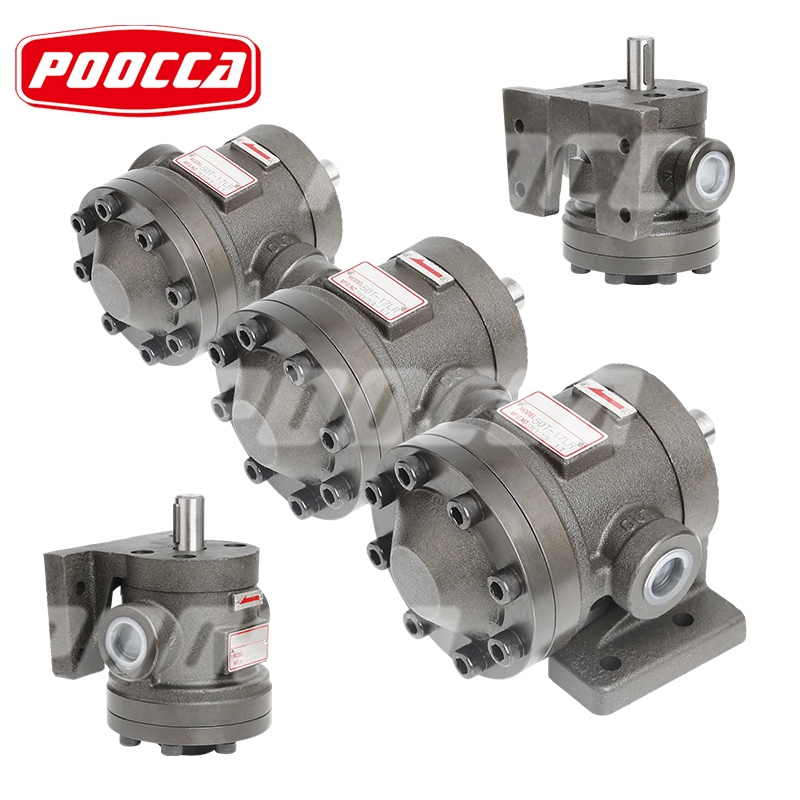
POOCCA offers a wide range of vane pumps in single, double and triple configuration. This range is compatible with Parker, Yuken, Vickers and Atos applications.
Advantages of Vane Pumps in Hydraulic Systems
Vane pumps have many advantages, so it’s no wonder that Vane pumps are popular with many equipment manufacturers.
Smooth, Low-Pulsation Flow
The multiple vane chambers produce continuous output with minimal ripple.
Self-Compensation for Wear
Vanes extend as they wear, maintaining efficiency and performance over time.
Quiet Operation
Typically lower noise levels compared to gear or piston pumps.
Good Suction Characteristics
Strong self-priming and ability to handle moderate contamination.
Compact Design
High power density in a small footprint.
Versatility
Suitable for lubrication, transfer, and power transmission duties.
Reliability Attributes for different industries including construction, agriculture, industrial presses and marine applications.
 Common Applications of Vane Pumps
Vane Pumps are found in many industries because they are reliable.
Construction and Mobile Equipment
Powering hydraulic cylinders and motors in excavators and loaders.
Industrial Machinery
Providing consistent pressure for machine tools, injection molding, and presses.
Agricultural Machinery
Driving implements in tractors and harvesters.
Material Handling
Operating conveyors, lifts, and forklifts.
Marine and Offshore
Steering gears and winches where smooth operation matters.
By integrating our Pneumatic components with hydraulic motors, hydraulic valves and hydraulic cylinders, complete systems are developed. POOCCA also supplies a matching range of hydraulic components.
Factors Affecting Vane Pump Performance and Efficiency
Several variables influence overall efficiency:
Fluid Viscosity
Optimal ranges ensure proper sealing without excessive drag.
Operating Speed and Pressure
Matching specifications prevents cavitation or overheating.
Temperature Control
Excessive heat degrades fluid and accelerates wear.
System Design
Proper filtration, reservoir sizing, and piping minimize restrictions.
Maximizing efficiency involves identifying the best-suited pump and maintaining system balance. Energy consumption can be significantly reduced by using variable displacement models that output at required levels.
Understanding and Handling Wear in Vane Pumps
Wear is the major problem in vane pumps and affects the vanes, rotor and the housing.
Common Causes of Wear
Abrasive Contamination: Particles in the fluid score surfaces.
Dry Running or Cavitation: Lack of fluid causes metal-to-metal contact.
High Temperatures: Reduce lubrication effectiveness and cause thermal expansion issues.
Improper Fluid Selection: Incompatible viscosity or chemistry accelerates degradation.
Overloading: Exceeding pressure or speed ratings.
The Vanes are the most worn item within the Vortexer as they constantly slide against the inside of the housing. However the self adjusting feature of the Vanes continues to function until they are required to be replaced.
Signs of Wear
Decreased flow or pressure output.
Increased noise or vibration.
Higher operating temperatures.
Visible leakage or fluid discoloration.
Using pressure gauges, flow meters and oil analysis on a regular basis helps to detect any problems early on.
Strategies for Maximizing Efficiency and Extending Service Life
Effective practices significantly improve longevity and performance:
Proper Installation and Alignment
Mount accurately to avoid overstress from misalignment. Use recommended mounting hardware and check the couplings.
Fluid Management
Select high-quality hydraulic fluids meeting manufacturer specifications.
Implement robust filtration systems, typically 10-25 micron.
Maintain proper reservoir levels and temperatures, usually 40-60°C operating range.
Schedule regular fluid changes based on hours of operation and contamination levels.
Operational Best Practices
Avoid prolonged operation outside recommended speed and pressure ranges.
Use variable displacement pumps where possible for energy savings.
Incorporate cooling systems in high-duty applications.
Monitor system pressure and temperature continuously.
Maintenance Procedures
Inspect and replace vanes, rotors, and seals at recommended intervals.
Check for scoring on the housing and rotor.
Clean strainers and replace filters proactively.
Perform pressure and flow tests during service.
By following these practices, it is possible to greatly reduce the amount of time your equipment is out of use, save money on repairs and maintain high levels of efficiency.
Advanced Considerations for Vane Pump Systems
Integration with Other Hydraulic Components
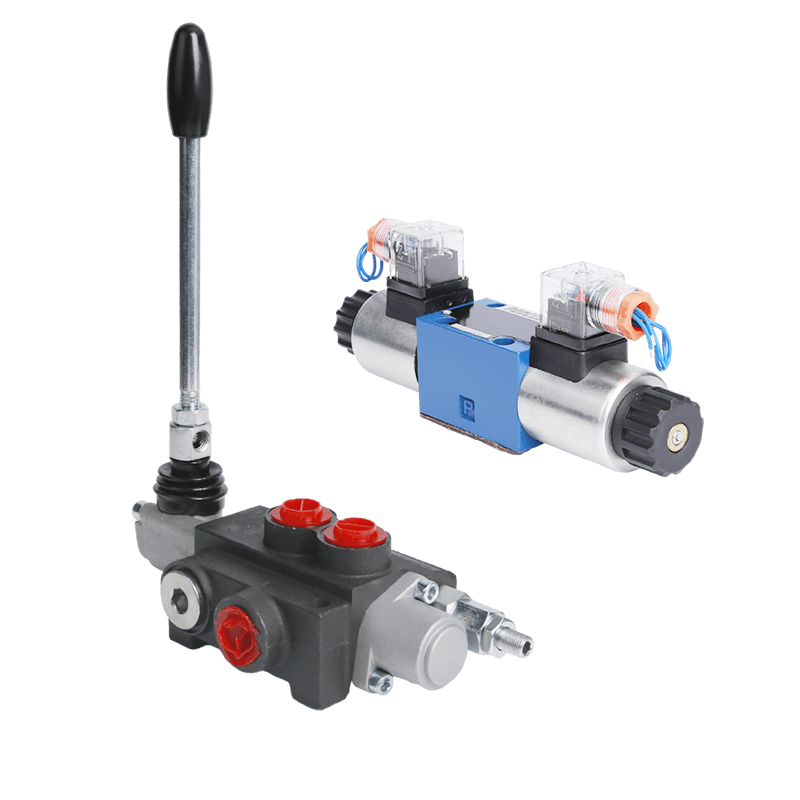
Vane pumps are typically used in complete systems with directional control valves, pressure relief valves, flow control valves and hydraulic motors. POOCCA provides the corresponding hydraulic valves and motors to be incorporated in a perfectly coordinated manner.
Material Selection and Modern Designs
Vane pumps offered today are made from the best available materials, such as hardened alloys and wear resistant coatings. Many have also been designed as a so called cartridge, which can be easily replaced.
Troubleshooting Common Issues
Low Pressure: Check for worn vanes, relief valve issues, or air ingress.
Noise: Indicates cavitation, misalignment, or bearing problems.
Overheating: Often due to restricted flow, high viscosity, or insufficient cooling.
Using a systematic approach in conjunction with the manufacturer’s instructions allows to solve most of problems quickly.
FAQ
What is the typical pressure range for hydraulic vane pumps?
The typical pressure for most hydraulic vane pumps is up to 200-250 bar, however there are also heavy-duty versions that can even achieve higher pressures, depending on the design.
How long does a vane pump last?
The lifespan of a vane pump in service can vary depending on the area of application and maintenance performed. Due to the wear-compensating feature of vane pumps, however, they can last for thousands of operating hours if properly maintained.
Can vane pumps handle dirty fluids?
While vane pumps can handle some dirty fluids, they perform best with clean fluids. In either case effective filtration is necessary to prevent vane pump wear.
What are the main differences between vane, gear and piston pumps?
Vane pumps are very smooth and efficient at moderate pressures. Gear pumps are simple and inexpensive for low pressures. Piston pumps are used for very high pressures and for maximum efficiency.
How often should Vane Pumps be Serviced?
As stated previously the manufacturer’s recommendation should be followed. For Filter changes this is usually every 500-1000 hours, however for a full inspection this could be dependant on previous working conditions.
Partner with a Trusted Hydraulic Manufacturer and Supplier
POOCCA’s more than 20 years of manufacturing experience, over 1,600 types of hydraulic components including hydraulic vane pumps and complete hydraulic systems, hydraulic gear pumps, hydraulic piston pumps and motors as well as hydraulic valves, and more than 20 branches across China and hundreds of agents and distributors in more than 100 countries and regions, provides customers with competitive factory price, fast delivery time, customized solution, 12 months guarantee or warranty, etc.
Hydraulic vane pump, complete hydraulic system solutions. At POOCCA, we have many years of experience in designing hydraulic systems. Contact POOCCA for expert assistance in choosing the right product for your application, technical expertise and the best hydraulic components for optimum performance and reliability. For more information on our wide range of high quality hydraulic vane pumps and hydraulic systems, please visit our product pages or contact us directly for any other information on how we can meet your hydraulic requirements.