 English
 Russian
 Arabic
 Indonesian
 Turkish
 Vietnamese
 Polish
 German
 Malay
Malay Thai
Thai Kazakh
 Spanish
 Chinese (Simplified)
 Korean
 Italian
 Azerbaijani
 Dutch
Dutch French
 Romanian
 Portuguese
 Hindi
HindiAccording to Grand View Research, the global hydraulic equipment market was valued in the multi-billion-dollar range and is projected to expand at a steady CAGR through the next decade, reflecting sustained demand for compact, efficient fluid power systems across construction, agriculture, manufacturing, and mobile equipment. That trend matters for buyers evaluating the double gear pump: a component that can simplify hydraulic circuit design, reduce installation footprint, and support dual-flow requirements in one integrated assembly. For OEMs and industrial buyers seeking professional, quality, and best-value hydraulic performance, the latest conversation is no longer just about pump availability—it is about system efficiency, standards compliance, lifecycle cost, and supplier flexibility.
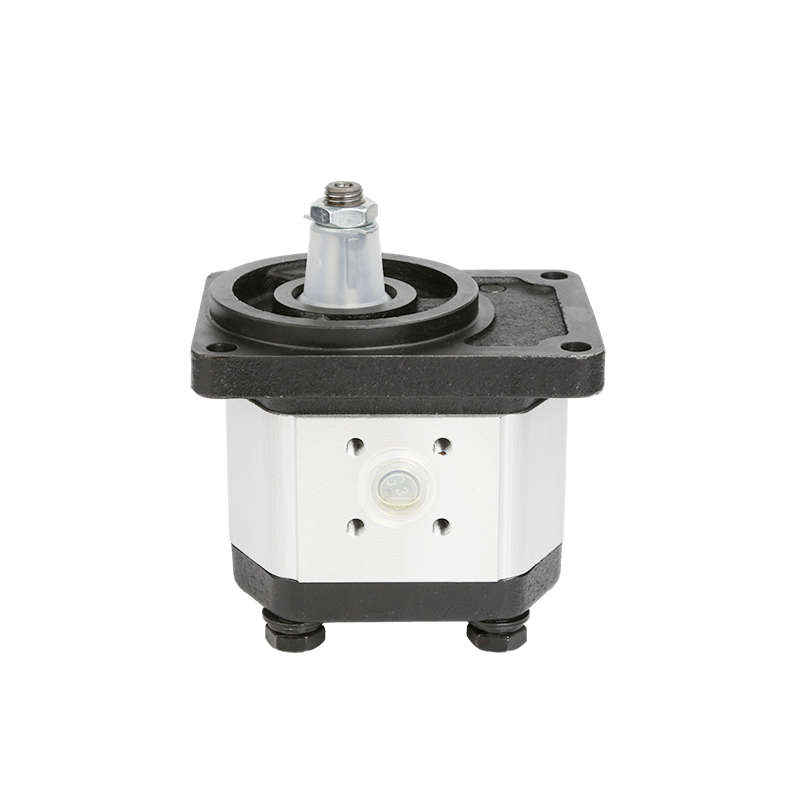
In practical terms, a double gear pump—also called a tandem hydraulic pump or multi section hydraulic pump—combines two gear pump elements in one housing, usually driven by a common shaft. This enables two separate hydraulic circuits, different displacement combinations, or coordinated flow delivery for cylinders, motors, valves, and auxiliary functions. For buyers comparing a double gear pump price, evaluating double gear pump manufacturers, or sourcing a double gear pump for sale, understanding the underlying technical and market factors is essential.
Industry Context: Why Double Gear Pumps Are Trending in Modern Hydraulic Systems
The latest demand for compact hydraulic architecture is being driven by equipment downsizing, electrification trends, and pressure to improve machine productivity without increasing envelope size. According to Markets and Markets, the hydraulic components and systems sector continues to see healthy global demand due to growth in construction machinery, material handling equipment, and industrial automation. For engineers, that translates into a need for pumps that deliver reliable flow while saving space and reducing plumbing complexity.
A double gear pump is trending because it solves multiple design challenges at once. Instead of installing two separate single-section pumps, designers can use one tandem unit with shared drive input and optimized mounting. This can reduce bracketry, couplings, shafts, and hose routing. According to NFPA fluid power industry data, fluid power remains a critical enabling technology in machinery where high force density and precise power transmission are required. In these systems, reducing the number of discrete components often supports both reliability and assembly efficiency.
According to Statista, the global construction equipment market has been forecast to exceed hundreds of billions of dollars in annual revenue, reinforcing long-term demand for hydraulic pumps used in excavators, loaders, tractors, lifting platforms, and power units. Many of these machines require independent or semi-independent flows for steering, lifting, tool actuation, cooling, lubrication, or auxiliary attachments. A tandem hydraulic pump addresses that requirement with a compact solution.
From a commercial standpoint, buyers are also changing how they source. They increasingly expect factory-direct pricing, faster customization, and flexible MOQ options rather than rigid catalog-only supply. This is where POOCCA has an advantage: the company can align with OEM and distributor expectations for custom displacement combinations, manufacturing support, and cost-conscious procurement. In markets where machine builders must balance quality with project budgets, supplier flexibility can be as important as raw performance data.
According to IBISWorld, industrial machinery manufacturing and related equipment supply chains remain highly competitive, which pressures OEMs to standardize components where possible while maintaining equipment differentiation. Double gear pumps support that strategy because they can be configured for different flow combinations without requiring a complete system redesign. For example, one section may feed a hydraulic cylinder circuit while the second section supports a motor-driven auxiliary line or lower-flow valve manifold. This modularity is one reason the product category continues to gain attention among engineers searching for professional and best-fit hydraulic solutions.
Technical Deep Dive: What Is a Double Gear Pump and How Does It Work?
A double gear pump is a positive displacement hydraulic pump made by integrating two gear pumping sections into a single body, generally with one common drive shaft. Each section contains meshing gears that rotate within a close-tolerance housing. As the gears unmesh at the inlet side, they create expanding volume that draws hydraulic fluid into the pump. The fluid is then carried around the outer circumference of the gears and housing and displaced at the outlet where gear teeth re-engage. In a dual-section design, this process occurs in two pump stages simultaneously.
As Joseph L. Mirdamadi, fluid power specialist and former NFPA technical contributor, states: “Positive displacement pumps remain fundamental to hydraulic system design because predictable flow under load is the basis of controllable force and motion.” That observation is especially relevant to double gear pumps, where two predictable flow streams can be delivered from one compact assembly.
In most hydraulic applications, double gear pump performance is evaluated by displacement, flow rate in GPM or L/min, and pressure in PSI or bar. Typical mobile and industrial gear pump configurations may operate from roughly 1,500 PSI up to 3,000+ PSI depending on design, materials, and duty cycle, while some heavy-duty variants approach around 250 bar. According to SAE International technical resources, correct component sizing requires matching displacement and speed to the desired flow while accounting for volumetric efficiency, pressure drop, fluid viscosity, and thermal limits.
The term “2 stage gear pump” is often used in the market, but it can mean different things depending on the application. In many hydraulic power units, a two-stage arrangement may refer to high-flow/low-pressure and low-flow/high-pressure behavior, especially in log splitters or power packs. In contrast, a standard double gear pump in industrial and mobile hydraulics typically means two gear pump sections operating in parallel from the same shaft, often with separate outlets and sometimes a shared inlet. That distinction matters for selection and avoids confusion when buyers compare a double gear pump kit with a tandem hydraulic pump for OEM equipment.
According to ISO guidance on quality management and industrial manufacturing consistency, process control and repeatable tolerances are essential for components where internal clearances directly affect leakage, efficiency, and wear. In a gear hydraulic pump, excessive internal leakage reduces volumetric efficiency, raises oil temperature, and limits pressure capability. This is why housing machining accuracy, gear profile quality, bushing design, and seal selection are all important.
As Erik Trost, hydraulic systems engineer, states: “The real value of a tandem gear pump is not simply two outlets; it is the ability to engineer independent circuit behavior without doubling installation complexity.” In machine design, that means one section can supply a steering valve while the other powers lifting cylinders, clamping actuators, cooling circuits, or hydraulic motors. It can also support systems requiring different flow rates from the same PTO or engine-driven input.
According to Markets and Markets, demand for compact, integrated hydraulic subsystems is increasing as OEMs seek to improve machine packaging and assembly efficiency. That macro trend directly supports adoption of multi section hydraulic pump designs. POOCCA addresses this need by offering custom hydraulic configurations, helping OEM buyers specify displacement combinations suited to real pressure, speed, and duty conditions rather than forcing compromise around a single standard pump.
When selecting a double gear pump, engineers should review at least six core variables: operating pressure (PSI/bar), required flow (GPM/L/min), shaft speed (RPM), fluid type, viscosity range, and circuit architecture. They should also consider whether the application feeds hydraulic cylinders, control valves, motors, or lubrication branches; whether outlets must remain independent; and whether startup temperature or continuous high-temperature service may affect seal life.
Industry Standards and Quality Expectations for Double Gear Pump Buyers
For B2B buyers, technical performance alone is not enough. Procurement teams, OEM engineers, and import managers increasingly evaluate hydraulic suppliers on standards compliance, documentation, and manufacturing discipline. A professional and quality-focused double gear pump supplier should be able to discuss not only pressure and flow ratings, but also quality systems, testing procedures, traceability, and export readiness.
ISO 9001 is one of the most important benchmarks because it indicates a structured quality management system covering process control, corrective action, supplier management, and continuous improvement. In hydraulic pump manufacturing, ISO 9001 alignment helps reduce dimensional inconsistency, assembly error, and batch variation. While ISO 9001 does not guarantee performance by itself, it is a strong indicator that the manufacturer follows repeatable procedures rather than uncontrolled production practices.
For equipment exported into European markets, CE marking considerations can also become relevant at the machinery or integrated system level. Although a pump component itself may not always require standalone CE treatment in the same way a complete machine does, compatibility with CE-oriented documentation, material declarations, and technical files can be important for OEM system builders.
SAE International standards matter because hydraulic connections, shaft dimensions, mounting interfaces, and pressure-related design references often align with SAE practices. This is particularly important when replacing pumps in North American or globally standardized machinery. Using standardized interfaces can reduce retrofit friction and lower the risk of field installation issues.
NFPA references are also valuable in fluid power discussions because they support common terminology, design understanding, and broader industry practices in North America. For hydraulic circuit designers, consistency in how pumps, valves, cylinders, and motors are specified improves communication across engineering, purchasing, and maintenance teams.
Where oil and gas or process-industry integration is involved, buyers may also review relevant API standards at the system level, especially if the pump is part of a larger package requiring broader compliance expectations. While many standard external gear pumps are not sold as API-certified standalone products, awareness of API-driven procurement culture is useful for suppliers serving industrial process sectors.
According to ISO, quality management systems improve an organization’s ability to consistently provide products that meet customer and regulatory requirements. According to SAE International technical publications, standardized interfaces and engineering specifications reduce interchangeability risk and improve serviceability in hydraulic systems. That is why many experienced buyers look beyond a basic double gear pump price and focus on lifecycle value.
This is another area where POOCCA can be positioned effectively: not just as a source for a pump, but as a factory partner supporting custom solutions, quality expectations, and OEM documentation needs. In international B2B procurement, that combination often separates the best-value supplier from the lowest initial quote.
Implementation Guide: How to Choose the Best Double Gear Pump for Your Application
Successful implementation starts with application mapping. The first question is not simply “What is a double gear pump?” but rather “What must each section do in the hydraulic system?” If one outlet feeds lift cylinders and another powers a hydraulic motor, the flow and pressure profile may differ significantly. Similarly, a compact hydraulic power unit may need one section for main work functions and another for pilot pressure, lubrication, or cooling.
According to Grand View Research, industrial automation and mobile equipment modernization are increasing demand for compact power transmission solutions that improve machine efficiency and reliability. In practice, that means the latest hydraulic buyers want components that are easier to install, easier to maintain, and easier to scale across multiple machine models.
Here is a practical selection workflow:
1. Define flow per section. Calculate required GPM based on actuator speed, motor RPM, or cycle time. If a cylinder must extend quickly, the main section may need higher displacement than the auxiliary section.
2. Define pressure per circuit. Determine normal operating and peak pressure in PSI or bar. A circuit running at 2,500 PSI has different pump and seal requirements than one operating below 1,500 PSI.
3. Confirm prime mover speed. Pump displacement and shaft RPM determine actual flow. Overspeeding may shorten life; underspeeding may miss performance targets.
4. Review inlet conditions. Poor suction design can cause cavitation, noise, and premature wear. Shared inlets and independent outlets must be assessed carefully.
5. Match circuit components. Pump performance must be aligned with relief valves, directional valves, hydraulic cylinders, motors, filtration, and reservoir sizing.
6. Consider service environment. Ambient temperature, contamination exposure, duty cycle, and fluid cleanliness all affect pump life.
According to Statista, maintenance cost control remains a top concern in industrial operations, and unplanned downtime can create disproportionate production losses. In hydraulic systems, a poor pump selection can lead to overheating, excess noise, internal leakage, seal failure, and reduced machine productivity. By contrast, a properly sized tandem hydraulic pump can consolidate functions while improving service access and lowering installation complexity.
As Robert Sheaf, fluid power educator, states: “Hydraulic reliability is designed upstream—long before the machine enters service.” That is exactly why OEMs should engage suppliers early, validate duty conditions, and request performance confirmation where needed. POOCCA is especially relevant for buyers who need custom solutions, factory-direct pricing, and flexible MOQ support for pilot runs, replacement business, or scaled OEM production.
For buyers researching double gear pump manufacturers, ask for housing material details, bushing type, shaft options, pressure test procedures, and compatibility with your machine’s mounting standard. Also ask whether the supplier can support custom displacement pairing, branding, and documentation for export markets. These factors often matter more than a low initial quote.
Future Outlook: Market Projections and What Buyers Should Do Next
The future outlook for double gear pumps remains positive because the applications that depend on them—construction, agriculture, material handling, industrial machinery, and compact power units—continue to demand robust and space-efficient hydraulic solutions. According to Markets and Markets, global industrial equipment modernization and automation investment are expected to sustain demand for fluid power components over the coming years. According to Grand View Research, industrial machinery and mobile equipment categories tied to infrastructure and manufacturing expansion should continue to support hydraulic system growth.
That means buyers can expect ongoing demand for tandem hydraulic pump designs, especially where machine builders need two independent flows from one drive source. At the same time, competition among suppliers will likely intensify. The best purchasing strategy is therefore not only to compare double gear pump price, but to evaluate customization capability, quality systems, lead time, standards familiarity, and communication responsiveness.
For OEMs, distributors, and engineering teams seeking the best combination of quality, flexibility, and commercial efficiency, now is a good time to review platform standardization opportunities. A well-selected double gear pump can reduce part count, support multiple machine variants, and improve packaging in both new builds and retrofits. If your team is evaluating application-specific options, consulting directly with POOCCA can help clarify the right displacement combination, pressure rating, and sourcing model for your hydraulic system.
Frequently Asked Questions
What is a double gear pump?
A double gear pump is a hydraulic positive displacement pump that integrates two gear pump sections into one assembly, usually with a common drive shaft. Each section produces its own fluid flow, allowing one pump body to serve two hydraulic circuits or two different flow requirements. This is why the product is also commonly called a tandem hydraulic pump or multi section hydraulic pump. According to SAE International, positive displacement pumps are essential in hydraulic systems because they provide predictable flow relative to displacement and speed, making them well suited for controlled power transmission. In practical machine design, a double gear pump may have a shared suction port with two separate pressure outlets, though exact architecture depends on model design. It is widely used in equipment that must operate hydraulic cylinders, motors, valves, and auxiliary functions simultaneously while conserving installation space. Compared with installing two standalone single pumps, a double gear pump can reduce coupling hardware, simplify mounting, and streamline hose routing. For OEMs and industrial buyers, this often means a more compact and cost-efficient hydraulic package.
How does a 2 stage gear pump work?
The term “2 stage gear pump” can describe two different concepts, so buyers should confirm the intended meaning. In many mobile and industrial applications, it refers to two gear pump sections driven by one shaft, each delivering flow to a separate circuit. In some power pack applications, however, a two-stage pump can refer to a system that provides high flow at low pressure and then transitions to lower flow at higher pressure. According to NFPA fluid power principles, correct terminology is critical because circuit behavior, relief settings, and performance expectations depend on design intent. In a standard double gear pump used on machinery, both stages rotate together and displace fluid at the same time. The actual output of each section depends on its displacement and the shaft RPM. If one stage is 8 cc/rev and the other is 14 cc/rev, they will produce different flows while sharing the same drive speed. This makes the design useful for machines needing a main work circuit plus an auxiliary line for steering, clamping, cooling, or lubrication.
How does a dual pump work in a hydraulic system?
A dual pump works by supplying two hydraulic flows from one mechanical input source, such as an engine, electric motor, or PTO. In a dual gear pump, both gear sets rotate simultaneously inside the housing. Fluid enters through the inlet side, is carried around the gear periphery, and exits through the outlet under pressure when the gear teeth mesh. According to ISO quality and manufacturing guidance, maintaining tight tolerances in gear pumps is critical because internal leakage directly affects efficiency, pressure capability, and heat generation. In system terms, the dual pump can be used to separate functions. One outlet may feed a directional valve controlling hydraulic cylinders, while the other powers a hydraulic motor circuit or pilot pressure branch. This separation can improve controllability and simplify circuit layout. It also allows engineers to select different displacement sizes for each section, supporting customized flow balance. For machine builders, the dual pump concept is especially useful where space is limited and independent hydraulic functions must run from a single prime mover.
What are the two types of gear pumps?
The two primary types of gear pumps are external gear pumps and internal gear pumps. External gear pumps use two externally meshing gears inside a housing and are widely used in hydraulic systems because they are robust, compact, and cost-effective. Internal gear pumps use one internal and one external gear in a different arrangement, often valued for smooth flow and suitability in some transfer applications. According to SAE International technical references, external gear pumps remain among the most common hydraulic pump types in mobile and industrial fluid power due to their simplicity and durability. The double gear pump discussed in this article is generally an external gear pump configuration consisting of two external gear sections integrated into one body. For buyers comparing gear hydraulic pump options, understanding this distinction is important because pressure range, noise behavior, contamination sensitivity, and application fit can vary by design. In B2B hydraulic procurement, external tandem gear pumps are often preferred where ruggedness, straightforward maintenance, and compact packaging are priorities.
What affects double gear pump price?
Double gear pump price is influenced by several technical and commercial variables, including displacement combination, pressure rating, shaft type, mounting standard, body material, seal type, and required testing or documentation. Pumps designed for higher pressure service, better wear resistance, or custom OEM interfaces generally cost more than standard low-pressure catalog models. According to IBISWorld, competitive pressure in industrial supply chains has increased buyer focus on total value rather than only upfront cost. That is especially true in hydraulics, where a lower-priced pump can become more expensive over time if it causes inefficiency, heat, leaks, or premature failure. Export packaging, branding, low-volume customization, and logistics conditions can also influence final pricing. Buyers should compare not just the unit quote, but also lead time, MOQ, support for custom solutions, and quality assurance practices. Factory-direct sourcing may create cost advantages when the supplier can provide both technical flexibility and stable production quality.
How do I choose the best double gear pump manufacturer?
The best double gear pump manufacturer is not simply the supplier with the lowest quote; it is the one that can consistently match product performance to your application requirements. Buyers should verify ISO 9001 quality management, pressure and flow testing capability, customization support, drawing confirmation processes, and familiarity with SAE or market-specific interface standards. According to Grand View Research, increasing demand for advanced and compact hydraulic systems is pushing buyers toward suppliers that can support application-specific engineering rather than only commodity supply. Ask whether the manufacturer can provide multiple displacement pairings, shaft and flange options, documentation for export markets, and support for flexible MOQ. Also review how well the supplier communicates on lead time, technical questions, and after-sales service. A quality-focused supplier should understand your requirements for PSI, GPM, hydraulic cylinders, motors, valves, and duty cycle—not just part numbers. For many OEMs and distributors, the best supplier is one that combines technical responsiveness, reliable quality, and competitive factory-direct pricing in a scalable partnership model.