 English
 Russian
 Arabic
 Indonesian
 Turkish
 Vietnamese
 Polish
 German
 Malay
Malay Thai
Thai Kazakh
 Spanish
 Chinese (Simplified)
 Korean
 Italian
 Azerbaijani
 Dutch
Dutch French
 Romanian
 Portuguese
 Hindi
HindiInternal gear pumps deliver reliable positive displacement performance with a distinctive advantage: many models support bidirectional rotation and flow reversal while preserving nearly constant capacity. This flexibility simplifies system design, accommodates varied equipment layouts, and enables practical functions such as line stripping or dual-direction transfer. The pump’s internal gear mechanism—with an outer rotor containing internal teeth meshing with a smaller idler gear, separated by a crescent—creates expanding and contracting chambers that move fluid smoothly in either direction when properly configured.
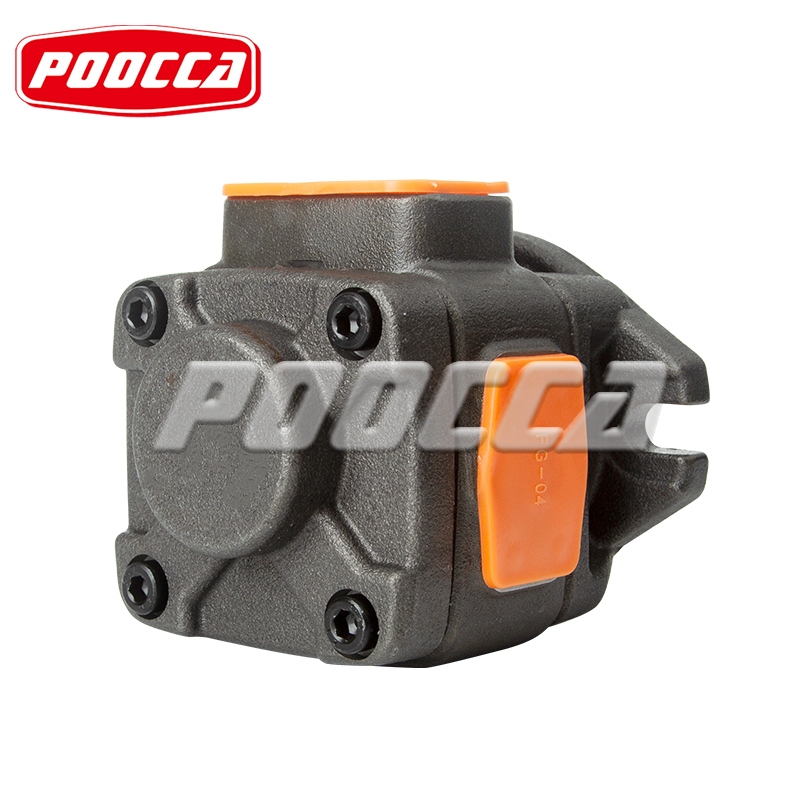
Not All Pumps Are Created Equal
Centrifugal pumps are optimized for a single rotation direction. Reversing them typically produces reduced flow and head in the original direction, accompanied by increased noise, potential seal or bearing damage, and risk of impeller loosening on threaded shafts. The larger suction port and radial discharge design assume unidirectional flow, making reversal inefficient or damaging.
Rotary positive displacement pumps, particularly internal gear types, handle direction changes more effectively. The meshing action forms sealed chambers that function symmetrically regardless of rotation direction in reversible models. This results in consistent volumetric displacement. Compared to external gear pumps, internal gear designs often provide lower pulsation and smoother flow, which benefits high-viscosity or shear-sensitive fluids in chemical processing, polymers, and precision metering applications.
Common Reasons for Changing a Pump’s Rotation
System layout frequently drives the need for rotation changes. When supply tanks or receiving vessels sit in positions that favor one port orientation, reversing the pump allows direct, short piping runs and avoids excessive elbows or restrictions that increase pressure drop or cavitation risk.
Operators also use reversal for loading and unloading cycles. The primary direction handles bulk transfer through hoses or manifolds, while a shorter reverse cycle strips residual product from lines, reducing waste and improving recovery. In rarer cases, systems run approximately equal time in both directions for recirculation or process flexibility, requiring robust overpressure protection on both flow paths.
Rotation Change Checklist
Before reversing an internal gear pump, a structured evaluation helps ensure safe, reliable operation. The primary questions to address include:
- Can the pump be reversed?
- Does the pump have a relief valve?
- Does the pump have a seal circulation plan?
- Does the pump have any internal lubrication paths?
Each factor requires careful assessment based on the specific model and application conditions.
Can the Pump Be Reversed?
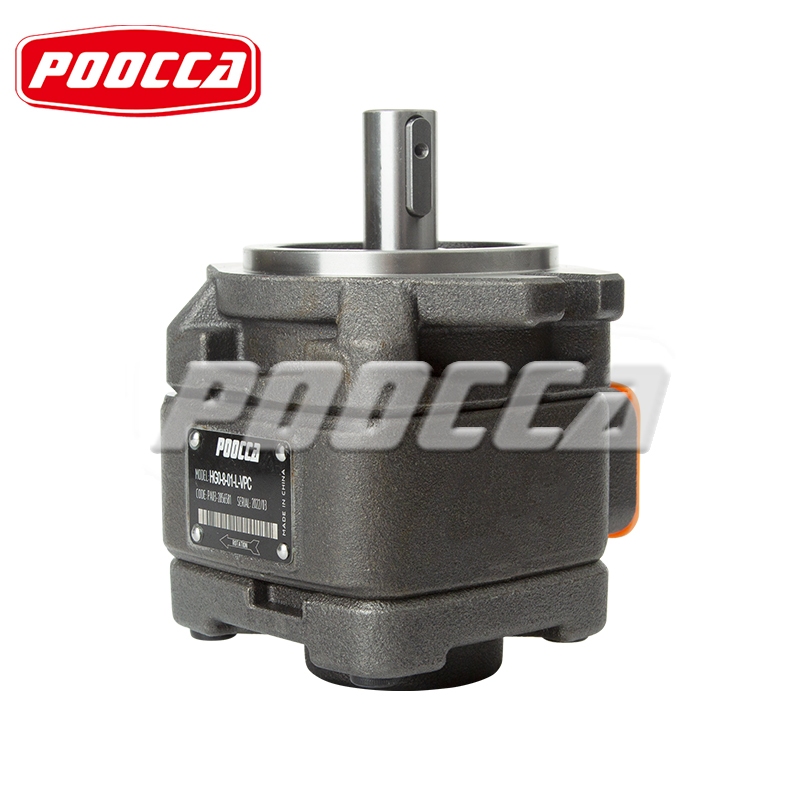
Most internal gear pumps accommodate reversal, but certain design features signal limitations. A rotation arrow cast into the housing or indicated on the nameplate often means the unit incorporates directional optimizations, such as in some magnetically driven or high-speed motor-mounted series. Reversing these models is generally not recommended without manufacturer approval.
Port size symmetry provides another indicator. Reversible pumps typically feature identical inlet and outlet port sizes, allowing clean swapping of suction and discharge roles. Models with a significantly larger suction port for optimized inlet conditions may experience reduced performance or higher wear when operated in reverse. Consultation of technical data sheets for series such as Rexroth PGH, Sunny HG, or Eckerle EIP helps confirm bidirectional suitability.
Does the Pump Have a Relief Valve?
Pump-mounted relief valves protect against overpressure but are often directional. Internal or return-to-tank valves function correctly in one flow direction only. For reversal, the valve body is commonly removed, rotated 180 degrees, and reinstalled to realign the seating and bypass pathway.
Compact models with built-in relief valves integrated into the casing may not support this adjustment, limiting full bidirectional use. In applications involving equal runtime in both directions, a single directional relief valve proves insufficient. Independent overpressure protection—via dual valves or external system relief—is necessary on both sides to prevent casing stress or seal damage during reverse operation.
Does the Pump Have a Seal Circulation Plan?
Mechanical seals require continuous lubrication and cooling for extended service life. Many internal gear pumps incorporate internal or external circulation paths, such as routing fluid from discharge to the seal chamber or from suction side.
Reversing flow direction effectively swaps the circulation plan. A discharge-to-seal flush may become a suction-side return, which can still provide adequate fluid depending on viscosity and cleanliness. In designs with fixed internal porting, plugs may need relocation to restore proper flow across the seal faces. External piping sometimes requires rerouting or replacement to maintain intended lubrication.
Evaluation of fluid properties—viscosity, temperature, and abrasiveness—guides whether additional flush lines or upgraded seal configurations enhance reliability across both rotations.
Does the Pump Have Any Internal Lubrication Paths?
Bearings, bushings, and idler pins often rely on pressurized fluid for lubrication. Dedicated paths typically draw from the higher-pressure discharge side to ensure adequate film strength.
Direction reversal can redirect or reduce this flow, potentially starving components. Many models include adjustable pipe plugs or check valves that allow repositioning of lubrication inlets. Casing grooves behind the rotor promote fluid movement and prevent settling; single-groove designs are directional, while dual-groove versions support either rotation.
Pressure-lubricated idler pins perform best with discharge-side feed. Changing plug locations or verifying check valve orientation restores effectiveness. For fluids with marginal lubricity, external lubrication systems or specialized materials become important considerations.
Internal Gear Pump Design Principles Supporting Bidirectional Operation
The core geometry of internal gear pumps underpins their reversibility. The outer rotor with internal teeth and smaller idler gear create multiple sealed chambers that progress fluid continuously around the crescent. This arrangement maintains separation between suction and discharge zones in either rotation direction for suitable models.
Volumetric efficiency stays high across a broad viscosity range because internal slippage paths remain consistent when ports exchange roles. Manufacturers optimize rotor profiles, clearances, tooth geometry, and materials—such as hardened alloys or wear-resistant composites—to minimize internal leakage and extend service life during repeated direction changes.
Internal gear pumps generally produce lower shear and smoother, lower-pulsation output than external gear counterparts, making them preferred for applications requiring gentle fluid handling or precise flow control.
Performance Considerations in Reverse Operation
Displacement volume depends primarily on gear geometry and shaft speed, so capacity remains nearly constant in reversible internal gear pumps. Minor efficiency variations can occur due to changes in lubrication effectiveness or internal leakage if modifications remain incomplete.
Higher-viscosity fluids enhance sealing and lubrication film strength but increase required torque in both directions. Lower-viscosity fluids demand tighter clearances and robust seal plans to limit slip. Operating speed should stay within manufacturer guidelines for the reversed configuration to avoid cavitation, noise, or excessive heat.
Noise and vibration levels typically stay low thanks to the gradual chamber expansion and contraction characteristic of internal gear designs. Balanced rotors and optimized tooth profiles further reduce these effects.
Practical Applications of Reversed Internal Gear Pumps
Reversed operation proves valuable in tank-to-tank transfers where vessel positioning favors one port orientation over another. Direct reversal eliminates complex crossover piping while preserving short, straight suction lines that minimize net positive suction head (NPSH) requirements.
Loading terminals for trucks, rail cars, or barges frequently employ primary forward flow for filling and brief reverse cycles to recover product from hoses, reducing spillage and product loss. Petrochemical blending systems, marine fuel or ballast transfer, and certain coating or adhesive processes utilize directional flexibility for efficient operation and cleaning cycles.
In hydraulic auxiliary circuits, reversible internal gear pumps serve as charge or lubrication units, integrating with directional valves to support bidirectional actuator movement without multiple dedicated pumps.
FAQ
Can all internal gear pumps operate in reverse?
Most internal gear pumps support reversal with appropriate modifications, but models featuring rotation arrows, asymmetric ports, or non-adjustable relief valves have limitations. Verification against manufacturer specifications remains essential.
Does reversing rotation affect pump capacity?
Capacity stays essentially constant because displacement volume is governed by gear geometry and rotational speed, independent of flow direction in reversible designs.
Conclusion
POOCCA is not only a supplier but also a manufacturer providing a broad range of gear pumps, from both internal and external varieties, along with hydraulic systems. POOCCA provides reliable products, thanks to its direct production, customization possibilities, affordable prices, and 1-year warranty. Contact our specialists now through sales@kamchau.com or via WhatsApp +86 18927498997 to talk about your requirements and receive quick shipment.