 English
 Russian
 Arabic
 Indonesian
 Turkish
 Vietnamese
 Polish
 German
 Malay
Malay Thai
Thai Kazakh
 Spanish
 Chinese (Simplified)
 Korean
 Italian
 Azerbaijani
 Dutch
Dutch French
 Romanian
 Portuguese
 Hindi
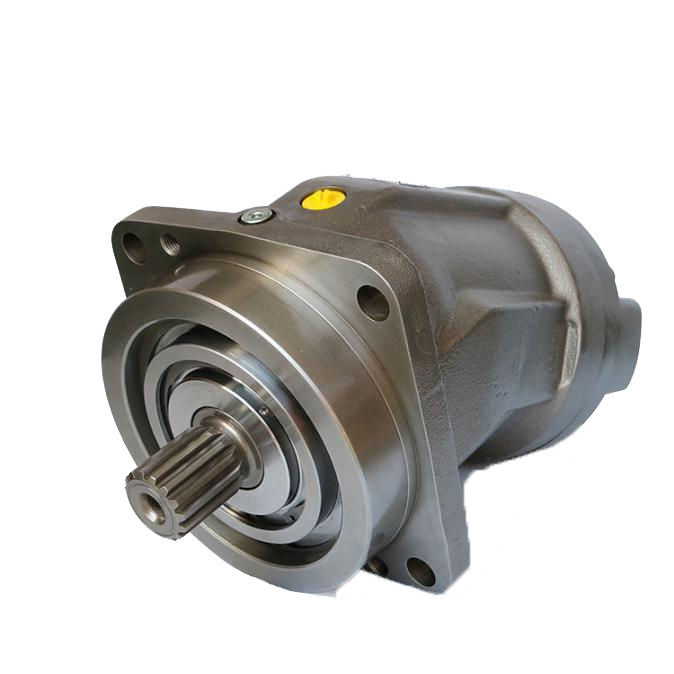
HindiA hydraulic piston motor is one of the devices that converts the hydraulic energy into mechanical torque and rotational energy. They are used to drive many industrial heavy machines. The selection of a suitable motor depends on various considerations such as torque, speed, pressure range, and the type of environment among others.
Application Requirements for Hydraulic Piston Motors
Good selection starts with a full study of the job’s operation needs. Each system puts special demands on torque, rotation speed, pressure, load handling, and conditions around it.
Torque, Speed, and Pressure Needs
Torque is the turning force from the motor. It comes mainly from displacement and working pressure. Speed sets the output revolutions per minute (RPM). Pressure rating shows the highest system pressure the motor can handle safely.
Typical hydraulic piston motors work well over a wide speed range. This often goes from low RPM for high-torque jobs to several thousand RPM for active uses. Pressure ratings often reach 3000–6000 psi or more, based on the design. Fixed displacement motors keep steady output. Variable displacement models adjust to changing loads for better energy use.
Key Calculation Examples
Theoretical Torque (T) = (P × D) / (2π), where P is pressure and D is displacement.
Motor Speed (N) = Q / D, where Q is flow rate.
Actual torque includes mechanical efficiency losses. Always check that the motor’s continuous and peak ratings go above job needs with a safety margin.
Load and Duty Cycle
Study the load features. This includes starting torque needs to beat static friction and running torque for steady work. Duty cycle shows continuous or short use. Motors in tough jobs, such as construction or mining equipment, must handle long operation without too much heat or loss in performance.
Think about inertia of driven loads and possible shock loads. High-inertia jobs may need motors with strong bearings and tough build.
Operating Environment
Conditions around the site affect motor choice a lot. High outside temperatures speed up fluid breakdown. Dirt or water can lead to early wear. Choose motors with right seals, materials that resist rust, and cooling options for tough places. Filtration standards (e.g., ISO cleanliness codes) and fluid match are important to keep volumetric and mechanical efficiency.
Types of Hydraulic Piston Motors
Hydraulic piston motors come in main groups based on piston setup and design changes. Knowledge of these differences helps match them exactly to performance needs.
Axial Piston Motors
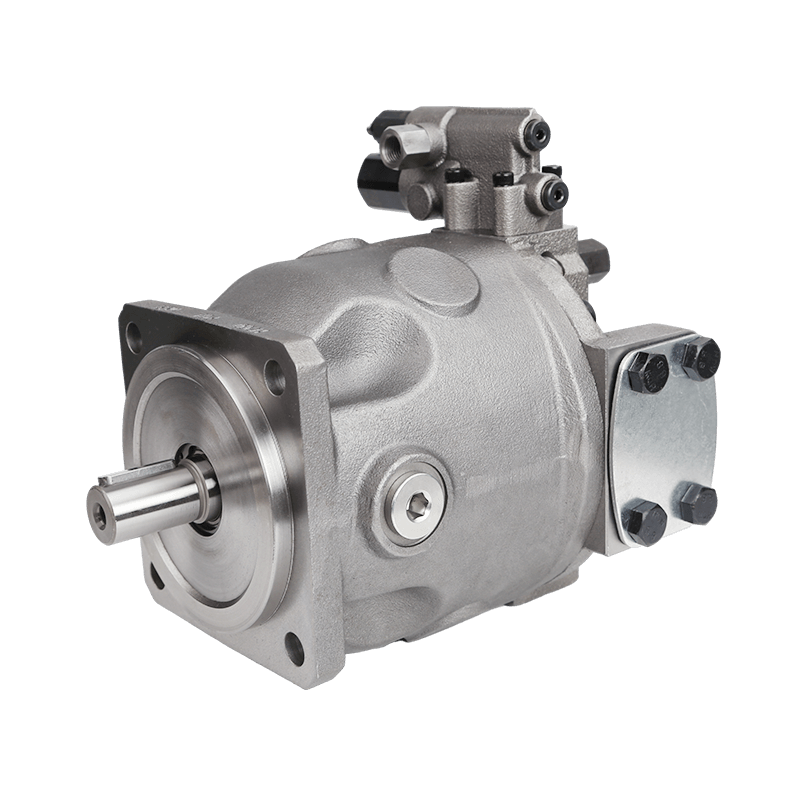
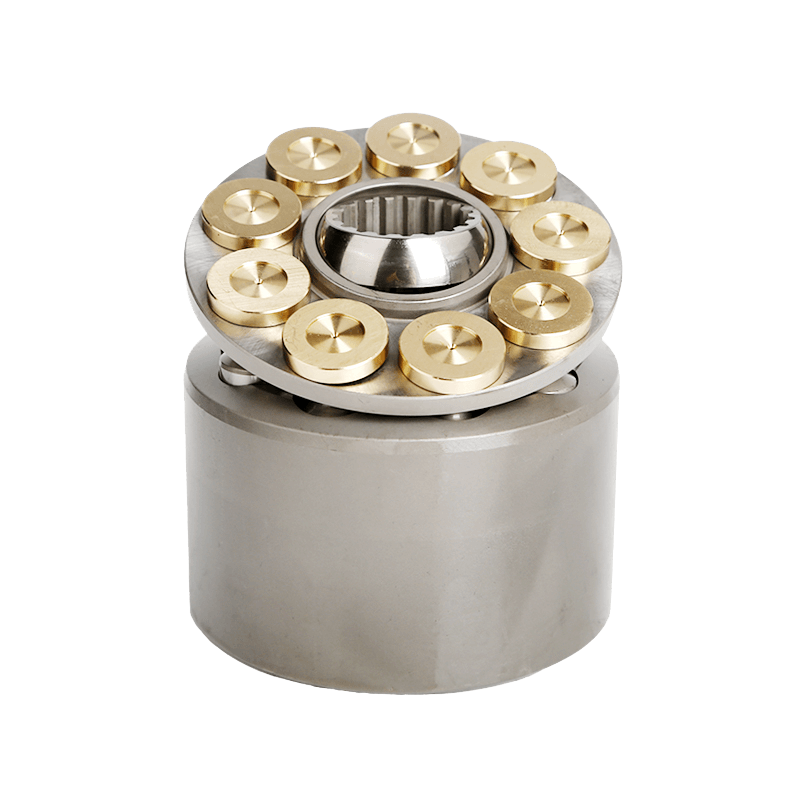
Axial piston motors have pistons set parallel to the drive shaft. They give high power in small sizes and support wide speed ranges with good control.
Subtypes:
Swash Plate (Inline) Design: Pistons work with a tilted swash plate. These are common for variable displacement models that give exact flow and speed control. Swash plate angles usually stay around 15–20 degrees.
Bent Axis Design: The cylinder block sits at an angle to the drive shaft (up to 40 degrees). This allows higher displacement changes and efficiency in hard jobs. Bent axis motors often give better starting torque and two-way performance.
Axial designs fit marine engineering, injection molding, hydraulic presses, winches, and mobile equipment that needs quick speed control.
Radial Piston Motors
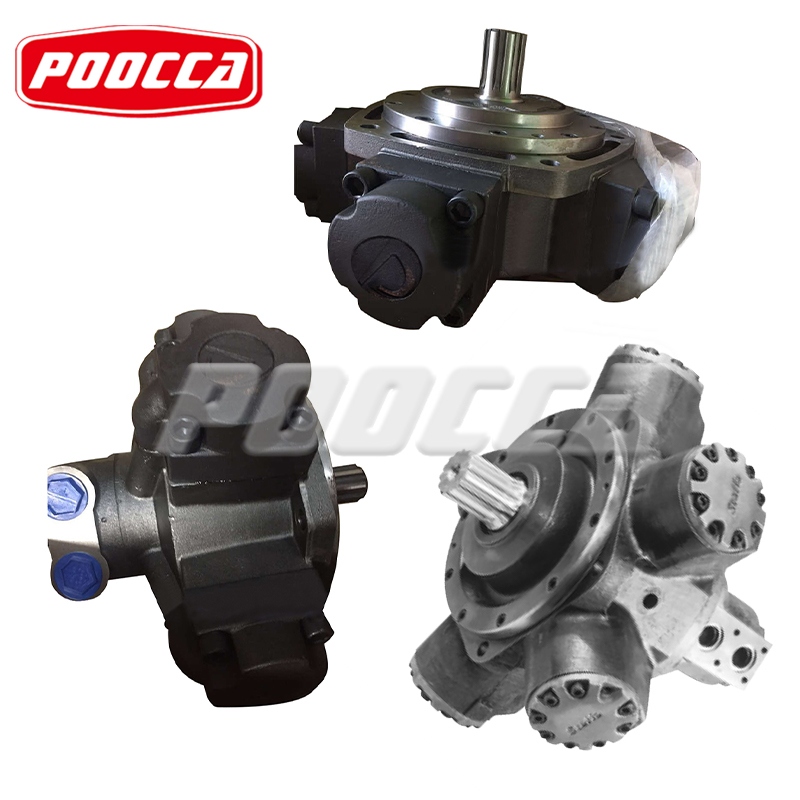
Radial piston motors place pistons at right angles to the output shaft. They create high torque at low speeds. They do well in jobs that need big starting torque and smooth low-speed work, such as cranes, winches, drilling rigs, and off-road vehicles.
Common types include crankshaft and multi-lobe cam ring designs. These motors often reach very high torque outputs without extra gears. They offer long service life under heavy loads.
Fixed vs. Variable Displacement Piston Motors
Fixed displacement motors give steady output features. They suit jobs with even demands. Variable displacement models change output through swash plate or bent axis setups. This improves energy efficiency and fit in systems with different loads.
Comparison Table:
| Feature | Fixed Displacement | Variable Displacement |
| Flow Adjustment | No | Yes |
| Design Complexity | Simpler | More complex |
| Energy Efficiency | Lower in variable conditions | Higher, adapts to demand |
| Cost | Generally lower | Higher initial, but operational savings |
| Applications | Constant speed tasks | Dynamic, multi-mode operations |
Match Motor Specs to Application
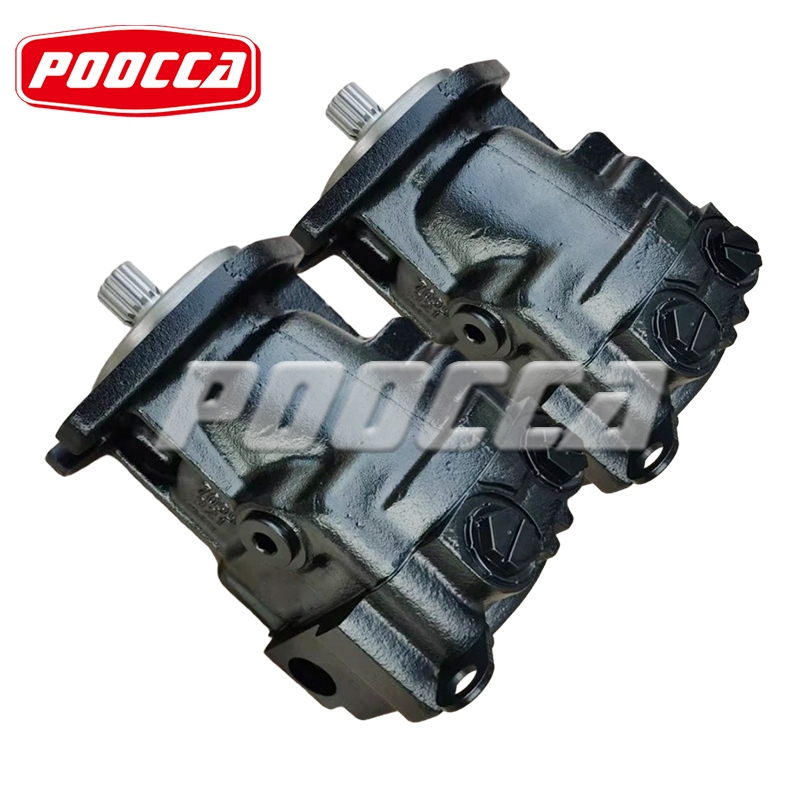
Exact spec matching stops under- or over-sizing. These problems can cause low efficiency, extra heat, or breakdown.
Select by Torque and Speed
Figure out needed torque and speed from system details. Make sure breakaway torque beats initial resistance. Check manufacturer performance curves for real efficiency at working points.
Displacement and Pressure Ratings
Higher displacement gives more torque at lower speeds. Lower displacement supports higher speeds. Pressure ratings must stay above maximum system pressure, including sudden rises, with safety factors. Volumetric efficiency drops with internal leaks, so pick motors with tight tolerances for high-pressure work.
Sizing and System Compatibility
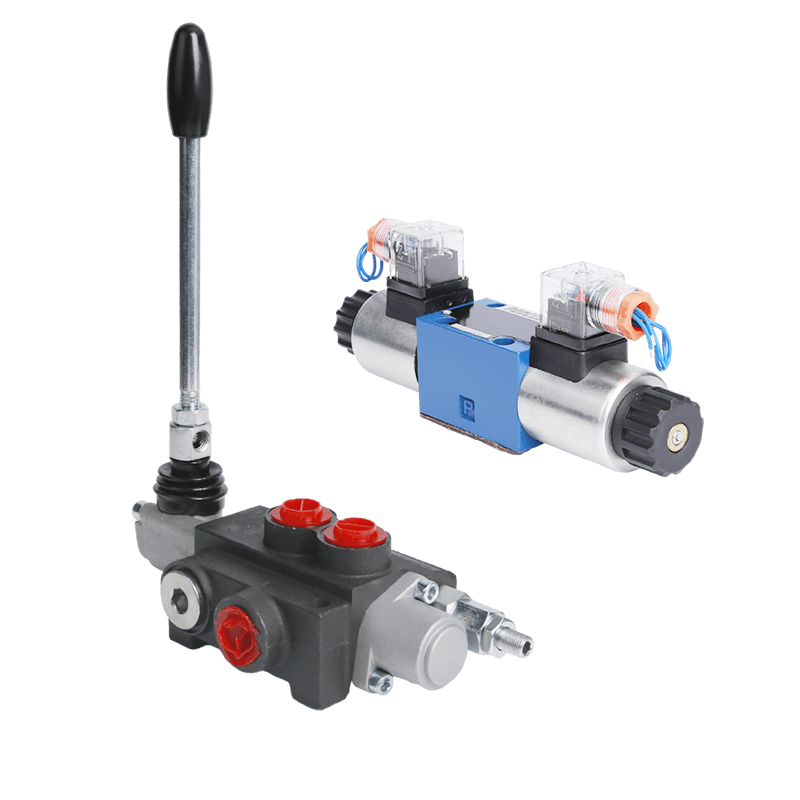
Check physical sizes, mounting flange standards (e.g., SAE), shaft setups, and port sizes. Confirm match with the hydraulic pump’s flow and pressure output. Think about full system dynamics, including valve controls and fluid thickness over temperature ranges.
Extra factors include noise levels, vibration, and fit with electronic controls for proportional or servo operation.
Key Factors to Consider When Selecting Hydraulic Motors
Beyond basic ratings, look at overall performance qualities.
Efficiency and Reliability
Total efficiency mixes volumetric (leakage) and mechanical (friction) parts. High-efficiency motors cut energy use and heat build-up. Reliability measures include expected service life (often 10,000+ hours), bearing strength, and resistance to cavitation or dirt. New designs use advanced materials and surface treatments for longer life.
Cost, Maintenance, and Support
Total cost of ownership covers initial buy, energy use, maintenance, and downtime. Motors with easy service points and replaceable parts (seals, pistons) reduce long-term costs. Focus on suppliers that give technical papers, spare parts supply, and application engineering support.
Environmental and Space Constraints
Small setups may prefer axial designs. Specify explosion-proof, submersible, or high-temperature types when needed. Fluid choice (mineral oil, synthetic, or biodegradable) must match seals and working conditions.
Additional Considerations for Optimal Selection
Integration with Hydraulic Systems
Piston motors work best when paired with matching pumps (e.g., variable displacement piston pumps) and control valves. Closed-loop circuits often use axial piston motors for two-way exact control. Open-loop systems may use radial designs for torque-heavy tasks.
Performance Testing and Validation
Ask for motor performance data under test conditions. Field testing or manufacturer simulation checks the choice. Watch parameters like case drain flow (which shows internal leakage) during operation.
Common Selection Pitfalls to Avoid
Oversizing causes low efficiency and higher costs. Undersizing leads to overheating and failure. Ignoring efficiency at partial loads or wrong fluid thickness gives poor results. Always check mounting, alignment, and filtration needs.
FAQ
What is the main difference between axial and radial piston motors?
Axial piston motors provide higher speeds and compact power density with good controllability. Radial piston motors deliver superior low-speed high-torque performance.
How do I calculate the required displacement for a hydraulic piston motor?
Use Displacement (D) = (Torque × 2π) / Pressure, adjusted for efficiency. Combine with flow rate for speed verification.
What pressure ratings are typical for hydraulic piston motors?
Common continuous ratings range from 2500–5000 psi, with peaks higher depending on model and design.
Can hydraulic piston motors operate bidirectionally?
Yes, most designs support reversible rotation with proper valving and circuit configuration.
Conclusion
Companies looking for dependable hydraulic piston motors will definitely find value in cooperating with experienced factories that offer complete ranges of products, including axial and radial types, fixed and variable displacement motors, and systems integration capabilities. Professional companies like POOCCA will help in choosing, customizing, documenting, and servicing equipment to enhance its performance and minimize overall cost of ownership. Discover a wide range of hydraulic motors along with piston pumps, gear pumps, vane pumps, and valves in one convenient place. Get in touch with an experienced manufacturer and supplier now to receive personalized quotes and consultation services regarding your project needs. POOCCA is one of the foremost manufacturers and suppliers of hydraulics.