 English
 Russian
 Arabic
 Indonesian
 Turkish
 Vietnamese
 Polish
 German
 Malay
Malay Thai
Thai Kazakh
 Spanish
 Chinese (Simplified)
 Korean
 Italian
 Azerbaijani
 Dutch
Dutch French
 Romanian
 Portuguese
 Hindi
HindiAccording to Grand View Research, the global hydraulic equipment market was valued at more than USD 45 billion in 2023, underscoring how central hydraulic pumps, motors, valves, and cylinders remain to construction, agriculture, manufacturing, mobile equipment, and industrial automation. For buyers searching for a hydro pack hydraulic pump, the challenge is no longer finding a supplier alone—it is selecting the right pump architecture, pressure rating, displacement range, and quality standard for the exact application. While many online catalog pages emphasize product grouping and quick ordering, procurement teams and engineers increasingly need a deeper understanding of hydraulic, gear, and hydrostatic pump fundamentals before committing to a solution.
This guide fills that gap. It explains how hydraulic pumps work, compares common pump types, outlines essential engineering considerations such as PSI and GPM, and reviews the standards and implementation steps that separate short-lived systems from dependable long-term installations. It also highlights how POOCCA supports buyers with custom solutions, factory-direct pricing, flexible MOQ options, and manufacturing aligned with ISO 9001 quality expectations.
1. Industry Context: Why the Hydro Pack Hydraulic Pump Market Is Expanding
The market for hydraulic pumps has evolved far beyond basic commodity supply. Today’s OEMs, maintenance teams, and distributors want fast availability, stable quality, configurable specifications, and confidence that pumps will integrate properly with hydraulic cylinders, valves, motors, reservoirs, and filtration systems. This demand is being driven by industrial modernization, mobile machinery upgrades, and global infrastructure investment.
According to Markets and Markets, the hydraulic pumps market is projected to grow at a CAGR of approximately 4% through the forecast period, supported by increasing equipment demand across construction, mining, agriculture, and material handling. At the same time, according to Statista, global construction output is expected to reach roughly USD 15.2 trillion by 2030, a figure that directly supports demand for hydraulic pump assemblies in excavators, loaders, cranes, truck-mounted systems, and compact power units.
What makes the keyword hydro pack hydraulic pump especially relevant is that buyers often start with a category-level search modeled after traditional product directory pages. They may know they need a gear pump, tandem pump, or hydrostatic pump, but they still need help connecting technical data to actual field performance. Competitor catalog pages often present displacement, pressure, speed, oil viscosity, and filtration requirements, which is useful. However, many stop short of explaining why those values matter in system engineering terms.
That gap creates a major opportunity for better content and better suppliers. A buyer choosing between a Group 1, Group 2, or Group 3 gear pump is not simply comparing model numbers. They are balancing flow rate in GPM, operating pressure in PSI, duty cycle, shaft loading, mounting dimensions, fluid compatibility, and expected service life. If the pump is undersized, the machine loses performance. If it is oversized, energy consumption, heat generation, and maintenance costs can increase.
According to IBISWorld, industrial machinery repair and maintenance remains a multibillion-dollar service segment in the United States alone, reflecting how costly hydraulic downtime can become when system components are improperly specified or poorly maintained. In practical terms, that means procurement decisions increasingly favor suppliers that can provide engineering support rather than just a parts list.
This is where POOCCA can stand apart. Instead of acting only as a catalog source, POOCCA supports B2B buyers with custom hydraulic solutions, factory-direct pricing, and flexible MOQ structures that are especially useful for OEM development, distributor stocking programs, and replacement-part sourcing. In a market where speed matters but mistakes are expensive, a supplier that understands both hydraulic fundamentals and application-specific requirements creates measurable value.
2. Technical Deep Dive: How Hydraulic Pumps Work and How to Choose the Right Type
At a fundamental level, a hydraulic pump converts mechanical energy into hydraulic energy by creating flow. It does not directly create pressure; pressure occurs when the flow encounters resistance in the hydraulic circuit. That distinction is one of the most important engineering essentials for anyone evaluating a hydro pack hydraulic pump solution.
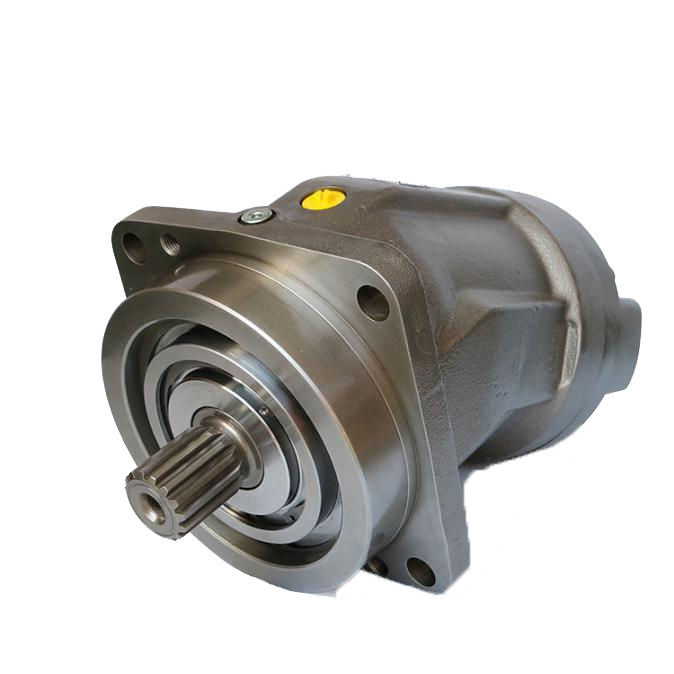
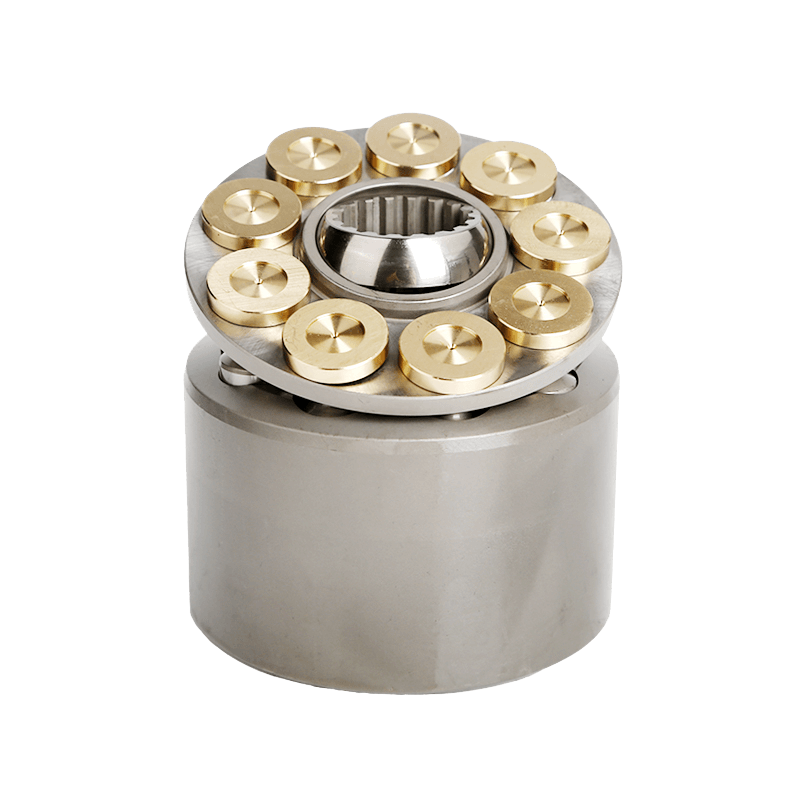
The three main types of hydraulic pumps are typically gear pumps, vane pumps, and piston pumps. Gear pumps are especially common because they are robust, cost-effective, and well-suited for many medium-pressure applications. Vane pumps can offer smooth flow and low noise in certain industrial environments. Piston pumps, including hydrostatic designs, are often chosen for higher-pressure, higher-efficiency, or variable-displacement needs.
As SAE International explains in its technical resources on fluid power system design, component selection must account for operating pressure, fluid cleanliness, speed range, and load profile—not simply nominal displacement. That principle is critical when comparing a simple gear pump with a more sophisticated hydrostatic pump arrangement.
According to NFPA fluid power industry data, fluid power systems are used in millions of industrial and mobile machine applications across North America, reflecting the continuing importance of standardized, serviceable pump technologies. According to Grand View Research, mobile hydraulics remain one of the strongest end-use segments due to demand from agriculture and construction equipment, where compact and durable pumps are essential.
As Eric Lanke, President and CEO of the National Fluid Power Association, states: “Fluid power is a foundational technology for modern manufacturing and mobile machinery because it delivers high power density, control, and reliability in demanding environments.” That statement captures why hydraulic pump design remains so relevant even as electrification advances in adjacent markets.
When sizing a pump, engineers generally begin with required actuator speed and force. For example, if hydraulic cylinders must extend rapidly under load, the pump needs enough flow in GPM to achieve desired motion and enough pressure in PSI to overcome system resistance. A compact dump trailer power unit may operate in a very different range from a high-duty industrial press or a closed-loop hydrostatic drive. In many gear pump applications, operating pressures may range from approximately 1,500 PSI to 3,000 PSI, while some piston pump systems can exceed 5,000 PSI depending on design and duty cycle.
Flow matters just as much as pressure. A pump delivering 10 GPM will behave very differently from one delivering 40 GPM, especially when combined with directional valves, relief valves, hydraulic motors, and cylinder bore sizes. Temperature rise, reservoir capacity, suction conditions, and line sizing all affect whether the selected pump performs as intended. The best engineering teams do not view the pump in isolation; they evaluate the entire hydraulic circuit.
According to ISO guidance on hydraulic fluid power cleanliness and system management, contamination control is one of the leading factors affecting component life. Even a high-quality hydraulic pump can fail early if filtration is inadequate or if fluid viscosity falls outside the recommended range. Many product pages mention filtration values, but buyers benefit more when that data is translated into practical risk reduction. Cleaner fluid reduces wear on gears, pistons, vanes, seals, and bearings, directly extending service intervals.
As a senior Parker Hannifin engineering specialist often emphasizes in fluid power training materials: “The right pump is the one that matches the system’s pressure, flow, duty cycle, and contamination control strategy.” That idea is simple, but it is the core of sound pump selection.
For buyers comparing gear pump options, especially where cost and ruggedness are priorities, POOCCA can help align displacement, shaft type, mounting style, and pressure requirements with the application. That is particularly useful for OEMs, agricultural machinery builders, compact hydraulic powerpack manufacturers, and distributors seeking alternatives to rigid catalog-only sourcing. Whether the need is a standard hydraulic pump or a custom-configured tandem arrangement, POOCCA offers a more consultative path than a simple listing page.
3. Industry Standards and Compliance: What Serious Buyers Should Verify
For industrial procurement teams, performance claims alone are not enough. The quality and repeatability of a hydraulic pump supplier should be validated through recognized standards, documented processes, and traceable manufacturing controls. This is especially important in international sourcing, where buyers may be comparing multiple brands, replacement options, and private-label opportunities.
ISO 9001 is one of the most important benchmarks. An ISO 9001-aligned manufacturer demonstrates a structured quality management system that helps reduce process variation, improve documentation, and support corrective action procedures. For hydraulic components such as pumps, valves, hydraulic cylinders, and motors, that consistency matters because even small tolerance deviations can affect leakage, noise, efficiency, and long-term reliability.
CE marking is also relevant for many products entering regulated markets, especially where equipment integration requires conformity with applicable European directives. While CE marking applies to the overall compliance context rather than functioning as a universal quality certificate, buyers should still verify which directives and product categories are relevant to the pump or hydraulic power unit they intend to import or install.
API standards become particularly important in certain energy, oil and gas, and process-industry contexts, where equipment expectations may extend beyond general industrial hydraulics. Not every hydraulic pump for mobile or industrial machinery falls under API-driven selection criteria, but for critical applications, understanding these standards can help buyers avoid expensive specification mismatches.
According to ISO, quality management systems built around process control, customer focus, and continual improvement are intended to enhance consistency and customer satisfaction across manufacturing operations. According to SAE International, standardized dimensions and performance references are vital in fluid power because interchangeability and design predictability reduce engineering risk across global supply chains.
NFPA also plays a major role through technical education, terminology alignment, and best-practice advocacy across the fluid power sector. These frameworks help buyers and engineers communicate more effectively about pump displacement, rotational speed, inlet conditions, pressure limits, and circuit safety.
In practical purchasing terms, serious buyers should ask six questions: Is the supplier working within ISO 9001 processes? Are test procedures documented? Are material and sealing choices suitable for the fluid? Are pressure and speed ratings clearly stated? Is traceability available? And can the supplier support custom configurations without compromising consistency?
These questions matter because hydraulic systems are interconnected. A pump that appears acceptable on paper can create issues if it does not pair correctly with relief valves, proportional valves, hydrostatic transmissions, cylinders, or hydraulic motors. That is why standards are not just administrative—they are operational safeguards.
For companies seeking a reliable source, POOCCA’s positioning around quality control, custom solutions, and factory-direct support aligns well with what modern B2B buyers expect from a hydraulic component partner. In a market crowded with generic listings, compliance awareness and engineering responsiveness are increasingly competitive advantages.
4. Implementation Guide: From Application Review to Successful Hydraulic Pump Integration
Implementing the right hydraulic pump starts with defining the application, not the product code. Whether the requirement involves agricultural machinery, a hydraulic powerpack, truck equipment, machine tools, lifting systems, or mobile attachments, the most successful projects begin by mapping performance targets before requesting quotes.
Step one is to define pressure and flow. Determine the maximum required PSI, target GPM, operating speed, and duty cycle. A system lifting intermittent loads may tolerate a simpler pump arrangement, while a machine running continuously may justify more advanced hydrostatic or piston pump engineering. Step two is to identify the driven components: hydraulic cylinders, motors, valves, coolers, and reservoir capacity. Step three is to confirm mounting, shaft, porting, and envelope constraints. Step four is to review oil type, temperature range, and filtration strategy.
According to Statista, industrial automation investment continues to rise globally, which has increased the need for compact, efficient, and application-specific hydraulic subsystems in both legacy and modern equipment. According to Markets and Markets, predictive maintenance adoption in industrial sectors is also growing steadily, helping operators reduce unexpected downtime and extend asset life through better component monitoring.
Those trends matter because implementation success is no longer measured only at startup. Buyers want pumps that maintain efficiency and serviceability over time. In field terms, that means checking suction line conditions, avoiding cavitation, ensuring proper alignment, priming the pump correctly, and setting relief valves within safe operating limits. It also means training technicians to recognize early signs of failure such as abnormal noise, heat, foaming, leakage, and inconsistent actuator speed.
As an ISO quality management expert states: “Reliable performance is rarely the result of a single component; it comes from disciplined specification, validated processes, and continuous verification.” In hydraulics, that principle is especially true.
A practical example: if an OEM is replacing a standard external gear pump used on a compact agricultural implement, the team should compare displacement per revolution, rated pressure, peak pressure, speed window, and shaft seal material—not just exterior dimensions. Another example: if a truck-mounted hydraulic powerpack needs faster cycle times, increasing GPM without confirming valve capacity and reservoir cooling can create new problems rather than solving the original one.
According to IBISWorld, maintenance-related costs and downtime continue to influence capital equipment purchasing behavior, which is why more buyers now prioritize supplier support and replacement consistency. This is where POOCCA becomes especially relevant for OEMs and distributors that need dependable sourcing, custom adaptation, and commercial flexibility. With factory-direct pricing and flexible MOQ options, POOCCA can support both pilot volumes and ongoing production demands while helping buyers optimize around real engineering requirements rather than generic catalog assumptions.
5. Future Outlook: Smarter Hydraulic Pump Selection in a More Competitive Market
The future of the hydraulic pump market will be shaped by efficiency, customization, and digital support. Buyers will continue to search for terms like hydraulic pumps for sale, electric hydraulic pumps, 12 volt hydraulic pumps, and hydraulic pumps manufacturers, but search behavior is becoming more technical and more outcome-driven. Procurement teams want solutions that are easier to integrate, easier to validate, and easier to source globally.
According to Grand View Research, demand for energy-efficient and compact hydraulic systems is expected to remain strong as industries modernize equipment while controlling lifecycle cost. According to Markets and Markets, smart manufacturing adoption will continue to expand across multiple sectors, creating more demand for hydraulic systems that deliver precise control, stable performance, and maintainability.
That does not mean traditional gear pumps will disappear. In fact, rugged gear pump designs are likely to remain essential where simplicity, affordability, and durability matter most. What will change is the buying expectation around them. Catalog access will still matter, but technical guidance, quality assurance, and customization support will matter more.
For companies evaluating a hydro pack hydraulic pump alternative or looking beyond standard directory pages, the smarter path is to combine engineering fundamentals with supplier partnership. If your team is reviewing hydraulic pump options for OEM equipment, replacement demand, or distribution supply, connecting with POOCCA can be a practical next step toward a better-fit solution backed by custom support, ISO 9001-aligned quality thinking, and factory-direct value.
Frequently Asked Questions
What is a hydraulic pump?
A hydraulic pump is a mechanical device that converts input mechanical energy into hydraulic flow for a fluid power system. It supplies the flow that moves fluid through valves to actuate hydraulic cylinders or hydraulic motors. Pressure is created when that flow encounters resistance in the circuit. The three main categories are gear pumps, vane pumps, and piston pumps. Gear pumps are often the most common because they are simple, durable, and economical. According to NFPA, fluid power remains a foundational motion-control technology across industrial and mobile machinery, which is why hydraulic pumps continue to be widely used in lifting, pressing, steering, and drive applications. In practical terms, a buyer selecting a hydraulic pump should review displacement, maximum PSI, target GPM, speed range, mounting style, and fluid compatibility. For systems such as a hydraulic powerpack or compact machine, these factors directly affect performance, heat generation, and service life.
What is the most common hydraulic pump?
The most common hydraulic pump in many industrial and mobile applications is the external gear pump. It is widely used because it offers a good balance of cost, ruggedness, simplicity, and availability. Gear pumps are frequently found in agricultural implements, small power units, trucks, machine tools, and general-purpose hydraulic systems. According to Markets and Markets, demand for hydraulic pumps remains strong in construction and agriculture, sectors where gear pumps are especially common due to their durability and straightforward maintenance profile. That said, the “most common” pump can vary by industry. Hydrostatic drive systems often rely on piston pumps, while lower-noise industrial circuits may use vane pumps. If your application has moderate flow needs, consistent duty, and a reasonable pressure range, a gear pump is often the starting point. Buyers should still verify pressure rating, speed, shaft type, and filtration requirements before purchase.
How do I know what hydraulic pump I need?
To determine what hydraulic pump you need, begin with the machine’s required pressure and flow. Pressure is typically expressed in PSI and reflects the force the system must generate; flow is expressed in GPM and affects actuator speed. Then review the type of application, fluid viscosity, duty cycle, operating temperature, mounting dimensions, shaft style, and whether the circuit uses hydraulic cylinders, motors, or both. According to SAE International, proper component matching is essential to prevent efficiency loss and premature failure in fluid power systems. You should also evaluate whether the system needs a fixed-displacement gear pump, a smoother vane pump, or a higher-performance piston or hydrostatic pump. If replacing an existing model, compare displacement per revolution, pressure ratings, inlet and outlet port sizes, and seal materials. For OEM or custom machinery, working with a supplier that can review technical drawings and performance targets is often the fastest way to avoid oversizing or undersizing.
What is a hydraulic powerpack?
A hydraulic powerpack, sometimes called a hydraulic power unit, is a self-contained assembly that includes a hydraulic pump, electric motor or engine, reservoir, valves, and supporting components needed to generate and control hydraulic power. It acts as the central energy source for external cylinders, motors, or lifting mechanisms. According to Grand View Research, compact and mobile hydraulic systems continue to see strong demand across industrial and construction applications, which supports the ongoing use of modular powerpacks in machinery, trailers, workshop equipment, and maintenance tools. A powerpack can be built around AC electric, DC electric, or engine-driven input depending on the application. For example, 12 volt hydraulic pumps are common in vehicle-based systems such as dump trailers and truck accessories, while larger industrial units may use three-phase electric motors. When evaluating a hydraulic powerpack, users should review pump displacement, tank size, operating PSI, GPM, control valve configuration, and cooling requirements.
What is the lifespan of a hydrostatic pump?
The lifespan of a hydrostatic pump depends on operating pressure, contamination control, temperature, duty cycle, and maintenance quality. In well-designed and well-maintained systems, hydrostatic pumps can deliver thousands of operating hours, but contamination, cavitation, overheating, and improper relief settings can shorten life dramatically. According to ISO guidance on fluid cleanliness and system management, contamination control is one of the biggest factors affecting component longevity in hydraulic systems. Hydrostatic pumps often operate in demanding conditions because they are used in variable-speed drive systems and closed-loop circuits, where precision and efficiency matter. To maximize lifespan, operators should maintain proper filtration, monitor oil condition, ensure adequate cooling, and verify that the pump is operating within rated speed and pressure limits. Warning signs of wear include noise, sluggish response, reduced output, leakage, and temperature rise. In fleet and industrial environments, condition monitoring and disciplined maintenance often deliver better life-cycle results than simply replacing failed units reactively.
What are the three main types of hydraulic pumps?
The three main types of hydraulic pumps are gear pumps, vane pumps, and piston pumps. Gear pumps use meshing gears to move fluid and are valued for cost-effectiveness and durability. Vane pumps use sliding vanes in a rotor and are often selected for smoother, quieter flow. Piston pumps use reciprocating pistons and can support higher pressure, higher efficiency, and variable displacement in demanding systems. According to SAE International, pump selection should be based on system pressure, flow demand, duty cycle, and the broader hydraulic circuit rather than on pump type alone. For example, a compact agricultural machine may perform very well with a gear pump, while a hydrostatic drive in construction equipment may require a piston pump. Vane pumps may be attractive in industrial machinery where low noise and stable output are priorities. Understanding these differences helps buyers choose the right pump architecture instead of relying only on brand familiarity or a generic product listing.