 English
 Russian
 Arabic
 Indonesian
 Turkish
 Vietnamese
 Polish
 German
 Malay
Malay Thai
Thai Kazakh
 Spanish
 Chinese (Simplified)
 Korean
 Italian
 Azerbaijani
 Dutch
Dutch French
 Romanian
 Portuguese
 Hindi
HindiAccording to Grand View Research, the global hydraulic equipment market was valued at USD 45.9 billion in 2023, underscoring how critical hydraulic pumps, motors, valves, cylinders, and power units remain across construction, agriculture, material handling, marine, and industrial machinery. For buyers searching for a vivolo hydraulic pump, the real decision goes beyond brand familiarity: it involves pressure capability, displacement range, rotational direction, mounting standards, efficiency, seal design, application fit, and long-term serviceability. This guide explains how hydraulic unidirectional pumps and gear pumps work, what differentiates common product groups, how to compare suppliers such as Danfoss, OMFB, and Italian hydraulic pump manufacturers, and what OEM buyers should evaluate before placing orders.
Industry Context: Why Unidirectional Hydraulic Gear Pumps Still Dominate OEM Design
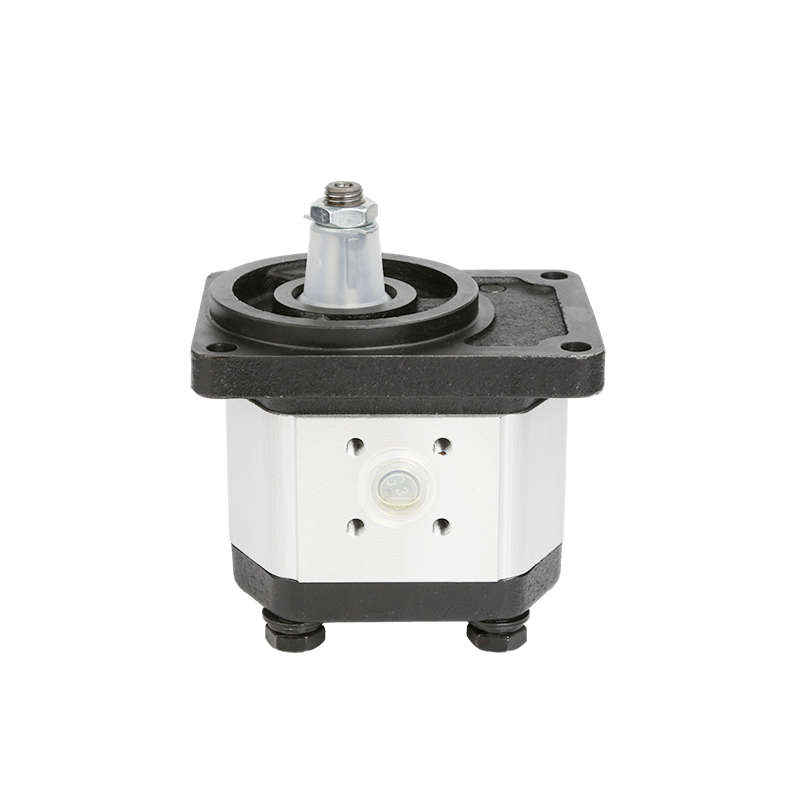
In B2B hydraulics, unidirectional external gear pumps remain one of the most widely specified pump architectures because they combine compact construction, predictable performance, and cost efficiency. They are commonly used in dump trucks, agricultural implements, aerial work platforms, forestry equipment, compact power packs, municipal vehicles, and machine tools. A typical unidirectional gear pump converts mechanical shaft rotation into hydraulic flow, delivering oil volume to actuators such as hydraulic cylinders and hydraulic motors at defined operating pressure.
According to MarketsandMarkets, the hydraulic pumps market is projected to grow at a CAGR of more than 5% over the forecast period, supported by infrastructure investment, agricultural mechanization, and demand for mobile equipment. At the same time, according to Statista, the global construction equipment market surpassed USD 160 billion in recent annual estimates, directly reinforcing demand for durable HYDRAULIC power transmission components.
When engineers search for a vivolo hydraulic pump, they are often really trying to learn about different types of hydraulic gear pumps and how those products compare with other brands in terms of displacement, pressure, shaft options, and installation flexibility. Competitor catalog pages often emphasize a broad size range, clockwise or counterclockwise rotation, flange variants, and optional anti-cavitation or relief features. That approach is useful for quick sourcing, but many buyers also need guidance on fit-for-purpose selection.
This is where POOCCA brings a practical advantage. As a hydraulic component manufacturer and supply partner, POOCCA supports OEM and distributor requirements with custom solutions, factory-direct pricing, and flexible MOQ options—important for buyers balancing pilot builds, aftermarket demand, and cost control. For procurement teams needing technical consultation on hydraulic pumps, motors, valves, or integrated solutions, POOCCA can be contacted here.
From a system perspective, gear pumps remain popular because they deliver stable flow in compact envelopes. In many mobile hydraulic systems, operating pressures commonly range from 145 bar to 250 bar, with premium designs extending toward 280–320 bar intermittently depending on housing, bearing, and seal design. Flow is typically discussed in GPM or L/min, while force output at the actuator depends on pressure in PSI or bar and cylinder bore dimensions. For example, a 10 GPM gear pump driving a properly sized circuit can efficiently operate tipping, lifting, steering, or clamping functions without the cost and complexity of variable displacement alternatives.
Technical Deep Dive: How Unidirectional Hydraulic Gear Pumps and Motors Work
A unidirectional external gear pump uses two meshing gears inside a closely machined housing. As the input shaft rotates, fluid is trapped between gear teeth and the housing wall, carried around the outside of the gear set, and forced toward the outlet. Because the meshing gears block return flow at the center, pressure builds on the discharge side. This design is straightforward, durable, and highly suited to compact hydraulic power systems.
According to the NFPA (National Fluid Power Association), fluid power systems are indispensable in applications where high force density and precise power transmission are required. In practical terms, this is why gear pumps are still specified widely for truck hydraulics, agricultural attachments, and industrial auxiliary circuits. They are simple to maintain, relatively tolerant of harsh duty cycles, and available in a broad range of frame sizes such as Group 1, Group 2, and Group 3 gear pump configurations.
As George Schuster, fluid power consultant, states: “External gear pumps remain a leading choice in mobile hydraulics because they offer a strong balance of simplicity, cost efficiency, and dependable volumetric performance.” That quote captures why engineers continue to specify this pump type even when more complex technologies exist.
Performance selection should always start with four core variables: displacement, speed, pressure, and fluid compatibility. Displacement is generally expressed in cm³/rev. Speed is measured in rpm. Flow depends on both values, and output pressure is determined by resistance in the hydraulic circuit. A pump does not “create” pressure by itself; rather, it produces flow, and the system load creates pressure.
According to SAE International, shaft alignment, inlet conditions, and contamination control are among the most influential factors affecting pump service life. Cavitation, aeration, and particle contamination are recurring causes of noise, efficiency loss, and seal failure. According to ISO 4406 cleanliness practice widely referenced across industry, stricter contamination control can significantly improve component longevity in hydraulic systems, particularly for pumps, valves, and motors operating above 2,500 PSI.
Most buyers exploring the term vivolo hydraulic pump are usually comparing specifications such as:
- Displacement range: from very small auxiliary pump capacities to larger pump bodies for truck and industrial use
- Pressure rating: continuous and peak bar/PSI values
- Rotation: clockwise, counterclockwise, or convertible configurations
- Mounting options: European, SAE, or custom flanges
- Ports and shafts: taper, splined, keyed, or parallel shaft variants
- Multiple-section builds: tandem or multi section hydraulic pump arrangements
According to IBISWorld, industrial machinery buyers are placing increasing emphasis on lifecycle value rather than unit price alone, a trend visible in hydraulic procurement where downtime costs can exceed component savings. That is why OEMs often evaluate not only pump list price, but also lead time, interchangeability, quality control, and post-sale support.
POOCCA addresses this with a portfolio covering hydraulic pumps, motors, valves, and related components, while also supporting customization for mounting dimensions, sealing, and application-specific pressure requirements. For projects requiring direct factory communication, technical review, or MOQ flexibility, buyers can reach out to POOCCA here.
As Dr. Michael Grant, hydraulic systems engineer, notes: “The most common gear pump selection error is choosing by displacement alone without validating inlet conditions, duty cycle, and pressure peaks. Reliable hydraulic performance depends on the whole circuit, not just the pump body.”
This matters for diagnostics too. If users ask, “How do I tell if my hydraulic pump is bad?” the warning signs typically include rising noise, foaming oil, reduced actuator speed, overheating, fluctuating pressure, and visible metal debris in filtration systems. A common hydraulic pump failure is cavitation-related wear caused by poor suction conditions, wrong oil viscosity, blocked inlet lines, or excessive speed. In many field cases, the pump is blamed first, while the real problem lies in the reservoir design, inlet hose sizing, or contamination control strategy.
Industry Standards and What Buyers Should Verify Before Ordering
Hydraulic procurement today requires more than matching a displacement number. OEMs and distributors should evaluate manufacturing quality, conformity documentation, and application compatibility. A reputable supplier should be able to discuss quality processes tied to ISO 9001, regional compliance requirements such as CE marking where applicable, and product alignment with relevant API standards or customer-specific technical standards for industrial and energy-sector applications.
ISO 9001 matters because it indicates a documented quality management framework governing traceability, process control, inspection, corrective action, and supplier management. It does not guarantee pump performance by itself, but it does improve consistency—an essential factor when ordering repeat batches of hydraulic gear pumps or motors for OEM production.
SAE International standards are especially important when discussing flanges, shafts, ports, and mobile hydraulic system integration. Buyers in North America often require interchangeability with SAE mounting conventions, while European equipment may lean toward different flange and port standards. Mismatched standards can create installation delays, leakage risk, shaft coupling issues, or warranty disputes.
NFPA references also remain relevant in system-level design because they provide a shared vocabulary for fluid power safety, symbols, and application engineering. For example, when someone searches for the unidirectional pump symbol, they are often trying to decode hydraulic schematics and identify correct directional flow in a circuit design. Getting this right is essential when pairing pumps with valves, relief devices, and return-line filtration.
According to ISO, standardized quality and process frameworks improve consistency across global manufacturing chains, a point increasingly relevant as OEMs diversify sourcing beyond a single domestic market. According to Statista, global manufacturing output remains heavily interconnected, and supplier resilience has become a top procurement concern since supply chain disruptions of recent years. In hydraulic sourcing, this means buyers now prioritize technical documentation, stable lead times, and multi-market support as much as raw pricing.
Another practical issue is documentation. Search phrases like Vivoil gear Pump catalogue, Vivolo gear pump PDF, and Vivolo Pump Distributors show that buyers are actively trying to confirm dimensions, availability, and replacement compatibility. A good supplier should provide clear dimensional drawings, pressure curves, shaft load notes, and seal material options—not just a list of product groups.
For customers seeking alternatives or cross-reference support, POOCCA can help evaluate equivalent hydraulic pumps and motors for OEM, aftermarket, and distributor programs. Its value proposition includes custom solutions, factory-direct pricing, and flexible MOQ, which is particularly useful for mixed-volume purchasing or prototype-to-production transitions.
Implementation Guide: How to Select the Right Hydraulic Pump for Real-World Applications
Selection begins with application duty. Is the pump being used for intermittent truck tipping, continuous industrial lubrication, steering, agricultural lifting, or power-pack service? Each use case changes the ideal displacement, pressure rating, and housing design. A buyer comparing Danfoss, OMFB, Vivoil, or another Italian hydraulic pump manufacturer should map product specifications to actual system load data before making a sourcing decision.
Start with required flow. If your actuator or hydraulic motor needs 8 GPM at working speed, select a displacement and rpm combination that delivers that flow without pushing the pump beyond its optimal range. Then calculate pressure. If your hydraulic cylinder requires 2,500 PSI to move the load with margin, make sure the selected pump’s continuous pressure rating exceeds normal operating demand and that the relief valve is set correctly. If the circuit experiences repeated pressure spikes, review peak rating and shaft seal capability carefully.
According to MarketsandMarkets, predictive maintenance and smart industrial monitoring are increasing equipment uptime by double-digit percentages in many sectors. In hydraulics, even simple monitoring of temperature, pressure, and filter condition can reduce unplanned stoppages. According to NFPA, better contamination control and component matching directly improve system reliability and safety, especially in mobile systems exposed to dust, vibration, and thermal swings.
Practical implementation checklist:
- Confirm rotation: unidirectional pumps must match the prime mover rotation.
- Check suction conditions: undersized inlet lines can cause cavitation.
- Validate fluid viscosity: wrong oil affects leakage, wear, and cold-start torque.
- Review mounting and shaft standards: avoid coupling misalignment.
- Match pressure and duty cycle: distinguish continuous from intermittent ratings.
- Plan maintenance access: serviceability affects total cost of ownership.
- Consider multi-section needs: a 3 section hydraulic pump may simplify system layout.
For buyers asking “Who makes the best hydraulic pumps?” the honest answer is application-dependent. Some brands are known for broad distributor networks, others for mobile hydraulics expertise, and others for cost-effective OEM sourcing. The best supplier is the one that delivers verified quality, technical fit, documentation, and reliable supply continuity.
That is why many B2B purchasers now compare not only catalog breadth but responsiveness. If your project needs a non-standard shaft, mounting flange, special seal, or private-label support, the supplier’s engineering flexibility becomes a differentiator. For these needs, POOCCA offers direct contact for custom hydraulic solutions, especially where MOQ, lead time, and cost efficiency must be balanced.
Future Outlook: What the Next Generation of Hydraulic Gear Pumps Will Look Like
Hydraulics remains a mature but evolving sector. According to Grand View Research, demand for efficient fluid power components will continue rising as construction, agriculture, automation, and utility vehicle markets expand. According to MarketsandMarkets, electrification and smarter machine architecture are not eliminating hydraulic systems; instead, they are pushing suppliers to develop more efficient, quieter, and more compact pump solutions.
Future product development will likely focus on tighter internal leakage control, improved seal life, better bearing support, and stronger compatibility with electrified prime movers. We can also expect more modular designs, making it easier to configure different types of hydraulic power assemblies, including tandem pumps, integrated valve blocks, and compact units for battery-powered equipment.
For procurement teams searching terms like vivolo hydraulic pump, bi directional pump, multi section hydraulic pump, or Vivolo hydraulic motor, the trend is clear: buyers want both trusted performance and sourcing agility. Suppliers that combine technical support, manufacturing discipline, and flexible order structures will be best positioned to serve OEM and aftermarket demand.
If your organization is evaluating hydraulic gear pumps, motors, valves, or replacement options for mobile and industrial systems, a supplier with ISO 9001-aligned quality processes, customization capacity, and factory-direct support can offer a meaningful advantage. That is where POOCCA fits naturally into the conversation as a practical sourcing partner for modern hydraulic applications.
Frequently Asked Questions
What are the different types of hydraulic gear pumps?
The main categories are external gear pumps, internal gear pumps, and gerotor-style designs, though in everyday mobile hydraulics, external gear pumps are the most common. They are valued for durability, simple construction, and favorable cost-performance ratios. Within this category, buyers will also encounter unidirectional, bi directional, tandem, and multi section hydraulic pump configurations. Group sizes such as Group 1, Group 2, and Group 3 indicate frame size and approximate displacement class rather than a universal performance rule. According to NFPA, gear pumps remain among the most widely used fluid power sources in mobile machinery because of their compact form and robust operation. According to Grand View Research, continued investment in off-highway equipment is helping sustain demand for fixed-displacement hydraulic pumps globally. For most OEM buyers, the real decision is not just pump type, but whether the pump’s displacement, pressure rating, shaft option, seal material, and mounting standard fit the application. If you need to learn about different types in a sourcing context, compare continuous pressure, peak pressure, volumetric efficiency, and available port configurations before narrowing your shortlist.
Are hydraulic gear pumps directional?
Yes. Many hydraulic gear pumps are built for a specific shaft rotation, typically clockwise or counterclockwise when viewed from the shaft end. That means they are directional in normal use, especially unidirectional pumps. However, some product designs can be reconfigured for opposite rotation through internal changes or specific assembly options. This is why datasheets carefully identify inlet and outlet ports, shaft direction, and drain requirements if applicable. According to SAE International, installation errors involving shaft rotation and mounting alignment are common causes of startup issues in hydraulic systems. In practical terms, if the rotation is wrong, flow may be reversed or the pump may fail rapidly due to improper lubrication and pressure loading. Buyers searching for a unidirectional pump symbol are often trying to verify this on hydraulic schematics. Always match motor or engine rotation to the pump specification. If you are replacing a pump from a Vivolo, Vivoil, Danfoss, or OMFB application, check shaft-end viewing convention, flange type, and port orientation before ordering. A rotation mismatch can cause immediate performance problems even if displacement and pressure ratings are otherwise correct.
Which type of gear is used in a gear pump?
In an external gear pump, two externally toothed spur gears are most commonly used. One gear is driven by the input shaft and the second is an idler. As the gears rotate, they carry hydraulic fluid around the outside of the gear mesh from inlet to outlet. Internal gear pumps use a different arrangement with an inner and outer gear. For common mobile HYDRAULIC systems, external spur gear designs dominate because they are compact, economical, and easy to package. According to IBISWorld, machinery buyers increasingly favor standardized, proven component platforms to simplify service and replacement inventories. That preference supports continued demand for conventional external gear pump architectures. Gear profile accuracy, side-plate design, bearing support, and housing tolerances all affect efficiency and durability. So while the answer is often “spur gears,” the engineering quality behind the gears matters more than the term itself. In higher-performance applications, careful machining and pressure-balanced wear plate design can materially improve volumetric efficiency, especially as operating pressure climbs beyond 2,000 PSI. For OEM projects, ask the supplier about material quality, bearing arrangement, and seal options—not just gear type.
What is a group 3 gear pump?
A Group 3 gear pump is generally a larger frame-size external gear pump compared with Group 1 or Group 2 units. “Group” usually refers to a family size with shared mounting patterns, body dimensions, and displacement ranges, though exact values vary by manufacturer. Group 3 pumps are often selected for higher flow requirements in trucks, agricultural machines, industrial power packs, and heavy-duty auxiliary systems. They can support larger displacement per revolution, making them suitable where more GPM is needed at a given engine or motor speed. According to MarketsandMarkets, growth in mobile machinery and utility vehicles continues to support demand for robust fixed-displacement hydraulic pump platforms, especially in medium-duty and heavy-duty applications. A Group 3 pump may also be available as part of a tandem or multi-section assembly, giving designers more flexibility for steering plus work functions in one package. When selecting one, do not assume all Group 3 products are interchangeable. Confirm shaft standard, flange dimensions, pressure rating, seal material, and port thread type. For replacements, cross-check dimensional drawings carefully, especially if sourcing among European and North American standards.
How do I tell if my hydraulic pump is bad, and what is a common hydraulic pump failure?
Common warning signs include whining or knocking noise, reduced actuator speed, erratic movement, overheating, difficulty building pressure, visible foaming in the reservoir, and metallic contamination in the filter. A bad pump may also show lower output flow at normal rpm or fail to reach expected working pressure under load. According to NFPA, contamination and improper fluid conditions are leading contributors to hydraulic component failure across many system types. A very common hydraulic pump failure is cavitation, which occurs when inadequate inlet conditions cause vapor bubbles to form and collapse inside the pump, damaging internal surfaces. Aeration, seal failure, shaft misalignment, and running with the wrong oil viscosity are also frequent causes. Before condemning the pump itself, inspect inlet hoses, reservoir oil level, suction strainers, coupling alignment, relief valve settings, and fluid cleanliness. Many field failures are system-induced rather than purely manufacturing defects. If the machine previously used a vivolo hydraulic pump or similar gear pump, compare actual operating PSI, GPM demand, and duty cycle to the replacement pump’s ratings. Correct diagnosis saves both downtime and unnecessary parts replacement.
What is Vivolo used for, and how should buyers compare it with other brands?
In search behavior, “Vivolo” is often used as shorthand for Italian hydraulic gear pump products used in mobile and industrial hydraulic circuits. Buyers may be looking for a replacement pump, a distributor, a PDF catalogue, or dimensional interchange data. In practical terms, such pumps are used in dump trailers, tippers, agricultural machinery, compact power packs, machine tools, and auxiliary hydraulic circuits where fixed-displacement flow is needed. According to Statista, global demand for machinery and equipment remains tightly linked to infrastructure, logistics, and food production sectors—all major users of hydraulic power systems. When comparing brands, focus on technical fit first: displacement, speed range, continuous and peak pressure, mounting flange, shaft style, seal material, and available documentation. Then compare supply factors such as lead time, MOQ, pricing, after-sales support, and customization ability. This is where partners like POOCCA may offer an advantage for OEM and distributor buyers needing custom solutions, factory-direct pricing, and flexible MOQ rather than a catalog-only transaction. The best choice depends on your application, replacement urgency, and whether you need standard stock or engineered modifications.