
 English
 Russian
 Arabic
 Indonesian
 Turkish
 Vietnamese
 Polish
 German
 Malay
Malay Thai
Thai Kazakh
 Spanish
 Chinese (Simplified)
 Korean
 Italian
 Azerbaijani
 Dutch
Dutch French
 Romanian
 Portuguese
 Hindi
Hindi1. Introduction: The Role of Gear Pump Pressure vs Flow in Hydraulic Systems
In hydraulic systems, gear pump pressure vs flow relationships play an important part in fluid power transmission. These relationships affect system performance directly. They become essential knowledge for people who work with hydraulic equipment.
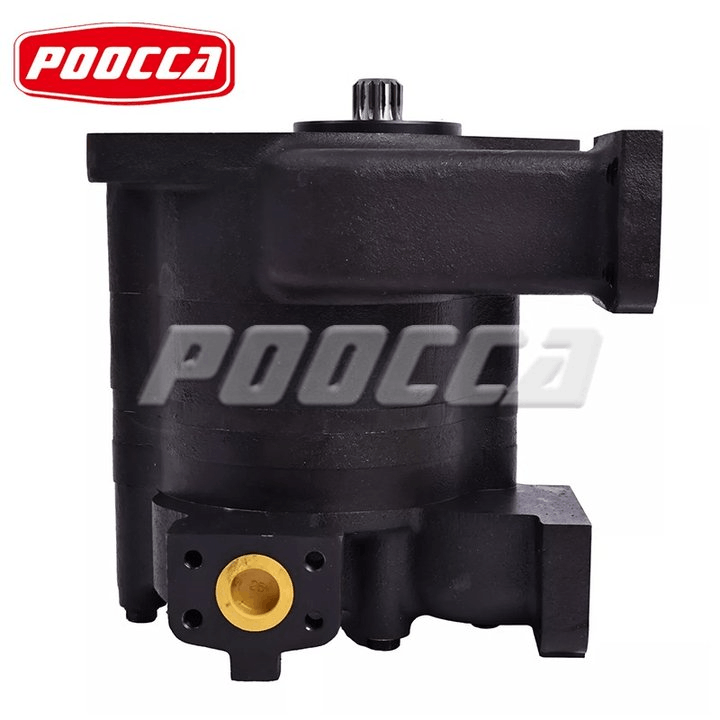
1.1 Basic Structure of Gear Pump Pressure vs Flow Systems
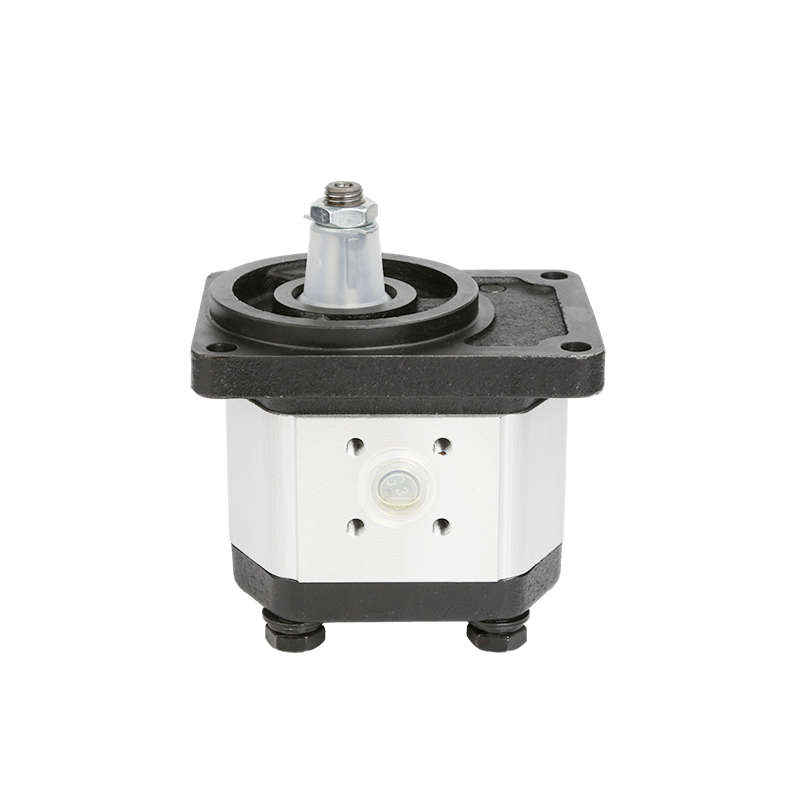
The basic structure of gear pump pressure vs flow systems centers on the gear pump’s core components. These components control pressure and flow through meshing gears, ports, and a fluid-containing housing.
Gear pump pressure vs flow forms a core relationship. It decides how well a hydraulic system moves fluid power in industrial use. Gear pumps work as positive displacement devices. They deliver an almost steady volume of fluid per revolution no matter the downstream resistance. This holds true until pressure limits appear.
2. Gear Pump Applications and the Importance of Pressure vs Flow
The gear pump finds wide use across many industrial sectors. It serves manufacturing machinery and mobile equipment. Gear pump pressure vs flow relationships help provide reliable fluid power in different operating conditions.
2.1 Key Application Areas for Gear Pump Pressure vs Flow
The main application areas where gear pump pressure vs flow matters include hydraulic power units. These units need balanced pressure and flow for stable operation. Machine tools require precise gear pump pressure vs flow for accurate machining. Construction equipment depends on consistent pressure-flow relationships for hydraulic functions. Agricultural machinery needs optimized pressure and flow for irrigation and harvesting tools. Automotive systems rely on balanced gear pump pressure vs flow for brakes and power steering.
Additional sectors include petrochemical processing for transferring viscous fluids like lubricants and fuels. Metallurgy uses it for high-reliability lubrication circuits. Aerospace supports actuation systems under varying loads.
2.2 Application-Specific Pressure vs Flow Configurations
Each application needs specific gear pump pressure vs flow configurations. These meet key performance requirements such as operating pressure limits and required flow rate of gear pump ranges. They also address fluid compatibility needs. In high-viscosity fluid handling, internal gear designs often keep more stable flow under pressure changes compared to external types.
3. Maintaining Gear Pump Pressure vs Flow: Focus on Hydraulic Gear Pump
Maintaining gear pump pressure vs flow balance needs regular attention to the hydraulic gear pump. A well-designed maintenance program can extend the pump’s service life greatly. It also reduces unplanned downtime.
3.1 Essential Maintenance Activities for Gear Pump Pressure vs Flow
To keep optimal gear pump pressure vs flow relationships, focus on these maintenance tasks. Perform regular fluid analysis and replacement to prevent contamination. Check seals and replace them to avoid pressure or flow leaks. Monitor gear wear to keep consistent pressure and flow. Conduct pressure and flow testing to verify balanced performance. Perform lubrication system checks to prevent mechanical issues.
3.2 Maintenance Best Practices for Hydraulic Gear Pump
Following the manufacturer’s recommendations for hydraulic gear pump ensures gear pump pressure vs flow operates at peak efficiency. This practice avoids premature failure and reduces long-term maintenance costs.
A gear pump is a positive-displacement device. It uses meshing gears to move fluid reliably in low-to-medium pressure applications.
4. Selecting the Right Flow Rate of Gear Pump: Aligning with Pressure Needs
Selecting the right flow rate of gear pump requires careful evaluation of application requirements. This step becomes especially important when balancing gear pump pressure vs flow relationships.
4.1 Key Factors for Selecting Flow Rate of Gear Pump
When choosing a flow rate of gear pump, consider these critical factors. Operating pressure must align with flow rate for balanced gear pump pressure vs flow. Flow rate needs must match the pump’s output to system demands. Fluid type affects pressure-flow dynamics and gear pump performance. Environmental conditions influence pressure and flow stability.
Additional considerations include pump speed. This is typically measured in RPM. Displacement volume per revolution appears in cm³/rev or mL/r. System resistance builds pressure as flow meets restrictions.
4.2 Selection Checklist for Flow Rate of Gear Pump
When choosing a flow rate of gear pump, follow this checklist. Match pump specifications to system pressure and flow requirements. Ensure compatibility with existing hydraulic gear pump components. Evaluate energy efficiency to lower operating costs. Assess maintenance needs and service availability. Review manufacturer reputation and support capabilities.
Flow rate of gear pump refers to the volume of fluid delivered per unit time. It serves as a key indicator of gear pump performance. Theoretical flow equals displacement multiplied by rotational speed. Actual flow accounts for volumetric efficiency losses due to internal leakage. These losses increase with higher differential pressure.
5. Internal and External Gear Pump Designs: Impact on Pressure vs Flow Performance
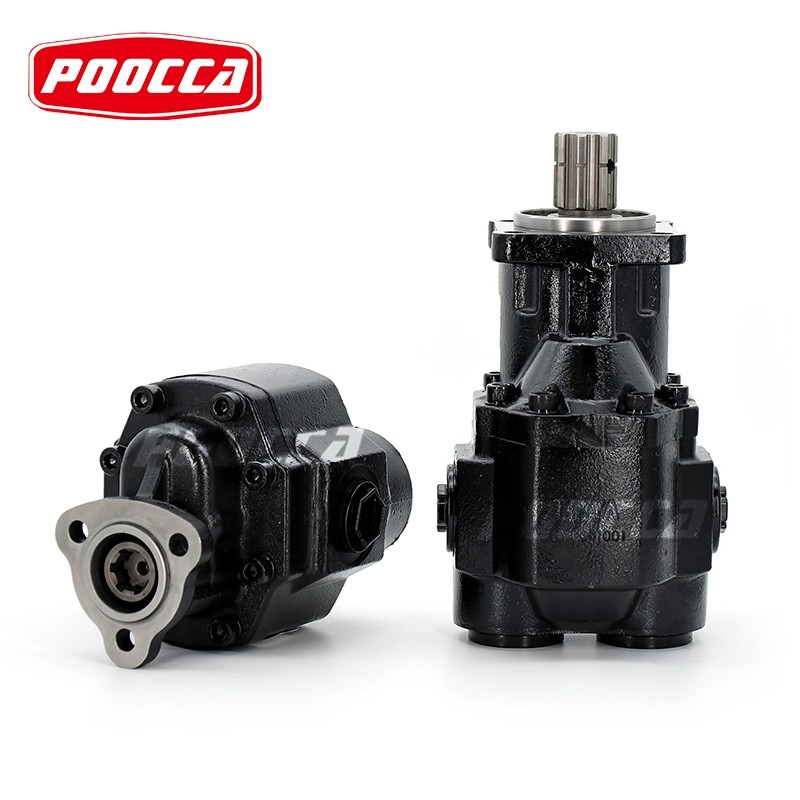
Gear pumps come in two primary configurations. These are internal and external. Each influences pressure and flow characteristics in different ways.
5.1 External Gear Pump Operation and Characteristics
External gear pumps feature two meshing gears rotating within a tight-fitting housing. One gear drives the other. This creates expanding chambers on the suction side to draw fluid in. It also forms contracting chambers on the discharge side to push fluid out. These designs deliver continuous flow with some inherent pulsation. They support higher pressures, often up to 210-250 bar in robust models, due to rigid shaft support. Flow stays largely constant with speed but declines slightly with rising differential pressure because of increased slip across gear clearances and side plates.
5.2 Internal Gear Pump Operation and Characteristics
Internal gear pumps utilize an outer rotor with internal teeth meshing with a smaller inner rotor. The crescent-shaped separator maintains sealing between suction and discharge zones. This configuration produces smoother, nearly pulse-free flow. It makes the design suitable for applications requiring consistent pressure delivery even with varying viscosities. Internal designs often perform well in handling higher-viscosity fluids at moderate pressures. They minimize noise and pulsation that could otherwise affect downstream flow stability.
5.3 Comparative Pressure-Flow Efficiency
External gear pumps typically achieve high volumetric efficiency of 85-98 percent at lower pressures. Efficiency drops as pressure rises due to leakage. Internal gear pumps maintain more stable efficiency across a broader viscosity range. They may have slightly lower maximum pressure ratings in some constructions. Overall efficiency, which combines volumetric and mechanical components, usually ranges from 75-90 percent. This depends on operating conditions, speed, and fluid properties. Performance curves show how flow plateaus at low pressure then slopes downward as backpressure increases.
6. Performance Curves and Efficiency Considerations in Gear Pump Pressure vs Flow
Gear pump performance curves provide essential data for understanding real-world pressure vs flow behavior.
6.1 Interpreting Flow vs Pressure Curves
In a typical gear pump curve, the x-axis represents differential pressure. The y-axis shows flow rate. At zero or low pressure, flow approaches the theoretical value, which is displacement times speed. As pressure increases, internal leakage grows. This causes actual flow to decrease gradually. This inverse relationship shows that the pump generates flow. System resistance generates pressure. Overloading beyond rated differential pressure risks rapid efficiency loss and potential damage.
6.2 Factors Affecting Volumetric and Overall Efficiency
Volumetric efficiency measures how closely actual flow matches theoretical output. It declines with higher pressure, lower viscosity, or increased clearances from wear. Mechanical efficiency accounts for friction losses in bearings and gears. Overall efficiency is the product of both. It often peaks at medium pressures and optimal speeds. Fluid temperature influences viscosity and thus leakage rates. Proper filtration prevents abrasive particles from speeding up wear and degrading the pressure-flow relationship.
6.3 Power and Torque Relationships
Hydraulic power output approximates pressure times flow with appropriate unit conversions. Input mechanical power must exceed this to overcome losses. Torque requirements rise with pressure for a given displacement. This guides motor or drive sizing. Accurate selection using these relationships prevents under-sizing or over-sizing. Such mistakes could compromise system balance or energy consumption.
Partner with a Reliable Hydraulic Gear Pump Manufacturer and Supplier
POOCCA acts as a dependable manufacturer and supplier of external and internal gear pumps. Such pumps can be configured for compatibility with reputable brands such as Rexroth, Parker, Marzocchi, Shimadzu, and many others. The company offers over 1,600 different types of hydraulic products, expedited shipping services, technical assistance, and a warranty of 12 months. The firm utilizes over two decades of expertise in the industry, including exports to over 120 nations worldwide.
Inquire about your product needs, custom design, and procurement from POOCCA. Feel free to contact the company using the provided phone number (+86 18927498997), email address (sales@kamchau.com), or by visiting the company in person in its manufacturing facility in Shenzhen.