
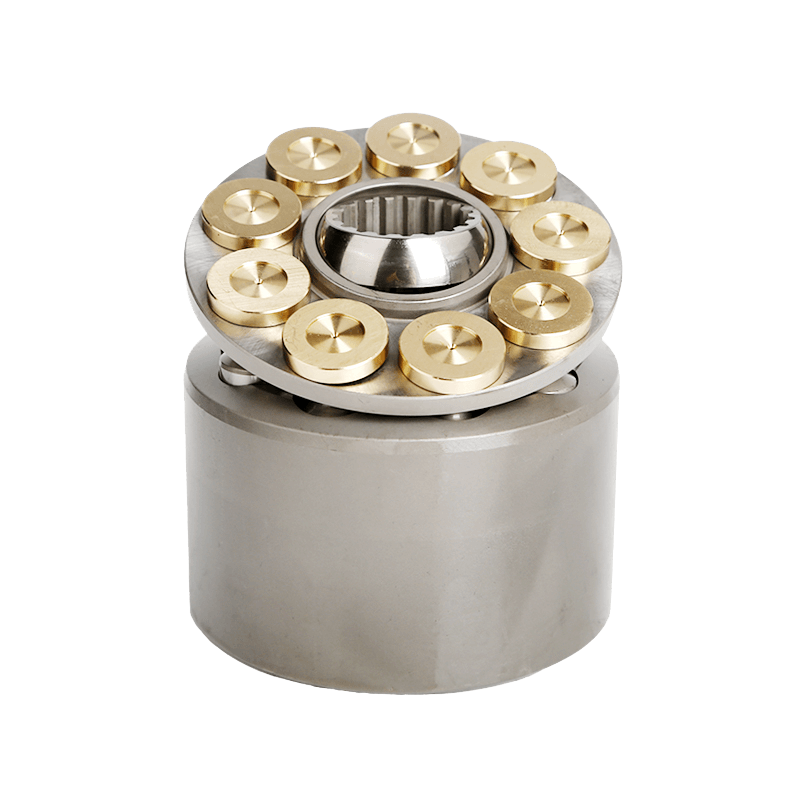
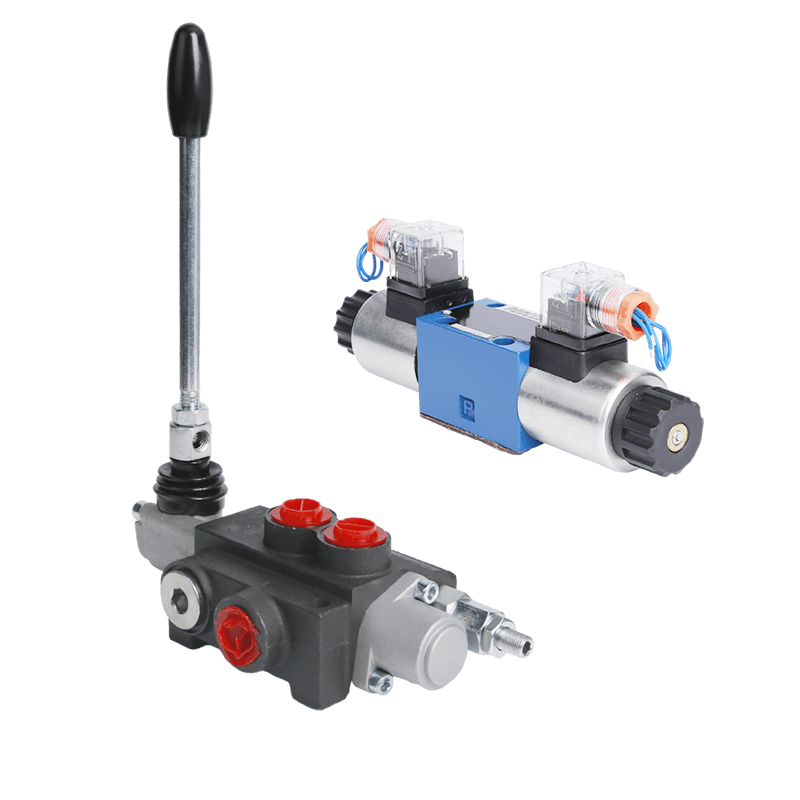
液压系统 need strong and reliable pumps to turn mechanical power into fluid power. This helps machines work smoothly in many industries. Among vane pumps, two main types exist: single-acting and double-acting. They work in different ways. A single-acting vane pump pushes fluid only during one part of the rotor turn. It fits jobs that do not need too much power. A double-acting vane pump creates pressure in both parts of the turn. It gives more flow and stays balanced even in tough work.
This article explains the clear differences between single acting vane pump and double acting vane pump. It covers how they are built, how well they perform, and how to choose the right one for your system.
Fundamentals of Vane Pumps in Hydraulic Systems

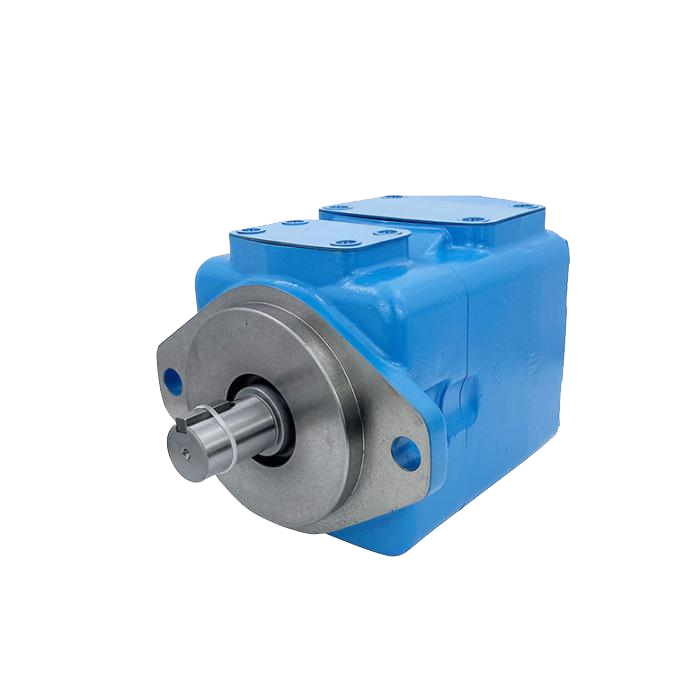
叶片泵 belong to the positive displacement family. Sliding vanes sit inside a rotor. They move in and out. This creates chambers that grow bigger to pull fluid in and then shrink to push fluid out. The rotor spins inside a stator. Centrifugal force or small springs push the vanes against the stator wall. This keeps everything sealed and gives steady flow.
Main parts include the rotor, vanes (usually 8-16 pieces), stator, end plates with special windows, and inlet/outlet ports. These pumps work well with fluid thickness from 10 to 500 cSt. They handle temperatures between -20°C and 80°C. Most models reach 85-95% volumetric efficiency. Slippage stays low. Advanced types support pressure up to 210 bar. Their small size—often less than 200 mm across—makes them easy to fit in mobile or fixed machines.
Working Principle of Single-Acting Vane Pumps
In a single-acting vane pump, the stator sits slightly off-center from the rotor. The offset is usually 1-5% of the rotor diameter. This creates chambers that change size. When the rotor spins (normally clockwise), vanes move in and out of slots. Each turn forms one suction area and one pressure area.
In the suction part, fluid enters through the inlet port. It fills the growing chamber on one side. As the rotor keeps turning, the chamber on the other side gets smaller. Fluid gets pushed out through the pressure port. This happens once every full turn. So there is one suction and one discharge. The oil plate has only two windows—one for inlet, one for outlet. The path stays simple.
Because of the offset, radial forces stay unbalanced. Bearings feel up to 20% more load than balanced pumps. This limits top pressure to about 140 bar. Flow usually ranges from 10 to 150 L/min. Some models let you change the offset to adjust flow. Pulsation stays around 5-10%. Using an odd number of vanes (like 13 or 15) makes flow smoother. These pumps can self-prime from up to 2 meters. That helps quick starts on mobile equipment.
Working Principle of Double-Acting Vane Pumps
Double-acting vane pumps use a stator that sits perfectly centered with the rotor. The inner shape of the stator has two long arcs, two short arcs, and smooth curves. It looks almost like an ellipse. This design creates two suction zones and two pressure zones placed opposite each other.
When the rotor turns clockwise, chambers grow in the upper-left and lower-right areas. Fluid gets sucked in there. At the same time, chambers shrink in the lower-left and upper-right areas. Fluid gets pushed out. Special sealing zones stop fluid from flowing back. Each turn gives two suctions and two discharges. The distribution plate needs four windows for the two separate paths. This nearly doubles the output compared to single-acting pumps.

Radial forces almost cancel out. Net load on bearings stays close to zero. That lets these pumps reach 210 bar and flows up to 300 L/min. Efficiency often goes above 92%. Even-numbered vanes (12 or 16) keep pulsation below 2%. This suits delicate actuators. Most models have fixed displacement. A few special versions add small compensators for tiny changes.
Key Differences Between Single-Acting and Double-Acting Vane Pumps
The way they are built creates big performance gaps. Single-acting pumps use the offset to allow variable flow. Some can adjust up to 50% with servo controls. Double-acting pumps stay concentric, so flow stays fixed. Their distribution plates show the difference clearly—two windows against four. That affects both complexity and price.
In daily work, single-acting pumps finish one full cycle per turn. Output stays lower, but the pump can switch suction and pressure sides easily. This helps simple bidirectional jobs. Double-acting pumps finish two cycles per turn. They boost total efficiency by 40-50% during long runs. Yet they need more precise parts during manufacture.
Force balance is another major point. Single-acting rotors carry 10-15 kN of unbalanced load. Bearings wear faster. Double-acting pumps stay perfectly balanced. Bearings last two to three times longer. Noise also changes—single-acting pumps run at 65-75 dB while double-acting stay at 60-70 dB because friction is lower. Double-acting pumps need service less often. Vanes last around 5,000 hours instead of 3,000.
优点和缺点
Advantages and Disadvantages of Single-acting Vane Pumps
Single-acting vane pumps stay simple and cheap. They cost 20-30% less at the start because they have fewer parts. Variable displacement saves energy when loads change often. Power use can drop up to 25% by matching flow exactly. They run fairly quiet. Assembly stays easy and fast. On the negative side, unbalanced forces stop them from handling high pressure. Wear happens quicker. Maintenance comes more often. Lower flow limits big systems.
Advantages and Disadvantages of Double-acting Vane Pumps
Double-acting pumps offer much longer life—bearings often last over 15,000 hours. They give higher flow for tough, non-stop jobs where every hour of stop costs over $1,000. Balanced forces cut vibration. Flow stays very smooth. This protects the whole system from shock. However, flow cannot change once set. They cost 15-25% more at purchase. Repairs need skilled workers because parts fit tightly. Both pump types hate dirty oil. Life drops 50% if particles bigger than 10 microns get inside.
Applications in Industrial Hydraulic Systems
Single-acting vane pumps work best at low or medium pressure. They power farm sprayers (under 50 L/min at 100 bar) and portable jacks that only lift one way. Their ability to change flow fits machine tools like CNC lathes where loads go up and down. Car test stands use them for quiet, compact metering.
Double-acting pumps shine in heavy work. They run construction presses at 200 bar, plastic injection machines that need steady 200 L/min, and mining conveyors that shake hard. Aircraft wing actuators love their low pulsation. Car power steering uses their steady performance. Wind turbines choose them for yaw control even at -40°C cold starts.
Many systems mix both types. Single-acting handles pilot lines. Double-acting drives the main power. This covers the full range from 70 bar to 210 bar.
Selecting the Appropriate Vane Pump Type

Choosing depends on pressure needs (below 140 bar points to single-acting), flow type (on-off or constant), and total cost over years. When flow must change, single-acting saves 20-30% on energy. Non-stop heavy work needs double-acting for up to 40% more running time. Check fluid thickness and cleanliness first. Keep oil at ISO 4406 Class 18/16/13 or better. Use software like MATLAB to test the system before building. Real prototypes confirm everything fits. New electro-hydraulic designs add digital control and bring another 15% improvement.
FAQ
What defines a single-acting vane pump’s operation?
A single-acting vane pump finishes one suction and one discharge each time the rotor turns once. It uses the offset between stator and rotor to change chamber size.
How does a double-acting vane pump achieve higher efficiency?
It completes two suctions and two discharges per turn. The centered design balances forces. Flow becomes smoother and wear drops.
What are common pressure limits for these pumps?
Single-acting pumps usually manage up to 140 bar. Double-acting models reach 210 bar for tougher jobs.
In which scenarios is a single-acting pump preferable?
Choose it for variable flow and lower pressure tasks like farm machines or metering systems where low cost and simplicity win.
What maintenance challenges arise with double-acting pumps?
More parts demand careful vane fitting and very clean oil. Still, balanced forces mean longer time between services.
Can vane pumps integrate with other hydraulic components?
Yes. They connect easily with cylinders, valves, and motors. This builds strong circuits for construction, manufacturing, and many other fields.
Collaborate with a Trusted Manufacturer and Supplier for Superior Vane Pump Solutions
As a premier manufacturer, supplier, and factory of hydraulic vane pumps, POOCCA delivers engineered precision for demanding applications. Custom single- and double-acting models ensure optimal performance, backed by rigorous quality controls and global exports. Industrial partners gain from volume pricing, swift prototyping, and expert integration support. Connect with the POOCCA team for consultations, specifications, or orders—email sales@kamchau.com or call +86-755-12345678 to advance hydraulic capabilities today.